While obesity in young people
is a risk factor for morbidity and mortality, the effect of obesity in older
adults is more complex. The obesity paradox in the elderly
suggests fitness matters more than weight,
finding that overweight and
moderately obese patients with certain chronic diseases often live longer and fare better than normal-weight patients with the same diseases.
Homestay & Fa’a Samoa (Samoan
Way)
For
personal travel, I prefer staying with local families or in hostels. National
Park of American Samoa
provides a list of homestay hosts (which included former deputy secretary of Samoan Affairs Nanai Afuola, whose recent
death at age 80 made front page news the day after my arrival). The objective of a homestay is to live as
much like locals and foster more authentic people-to-people connections.
Three
generations under one roof: homestay host Alu (executive director of AmericanSamoa Alliance Against Domestic and Sexual Violence), her daughter (in Samoana High School
uniform) and her Mama (visiting from Sydney). Many American Samoan households are
three-generation family units (aiga)
headed by a chief (matai, over 90%
are male) who represents the family on the village (nu'u) council (fono).
My homestay family members did not participate in traditional
Sunday morning church service followed by lunch banquet (to'ona'i), nor observe evening
prayers (sa). There was no home cooking (which was a man's responsibility in traditional Samoa), but meals were
take-out with leftovers for the next meal.
Alu and her Mama seemed more Australian, so I often relied on Alu’s intelligent
daughter (who was raised in American Samoa
since moving as a toddler from Australia)
and other locals for a reality check. After all, I didn’t want to be duped
like Margaret Mead, according to New Zealand anthropologist Derek Freeman,
who claimed her informants played a Samoan joke on her.
For
example, one local told me that Samoan elders complain by crying until they get
their way because a crying senior is like a curse. According to this informant, two laid-off elders went to see the
Governor, crying to get their jobs back so the Governor added them to his
payroll; one elder has died since and “you always want to make a senior die
happy.” True? (Stoic
California Governor Jerry Brown would not be swayed by tears/curse, nor protests).
On a
couple of evenings, Alu and Mama attended a widow support group led by a social
worker trainee. Alu explained that these
meetings were helpful in unearthing individual feelings of grief since “I (the
individual)” is subordinate to “we (the extended family)” in Samoan culture.
Fa’a Samoa (Samoan Way) is illustrated in proverbs
like o le ala I le pule le tautua
(“the way to the family title is through loyal and faithful service to the
family”). In The Happy Isles of Oceania, Paul Theroux offered his criticism: “It
seemed to be one of the oldest Samoan customs to victimize the person without a
family, the individual, the outsider, the stranger, because it was a society
where, if you had no family, you had no status.
Perhaps this was the reason they had achieved so little, either here or
on the mainland. They did not want to
stand out.”
As a
gerontologist trained in the USA,
I wondered about the relevancy of an ethical principle like respect for
autonomy or self-determination in a communal society like American Samoa? I thought about my own Chinese upbringing, in which a healthy individual would express feelings of grief in the appropriate context like loss of a loved one. I also thought about Jehovah’s Witnesses who
grieve over loss of loved ones yet maintain their Bible-based hope in the
resurrection and living forever in Paradise on Earth.
Instead
of going to church on Sunday morning, we relaxed at home, which was a great
opportunity to hear more about Mama’s life story as a minister’s wife for 51
years in Western Samoa, New Zealand, Australia and American Samoa. Mama showed me manuscript that she and Alu
plan to publish about Papa’s ministry in New
Zealand and Australia.
Breathtaking view of Pago Pago Harbor
American Samoa would be
a beautiful and tranquil place to enjoy retirement, just listening to the trees grow!
Pola Island
is a protected seabird nesting area.
Later in the
evening, Alu and I sat in on Mama’s Samoan language lessons to a woman who recently moved to American Samoa and now trying to learn the formal
and ceremonial, as opposed to everyday and colloquial, Samoan speech. Showing fa’aaloalo
(respect) involves matching the formality of speech to the status of the
person, with matai and ministers
regarded as royalty.
Laughing Samoans
Joined
Alu and her Mama to Laughing Samoans’ two-hour Fobulous show, which poked fun at aspects of Samoan culture, for $20 per adult ticket
(no student discount available).
Samoan
making wedding plans with palagi
fiancé: inviting village of 4,000 to
wedding; imposing strict discipline (spare the rod, spoil the child) by
knock-out instead of time-out (Samoans would never send a kid to room without eating
dinner). Alu told me she has never used
corporal punishment, and I found her daughter remarkably self-disciplined (focused on studying for exams during my homestay visit, which would have distracted myself) and one of the most respectful teenagers I know.
Father
and Son skit covered Samoan values of conservatism (no sleepovers, go to school for education
not socialization) and modesty (cover up body when going to beach).
Elvis impersonator sang (in tune of Blue
Suede Shoes) about going broke from fa’alavelave
(obligation charged to family members to contribute toward events like
weddings, graduations, funerals, church activities) to promote social harmony.
Alu’s Mama expressed her concern that this practice could be a financial
burden: forget presents; just give me your presence.
Getting around
I prefer walking
and mass transit, but went along on car rides because “when in American Samoa, do as the American Samoans
do.” The pervasive car culture enables a
sedentary lifestyle, and I was struck by the near absence of pedestrians
outside of Fagatogo village, the commercial and government hub on Pago Pago Harbor.
Tourist
trap hotel car rental agency charged an exorbitant $80-90 per day, while gas
price was about $4.13 per gallon. I
favored the local mass transit, colorful aiga buses, which run from sunrise to sunset, and will drop off passengers upon
request in the absence of designated bus stops. Since there really is only one main road, one
can flag the bus (like a taxi) if there is no bus stop nearby to get picked up. Cost was $2 for one-way fare for the scenic ride from Pago Pago to Tafuna
(about 5 miles distance).
On
this hard seat bus and against blasting music from the bus speakers, a uniformed student
asked me, "Are you new?” I replied, “No, I’m old.” Giggles. No seniors on this hard seated bus.
On
this soft seat bus and a video playing, sat next to an older woman who asked to
be dropped off at this Kingdom Hall of Jehovah’s Witnesses.
American Samoa’s motto
is Muamua Le Atua (Let God Be First). Ieova is Samoan for God’s name Jehovah.
Over
half of reported injuries in American
Samoa are attributed to dog bites, which interfere with a healthful lifestyle that includes walking and
bicycling. Outside Fagatogo, it was rare
to see anyone walking outdoors; it seemed people hop in and out of cars to get
around.
Chicken of the road. One Samoan
explained that locals do not eat local chickens, which eat toads that are "so ugly."
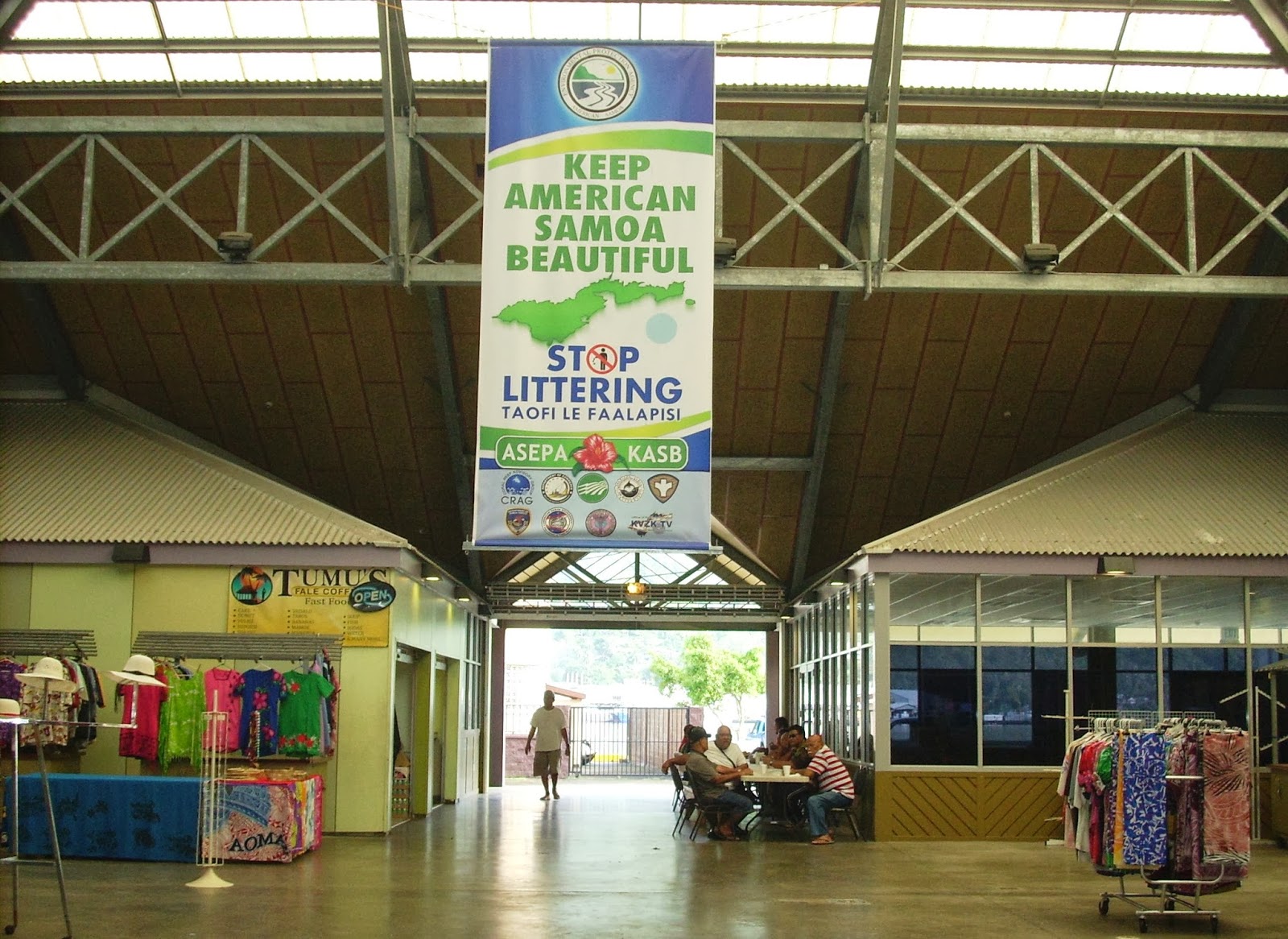
Opening of legislature
Legislators, which include two mature women, in front and CCJS Combined Choir in back
Preparing for Governor's arrival
Meeting TAOA
With time
for only a one week trip to study aging in American Samoa, I decided to start with the State Unit on Aging. Thanks to the
Administration for Community Living’s Region IX Office based in San Francisco, I was introduced to the
American Samoa Territorial Administration on Aging (TAOA). According to its website:
The Territorial
Administration on Aging was established in 1974 during Governor Peter Tali
Coleman's term in office. Delegate-at-large A.P. Lutali in Washington
D.C. requested through U.S. Congress to have a
program to help the seniors of American
Samoa. Some of the people did not want such program,
saying that it's a Welfare program and they didn't like to turn American Samoa into a
Welfare State. Eventually, it was established as part of the Governor's Office
and HC Pulefa'asisina B. Tuiasosopo as its manager. A TAOA staff was hired, Mr.
Penei Sewell was its Director, and it became an ASG Agency.
TAOA is 100%
federally funded through grants from U.S. Department of Human & Social
Services and U.S. Department of Labor.
Mission
Statement: TAOA was established to serve
the senior citizens of American Samoa through services funded by our two
grantors - DHSS and DOL, as follows: Senior
Nutrition Program through Food Vouchers served to seniors 60 plus each month
the employment program for those 55 years of age and older.
TAOA Social Services
Manager Tafia Fiame Taimalelagi makes telephone calls to schedule appointments from her office. In the Pacific islands
(including my native Hawaii), the oral-aural tradition and face-to-face
interaction is favored over written and electronic communication (American
Samoa’s isolation makes its internet access the most expensive in America). After all, there was no written language in Samoa until after the London Missionary Society arrived
in 1830 and developed the Samoan alphabet in order to translate the Bible.
American Samoa’s only senior center looks over Pago Pago Harbor in Tsunami Hazard Zone.
This location near Pago Pago port is convenient for cruise ship passengers to shop at TAOA Handicraft Market.
Inside TAOA Handicraft Market, TAOA Secretary Tina handles sales of handicrafts made by seniors under Title V of the Older Americans Act.
Title V Manager Fanaufouina Solia displays more handicrafts in her office. In addition to creating handicrafts, seniors also work
in schools teaching Samoan language and culture.
Seniors
busy at work on handicrafts—baskets, mats—made from paogo (pandanus, official tree of American Samoa).
TAOA
Title III Manager Amiula Pola next to van (12 passenger seats, 2 wheelchairs)
used to escort seniors to hospital, Social Security/bank offices, post office,
etc.
Tafia picks up copy of Governor’s 64-page State of the Territory Address from Governor's Executive Assistant Iulogologo
Joseph Pereira in Executive
Office Building. Governor's Address states, "We owe a debt of gratitude to our senior citizens for we are benefitting from their hard work," and highlights ASG contributing local funds to increase services to seniors; activities planned during Senior Citizen Month in May; transportation services; intergenerational programs with Department of Education (employing seniors as mentors to students) and Museum Director (seniors teach indigenous arts and craft to young).
My trip coincided with TAOA’s plans to transition its food vouchers to a congregate and home-delivered meals program under Title III of the Older Americans Act. As a foodie, I was thrilled so I went along for the ride (nearly 55 square miles of scenic Tutuila) with Finance Manager Sam Kupa and Social Services Manager Tafia to meet food vendors.
Driving over potholes and puddles on the road can be rough. Governor's Address also mentioned intention to continue road repair projects as funding becomes
available.
Samoans take great pride in caring for their own, and adapt welfare programs to
the Samoan Way,
which involves “sharing” government benefits (WIC, NAP) with aiga (extended family). In a communal society, even social security
benefits and food vouchers intended for seniors apparently are “shared” with family
members. TAOA Director Ale Tifimalae said
that this problem surfaced when TAOA staff made home visits to home-bound
seniors, and his office was looking at solutions to end this abuse by family
members of seniors. One solution is the transition to congregate meals program, where
seniors dine in-person so TAOA can be assured that seniors benefit from
nutritious meals as well as socialization.
TAOA
staff in front of fale.
Respect for dead
Graves of dead ancestors, rather than food,
are planted in front gardens.
Sarcophagus
lies next to house.
Island Funeral displays variety of caskets.
Chapel
at LBJ Tropical Medical Center,
American Samoa’s only
hospital. While making my way to
restroom, I found morgue with chapel.
Samoans will drop everything to visit dying relative’s body while still
warm.
Food desert
There's a joke about a Samoan's favorite food is all-you-can-eat! Well, I could find only one restaurant that offered all-you-can eat, on Friday nights only.
In 1830, John Williams (statue in Leone) of
London Missionary Society arrived in Samoa to introduce Christianity and trade of foodstuffs
began. Modernization has fueled
population growth and imported food. Today,
people in American Samoa
depend on imports for 95% of their food,
and this increasing reliance on imported canned/frozen/processed foods with
longer shelf life has contributed to a deterioration of their diets.
Fast
food in Tafuna village. Fast foods and
other nutrition-deficient meals provide calories (energy), but leave one
malnourished, tired and hungry, which can lead to overeating and weight
gain. By adopting the Standard American
Diet (SAD), American Samoa
has experienced a growing prevalence of obesity, diabetes, cardiovascular disease, hypertension and other chronic conditions.
When Paul
Theroux published The Happy Isles of
Oceania in 1992, he wrote rather contemptuously about American-style
consumption: “Greedy, wasteful,
profligate, and proprietorial, American Samoans are living on large handouts,
forever pushing supermarket shopping carts full of junk food, packages and
cans, the Cheez Ball diet of fat-bellied Polynesia—seedy prosperity.”
Traditional Samoan diet included fresh fish gathered from the reef by women,
while modern diet is canned fish. In
1963, Starkist opened its tuna cannery plant in American
Samoa,
and employs a workforce of 2,000 mostly from independent Samoa. About 40% of all U.S. exposure to mercury comes from eating contaminated
tuna from the Pacific,
which is associated with brain and nervous system disorders. It is safer to eat canned light (smaller
skipjack tuna) than canned white (albacore), which is a larger predatory fish
that accumulates higher concentrations of mercury.
Panikeke (pancake donuts) sold six for dollar (Fagatogo Market). Falaoa (flour) introduced by 19th
century traders.
Dozen local
eggs (from toad-fed chickens?) cost dollar more than eggs from California due to monopoly as one local
explained that Samoans don’t like competition due to dominant sharing culture.
Turkey tail was banned for awhile (2007-2013) in
neighboring independent Samoa, as public
health measure but found to violate WTO rules.
Sticker shock: fruit prices
Sticker shock: vegetable prices
Samoan-Chinese 3-item lunch (Sunny’s)
Filipino chicken adobo and green bananas plate for $4 (Pinoy)
Traditional foods
American Samoa’s first and only Registered Dietitian, Ianeta Ah Ping, Manager of Dietary Services at LBJ Tropical Medical Center.
American Samoa is mountainous with less than 10% of its land suitable for agriculture. I mostly saw growing around the island: tropical trees (breadfruit, coconut, mango, noni, papaya), green bananas, and root crops (taro, yam). To address the obesity epidemic and food security via intergenerational programs that involve all ages in the physical activity of growing their own food would be awesome! There are a variety of vegetables that grow well in tropical climates like American Samoa. Grow food, not lawns!
Tapwater must be filtered or disinfected (boiled) before drinking; bottled water is common.
Kava is the root of the pepper plant, used ceremonially (mildly narcotic drink) and medicinally (sedative, muscle relaxant, remedy for nervousness and insomnia) for over 3,000 years by Polynesians. After unsuccessful attempts to
find locally produced ‘ava, I ended
up purchasing packets made from Fiji
and independent Samoa. Samoan noni juice is also from independent Samoa. Samoan koko (cocoa) is sold in blocks packaged in styrofoam cup.
Samoan food plate (Louise Grocery Market aka Charlie Block)
My
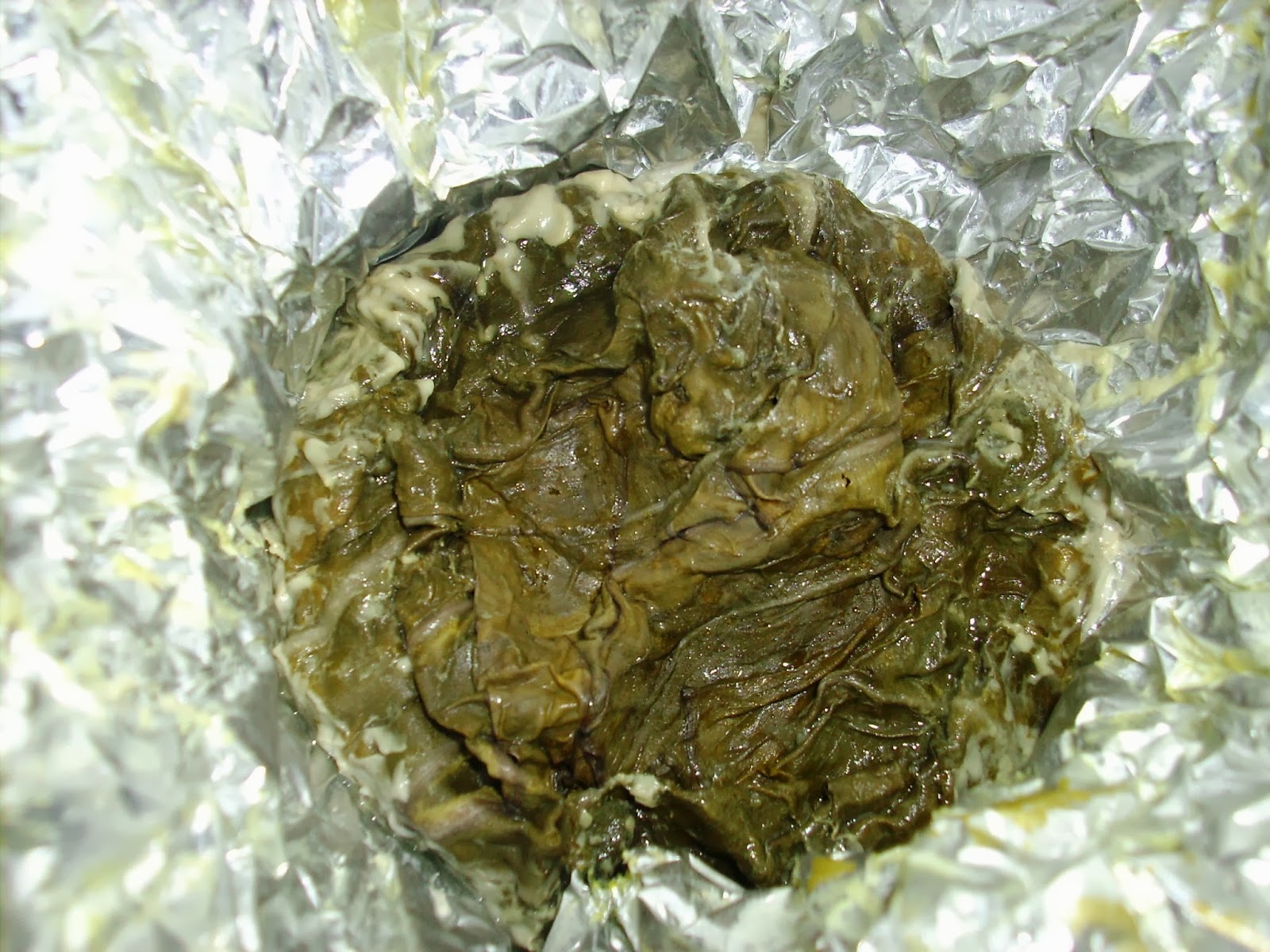
favorite: palusami made from taro leaves,
onions and coconut cream (Louise Grocery Market)
Sua fa’i is warm breakfast porridge made
from banana, tapioca and coconut milk (Milovales)
Farewell congregate lunch plate—poke
(cubed raw tuna marinated in sea salt, soy sauce, onions, chili peppers), sapa sui (Chinese bean noodle with mixed veggies), umu roasted pork, palusami, chicken, taro in coconut milk, breadfruit, and raw greens
with carrots salad in center—deliciously prepared by TAOA staff, who should be
in the catering business! “Ta’u valea pe
a le lava mea’ai” is the Samoan phrase meaning that it’s embarrassing not to
have enough food for a special event or occasion, so I shared some chicken – in
the Samoan tradition of sharing – and wrapped up leftovers for my supper.
Tafia presented me with surprise (!) puletasi in
fabric matching hers. After my non-stop
eating, I could not fit blouse and fortunately the skirt had an elastic waist! American Samoan seal carved into wood by Title V senior.
First Lady’s passion for seniors
My first visit was
with my homestay host Alu, who said she worked with “Cindy” at Department of Human
and Social Services, and now they are both active members of American Samoa Organization on Aging (ASOA). In the library, there is a sign that reads “aroha – where there is love, there is
life” – which Alu’s Mama liked to quote. During the tour, the First Lady highlighted photos from last May's first-ever luncheon honoring seniors at the Government House on American Samoa Senior Citizens Day, and photos from last month’s Special Olympics in Australia, where American Samoa’s 12-member team took home 10
medals! We were treated to cookies and truffles, and given 2014 Calendars from American Samoa Historic Preservation Office.
My second visit
took place on my last day, when I enjoyed an hour-long meeting with the First Lady who spoke like a fellow gerontologist, covering an impressive range of topics from grandparents caring for grandchildren (she has two grandchildren), home visits to isolated seniors, elder abuse prevention, hospice care and the overall need for more senior services. I wish our U.S. First Lady paid as much attention to seniors as to her Let's Move campaign targeting obese kids. We were treated to sandwiches and fries, and I received an autographed copy of the book, American Samoa: 100 Years Under the United States Flag.
With
TAOA Finance Manager Sam, First Lady Moliga and TAOA Social Services Manager
Tafia. Like the Sesame Street Song:
One of these things is not like Samoans,
One of these things just doesn't belong,
Can you tell which thing is not like the others
By the time I finish my song?
I'm the smiley American flashing my teeth
while others strike passport-like facial expressions.
The future
As far as
I could tell, American Samoan seniors have wide faces with room for dental
arches, indicating good nutrition by their parents. In Nutrition and Physical Degeneration,
dentist Weston A. Price traveled the world in the 1930s to study teeth and the
health of “primitive” people: those who
ate “modern” refined and processed foods (white flour, sugar, canned foods,
other denatured foods that remove essential nutrients) had decayed teeth and deformed dental arches; those who ate ancestral foods
(natural, whole foods) had near perfect teeth.
He found that it took only one generation of poor eating to destroy a
family heritage of perfect teeth and bone structure, jaw structure, jaw alignment
and dental arches. Check out the website
http://www.westonaprice.org/nutrition-greats/weston-price
for copyrighted photos comparing the perfect teeth of a Samoan boy born to
parents who ate nutrient-rich native foods, and the crowded dental arches of a
Samoan boy born to parents who ate “modern” foods.
Almost
ten years ago, gerontologists projected that due to the rapid rise of childhood
obesity, the current generation of children could be the first, in the history
of the United States, to live less healthful and shorter lives than their parents. This suggests that the younger generation can
learn from the experiences of older adults. (I was surprised to learn that American Samoa’s School
Lunch Program is not subject to the same nutrition requirements as
National School Lunch Program, though both are funded by USDA.) I am
encouraged that TAOA is transitioning to a culturally appropriate congregate and home-delivered meals
program (which is subject to nutritional standards) to promote the health,
safety and well-being of seniors in American
Samoa.
In
American Samoa TAOA, I enjoyed observing the seniors weaving their mats while
socializing at their senior center, admired their handicrafts (baskets, coconut
shell bowls, wood carvings, etc.) at the store, and appreciated learning that
they are teaching these traditional craft skills to schoolchildren. Though I’m not a bingo fan, American Samoan
seniors like to play bingo, which is a form of fundraising to build church halls. I was impressed by the First Lady’s informed
and passionate commitment to advocate on behalf of American Samoan seniors,
amazed by the power of crying seniors to get what they want, and the respect
accorded to them.

Senior role model: Tafia is also known as
American Samoa’s “own Elizabeth Taylor," an actress currently working on her fourth feature film. Tafia holds up DVD of "Heart to Heart," the first feature film written, directed and cast by natives of American Samoa and filmed on site!
Tafia’s
Leone house, damaged in 2009 tsunami, not habitable but still standing tall.
No, this is not a photo of American
Samoa, but Waikiki (Honolulu) before it
became overrun with tourist development. American Samoa has avoided thus far, the fate of Hawaii's shameless sell-out because American Samoa's land tenure system is permitted to discriminate by restricting individual land ownership to
persons who are at least 50% Samoan ancestry, so it remains for livable for locals.
As I reflect on my one week in American
Samoa, I thought about how much this experience reminded me of my own upbringing
raised in a three-generation household where my grandparents rocked and ruled:
the emphasis on family, food, village (my family belonged to Lung Doo Benevolent Society, where I called thousands of members my aunt, uncle, or cousin!),
food, education, food, proper behavior, food, etc. Sharing food builds relationships and respect, so no
such thing as Michelle Obama’s eat before you come to my party because it’s all about us (not just you) so it's “our” party, too! And we'll cry if there's no food (American Samoan senior curse)!
Today
begins Chinese New Year’s. When my
grandparents were still alive, I remember getting up early on Chinese New Year’s to serve my grandparents tea and a tray of assorted dried fruits, with the cheerful
greeting, Gung hay (wish you happiness) fat choy (increased prosperity)! In exchange, my grandparents handed me lai see (money in red envelope) which I then “shared” with my parents. (Tray of togetherness exhibit from Hawaii State Library)