“The message I want to get out is support our nightlife venues, support our restaurants, go out and enjoy yourself. Make sure you are vaccinated because of the requirement, but don’t feel as though you have to be micromanaged about mask wearing. Like, we don't need the fun police to come in and try to micromanage and tell us what we should or shouldn't be doing. We know what we need to do to protect ourselves. No one has been more conservative about protecting themselves than I have, not just because I want to set an example…"—San Francisco Mayor London Breed (Sep. 20, 2021), in damage control interview after caught in video violating the City’s mask mandate inside Black Cat Jazz Club in Tenderloin
Mayor Breed,
fun-loving 47-year-old role model during COVID-19 pandemic, defended her maskless ebullience as she
welcomed original members of veteran R&B group Tony! Toni! Toné! performing
in public after a 25-year absence: “I was feeling the spirit and I wasn’t
thinking about a mask…when the spirit moves you because you are watching
history in the making, Bay Area royalty perform!” So unlike 54-year-old Gov.
Gavin Newsom, who apologized after caught flouting his own rules last year,
dining maskless inside The French Laundry restaurant on occasion of private
birthday party with lobbyists, a misstep that fueled recall election that cost
taxpayers nearly $280 million. (Day after Newsom's dining in at The French Laundry, Mayor Breed dined at same posh restaurant for birthday party of socialite friend; later, she acknowledged breaking "the spirit" of health orders and "committed to doing better" as she announced need to seriously follow the City's stay-at-home order.)
Not to be party pooper, but Mayor Breed’s vaccination defense is no excuse for not wearing mask indoors, according to UCSF infectious disease specialist Dr. Peter Chin-Hong, who explained, “Even with vaccination checking, bringing together lots of noses and mouths from different households can be a risky enterprise.”

According to CDC COVID-19 tracker, SF community transmission remains “substantial” (orange) indicating that everyone (regardless of vaccination status) should wear masks in public, indoor settings. Got fun police enforcement?!
People age 65+ with comorbidities
(heart or lung disease, obesity, type 2 diabetes) are more likely to get more
severe illness from COVID-19 breakthrough cases. Many of my clients fall within this
at-risk category, so I wear KN95 mask during private home visits, though
clients and their family members opt to go maskless.

Old age remains an important risk factor for dying of COVID-19.
“To
put it more bluntly: in assessing an individual’s risk of dying from COVID, age
appears still as important — and maybe even more important — than vaccination
status. And while encouraging further vaccination remains by far
the best tool we have in fighting the pandemic to an endgame détente, we should
also be clear along the way about the continuing risks to the vaccinated
elderly and what might be done to protect them.
…vaccination has confirmed the age skew: by producing severe breakthrough cases concentrated overwhelmingly in the elderly and by reducing the risk faced by individuals by an astonishing degree that is nevertheless smaller than the still more striking effect of age.” –David Wallace-Wells, “The Public Continues to Underestimate COVID’s Age Discrimination,” New York Magazine (Sep. 27, 2021)
This month, SF Bay Area resident Primetta Giacopini died at age 105 from COVID-19 in breakthrough case. Last month, former SF poet laureate Jack Hirschman died at age 87, after testing positive for COVID-19 (vaccination status not public).
“COVID-19 has claimed nearly as many lives in 21 months—roughly 700,000—as AIDS did over 40 years.”—Marc Sandalow, “Pandemic deaths approach a grim milestone,” SF Examiner (Sep. 26, 2021)
Welcome
back to OMI!

https://www.sfgate.com/politics/article/S-F-s-Border-Town-District-11-Feels-Left-Out-3238460.php
During my first semester as a SFSU gerontology student (when I launched this blog!), I enrolled in an elective graduate course, Public Health and Community Organizing, which used UC Berkeley gerontologist Meredith Minkler’s textbook, Community Organizing and Community Building for Health and Welfare (2012). One course assignment involved conducting a cultural humility community assessment, and I chose to study older adults in nearby OMI (Ocean View-Merced Heights-Ingleside) neighborhoods, located in SF Supervisorial District 11 and just one Muni stop (lines #28, 29 and M) away from SFSU. OMI was my open classroom, and I returned to visit its two senior centers this month to coincide with National Senior Center Month and Healthy Aging Month!
We
always could spot a friend, welcome back
And
I smile when I think how you must have been
And
I know what a scene you were learning in
Was
there something that made you come back again
--John Sebastian, “Welcome Back, Kotter” (1975)
OMI residents were traditionally underserved by the City & County of San Francisco because they had the second highest rate of home ownership at 68% compared to the City average of 36%, so there was a perception of less need when compared to non-homeowners (renters, unhoused) in other parts of the City. Over half of OMI residents were African-American until the mid-1990s, when the rising cost of living led many to leave the single-family homes they purchased during the post-World War II housing boom in OMI. Though their homes appreciated in value, they struggled in later life to live on fixed incomes and navigate hilly terrain to meet their needs. Many also had adult children who left the neighborhood to raise their own families in areas more affordable than SF.
This context
seemed lost under Older Americans Act (OAA) Title III (community-based services
to help older Americans age 60+ maintain independence and remain in their homes),
which targets those at higher risk of nursing home placement: older
non-Hispanic whites with low-income, chronic conditions, difficulty performing
at least three activities of daily living (ADL), time spent in a
hospital/nursing home, and who do not own their home and lack caregiver support. African-Americans are less likely to use nursing homes (than non-Hispanic
whites), as they tend to have strong norms and extensive networks of filial/community
support from a more cooperative/interdependent lifestyle, which minimize the
need for institutionalization. While a resilient community that “takes care of
its own” is commendable, this is no excuse for government failing to invest adequately in
care infrastructure to support OMI older adults, who desire to age in place,
and their informal support networks.
(Sigh, paying to care for older adults aging in place just doesn’t grab attention like “SF could expand program that pays drug users to stay clean” and “SF will begin paying people to not shoot other people.”)
An influx of Asian and other ethnic groups made OMI one of SF’s most diverse neighborhoods. As of the 2010 U.S. Census, the OMI population was 45% Asian, 25% Black, 18% white and 12% Other. OMI’s population of seniors age 65+ was 13.8%. SFSU Institute for Civic and Community Engagement report on District 11 concluded that while residents have strong bonding of the kind that reinforces ties between similar groups (strengthening existing relationships), there is need for bridging social capital among diverse groups (building new relationships). For example, OMI Senior Center participants are mostly Asian (as well as monolingual Cantonese); I.T. Bookman Community Center participants are mostly Black though growing more racially diverse through outreach and programming.
As in the case of many marginalized groups who can’t count on the government and outsiders, OMI residents rely more on informal networks or mutual aid groups to address specific needs. During this COVID-19 pandemic and reports of violent attacks against Asian seniors, community organizers in OMI made news for their bridging efforts to bring COVID-19 testing/vaccines and to distribute safety packets to their neighbors.

OMI is located in the Fog Zone, the City’s southwest area bordered by SFSU to its west and City College of SF-Ocean Campus to its east. On 19th Avenue & Junipero Serra, there are crosswalks with multiple pedestrian “beg buttons” and lanes of converging traffic including M train in middle, to get to Temple United Methodist Church, which leases space on weekdays to Catholic Charities SF for OMI Senior Center and Aging Services Case Management.
In July, plans were underway to welcome back
participants in-person to senior centers, which had pivoted to virtual
programming and meals to-go in response to March 2020 shelter-in-place order. Senior
centers were first to close, and among last to reopen during pandemic. With Delta
surge, fun police at senior centers limited capacity for in-person activities
to enforce physical distancing, along with proof of COVID-19 vaccination + “micromanage”
mask wearing (sorry, Mayor Breed). Community Music Center Older Adult Choirs
now presented in hybrid format, split in-person and virtual participation.
Food brings
people together, so great start to study community! Almost a decade ago, I
shadowed long-time OMI resident and Community Living Campaign (CLC) Community Connector Deloris McGee in her work organizing OMI Food Network with peers and neighbors to deliver
food pantry boxes from Temple directly to homebound residents, mostly older
adults age 80+. Her efforts involved changing the local food pantry policy that
required recipients to show up in-person and wait their turn in line for
pick-up, and mobilizing volunteers to canvas the neighborhood to identify
residents who needed food delivery assistance because they could not drive,
stand in line, carry their food boxes up the stairs or hills in their
neighborhood. After only a few months of operation involving volunteers of all
ages, SF Department of Aging & Adult Services approved CLC’s request for
funding to operate OMI Food Network, and this model became the basis for the
City’s Senior Home-Delivered Grocery Program!
During
COVID-19 pandemic, OMI Senior Center has an 8-month wait list for its food
pantry (currently serving 250 participants=150 in-person pick-up + 100
home-delivered) on Thursday morning. OMI Senior Center also offers meals to-go,
prepared by On Lok 30th Street Senior Center.

OMI Senior Center presents weekly “Cooking with Andy and Tiffany” in bilingual English/Cantonese. Each Friday afternoon, Iron Chef Andy goes live on Microsoft Teams to prepare meals with ingredients from previous day’s food distribution, using seasonal produce like cauliflower, yellow bell peppers, and zucchini. Food sculptor Tiffany carves floral arrangements from produce used in plating. Voila! Cauliflower rice, bell pepper & celery salad with Thai peanut sauce and onion carved into flower.

Herb crusted cauliflower “steak” on bed of tomato sauce with onion/yellow bell pepper flower and zucchini leaves/wedges. Herbs harvested from windowsill herb garden at OMI Senior Center office. There is talk about possible OMI Senior Center cookbook!
Like Chef Andy, older adults who grew up cooking from scratch know traditional methods to get the best nutrition like cooking vegetables with vitamin C sources (tomatoes, onions) to improve absorption of minerals (like calcium, iron, zinc, copper and magnesium that bind to plant fiber). Yet, the importance of cooking your own food appears lost in bipartisan bill introduced to establish medically-tailored home-delivered meals to “vulnerable seniors” as a new Medicare pilot program.
On Oct. 1, 2021, recipients of Supplemental Nutrition Assistance Program (SNAP) will see an average 25% increase to their benefits to reflect update to 1975 Thrifty Food Plan, based on changes in food consumption (increase in calories)…and remain free to purchase non-nutritious sugary drinks.
“There
was a time in the history of the world when food was considered precious. It was the number one priority for everyone.
Money was spent there. And we all knew, because we were working on the land,
how hard it was to grow food. ... And then all of a sudden after World War II,
the whole advertising industry got in there, and the industrial food system,
and they said that food should be fast, cheap and easy. Well, here we are. If
you don’t pay the people who work in the fast-food industry, then it can be
cheaper. If we’re not paying attention to any environmental issue, it can be
cheaper.
“But I don’t want cheap food. I want affordable food, and I know for certain that when you cook your own food, it can be affordable. ... I want to know where everything comes from. And I think that's the most important thing that we can do right now, is to expose the people who don't care, and to really support the people who do.” –Alice Waters, 77-year-old proprietor of farm-to-table restaurant Chez Panisse and cookbook author, “Eating real food is not a trend,” SFGate (Sep. 9, 2021)

Before COVID-19 pandemic, SF Department of Disability & Aging Services (DAS) selected OMI Senior Center for its Urban Garden Project, a SNAP-Ed federally funded program targeted to serve low-income seniors age 60+, by providing “meaningful and fun physical activity and increase access to healthy foods through an edible garden.” However, activation of this garden space (metal bucket planters) on hold until it’s deemed safer for seniors to gather in-person. Grow food to build community, year-round in SF’s Mediterranean climate!

While OMI may lack mental health clinics (complaint heard from residents), OMI has welcoming community centers with staff that reflect the diversity in the community (contrast with homogeneous staffing at “institutes” in SF that serve older adults) and religious organizations that offer physical meeting spaces for stabilizing connections. After all, psychologists have been appropriating from religious practices like meditation, gratitude, moving together in unison, etc.
“…much
of what psychologists and neuroscientists are finding about how to change
people’s beliefs, feelings, and behaviors—how to support them when they grieve,
how to help them be more ethical, how to let them find connection and
happiness—echoes ideas and techniques that religions have been using for
thousands of years…
Regularly taking part in religious practices lessens anxiety and depression,
increases physical health, and even reduces the risk of early death. These
benefits don’t come simply from general social contact. There’s something specific to spiritual
practices themselves.
…when it comes to finding ways to help people deal with issues surrounding birth and death, morality and meaning, grief and loss, it would be strange if thousands of years of religious thought didn’t have something to offer.”—David DeSteno, “Psychologists Are Learning What Religion Has Known for Years,” Wired (Sep. 14, 2021)
Amen! As a MSW student, I wrote a paper exploring my affinity for person-centered theoretical orientation based on Carl Rogers and Mister Fred Rogers, who were both influenced by their faith. Both Rogers were raised with strong Protestant Ethic, studied at theological seminary and considered religious calling; focused on realizing human potential, unconditional positive regard for people, recognition of the environment/neighborhood on our experiences, belief that empathic therapist encourages client awareness and acceptance of all feelings.
“To know that you do not
know is the best.
To think you know when you do not is a disease.”—Lao Tzu, Tao Te Ching
My cultural humility community assessment
focused on OMI community
of seniors, mostly African-American women who were residents since the 1950s
and desired to age in place. The assignment began with critical self-reflection
to analyze my cultural identities and potential role with respect to this community,
and provided an opportunity to find common ground in community practice.
Initially, I
appeared to be an outsider (non-OMI
resident, younger, Asian) in OMI’s community of primarily African-American
seniors. Outsiders who are not members of the group are relegated to the tertiary level of contact with the
community, where they can provide consultation and sharing of technical
knowledge. Arguably, I could be considered of a “similar ethnic or racial
background” as an ethnic minority/”person of color,” but not of the community,
which would place me at the secondary
level of participation as a liaison between the community and the larger
society.
More significantly,
I related to OMI senior community defined by their deep faith/spirituality that
values humility to seek God’s guidance with a view to a person’s figurative
heart (motivation of whole inner person), rather than race,
gender, social class, etc. Humble persons view these mostly socially
constructed markers as superficial differences that assign privilege/oppression
that don’t make us better or worse beings; we all matter in God’s eyes. Thus, I
felt “welcomed to belong” and we shared the same interest in healthy living to
support “aging in community.”
We got to live
together
I am no better and neither are you
We are the same, whatever we do
You love me, you hate me, you know me and then
You can't figure out the bag I'm in
I am everyday people, yeah yeah...
--Sylvester Stewart (aka Sly Stone), “Everyday People” (1968)

I.T. Bookman Community Center (ITBCC) serves all ages, offering adult programs through its partnership with SF DAS. Next door is Pilgrim Community Church, whose Pastor Harold Pierre also served as ITBCC Executive Director. One block up across the street is Ocean View Library, the City's smallest branch in this "forgotten community" which needs $47 million for expansion, so support Build America’s Libraries Act! (Ocean View Library was where I first met Edna James, SFSU Gerontology alum, SF Aging Commission President and retired RN who founded OMI Community Action Organization's NIA/UJIMA Wellness Nursing Center and taught health literacy at ITBCC.)

Ten years ago, ITBCC collaborated with Sufi community to host free community lunches for seniors on last Friday of the month, while it continued to fundraise to upgrade its kitchen to meet standards for City-funded congregate lunch program. Mission accomplished with upgraded kitchen and lunch provided by Project Open Hand, except COVID-19 pandemic necessitated switch to meals to-go. In addition, ITBCC’s weekday Grab & Go Café fundraiser offers $5 made-to-order hot breakfast (eggs; choice of meat; grits or homestyle potatoes; biscuit, English muffin or toast) as well as $1 menu (coffee, donuts, muffins, juice, eggs cooked to order).

ITBCC Executive Director Felisia Thibodeaux ("vaccine queen") made national news last month for her one-person-at-a-time efforts to get COVID-19 vaccines to over 1,270 people! This month she received Jefferson Award for her vaccination efforts.
My employer
requires all employees, regardless of vaccination status, to take COVID-19 test
at least monthly. For this reason, I went to ITBCC’s Friday Wellness Hub, which
offers both COVID-19 test and Pfizer vaccine shots (including boosters for
those who received Pfizer vaccine more than 6 months ago).

After my nasal swab at ITBCC Wellness Hub, I received bag of colorful produce (apple, bananas, blackberries, broccoli). Wow, I’d be willing to get COVID test more often just for the fresh produce 😉!

ITBCC’s banners publicize timely Housing & Tenant Counseling Services: California’s eviction moratorium for renters unable to pay rent ends today, while state’s $5.2 million COVID-19 rent relief is still available to eligible applicants.
Single-family
housing: age + racial diversity/integration
Gov. Newsom, who survived this month’s recall election, signed legislation to allow for increased housing density and ending single-family zoning in California. In addition to potential for increasing housing supply, impact of this law could increase racial and economic diversity/integration.
According to UC Berkeley's Othering & Belonging Institute study, "The Roots of Structural Racism: Twenty-First Century Racial Residential Segregation in the United States," most U.S. metropolitan cities have grown more racially segregated since 1980s, with predominantly white areas faring better in life expectancy at 84 years—or five years greater than predominantly Black and Latinx areas at 79 years.

While people are getting woke to ending racially segregated housing, will people get woke to ending age 55+ segregated housing like The Villages in Some Kind of Heaven (2020)?
· Congress introduced Grandfamily Housing Act of 2021 to support multigenerational “grandfamily” housing for 2.3 million grandparents who are primary caregivers to 2.7 million grandkids in USA
· Matt Fuchs summarized research on “How housing that mixes young and old can improve the lives of both” (WaPo, Sep. 14, 2021): cultivate shared purpose with neighbors; provide safety nets that protect mental health; foster greater civic engagement as well as mental and physical activity.
Welcome “self-care”
Effective June 1, 2021, National Association of Social Workers (NASW) Code of Ethics added “professional self-care” in its Preamble and Ethical Principles, intended to be aspirational and support a “healthy culture among social workers.”

Last month’s NASW webinar, Becoming a Medicare Part B Behavioral Health Provider, was really about advocating for increasing Medicare reimbursement for clinical social workers (CSW). Arguably, seeking more compensation is part of professional self-care. Ignore snake oil advice from social work major Suze Orman, who told social workers to suck it up (“You just have to be one of those that seriously live below your means”).

Tanya Joy
Moradians, LCSW, talked about olden days when she had to work under licensed MD
until California became first state to license social workers in 1965 and later
parity bill allowed LCSW to bill insurance. She urged continued advocacy for
increasing compensation to social workers under Medicare model.
NASW supports Improving Access to Mental Health Act, introduced by U.S. Representative Barbara Lee, MSW:
· Increase Medicare Reimbursement Rates for CSWs from 75% to 85% of physician fee schedule.
· Increase Access to CSW Services for
Skilled Nursing Facility (SNF) Residents, by allowing independent CSWs (not
employed by SNF) to seek reimbursement under Medicare Part B for providing
psychotherapy services to SNF residents receiving care under Medicare Part A
· Provide Access to CSW Services
that Help Medicare Beneficiaries Coping with Physical Health Conditions, by
allowing reimbursement beyond “diagnosis and treatment of mental illnesses” to
Health and Behavior Assessment and Intervention (HBAI) services such as “cognitive,
behavioral, social and psychophysiological interventions to prevent, treat, and
improve physical health and well-being.”
Is the point of seeking higher compensation to incentivize more social workers into serving Medicare beneficiaries? Whatever, I’m allowing my NASW membership to lapse because so little attention is paid to what really matters, like ensuring social workers who serve older adults actually have the desire and ability (attitude and gerontology know-how). When I attend social work meetings on DEI (Diversity, Equity, Inclusion), I’m the lone voice begging discussions to go beyond racism to seriously consider ageism/ableism. What will it take social workers, who are woke enough to use #BlackLivesMatter and #StopAAPIHate as part of their email signatures, to include #EndAgeism?
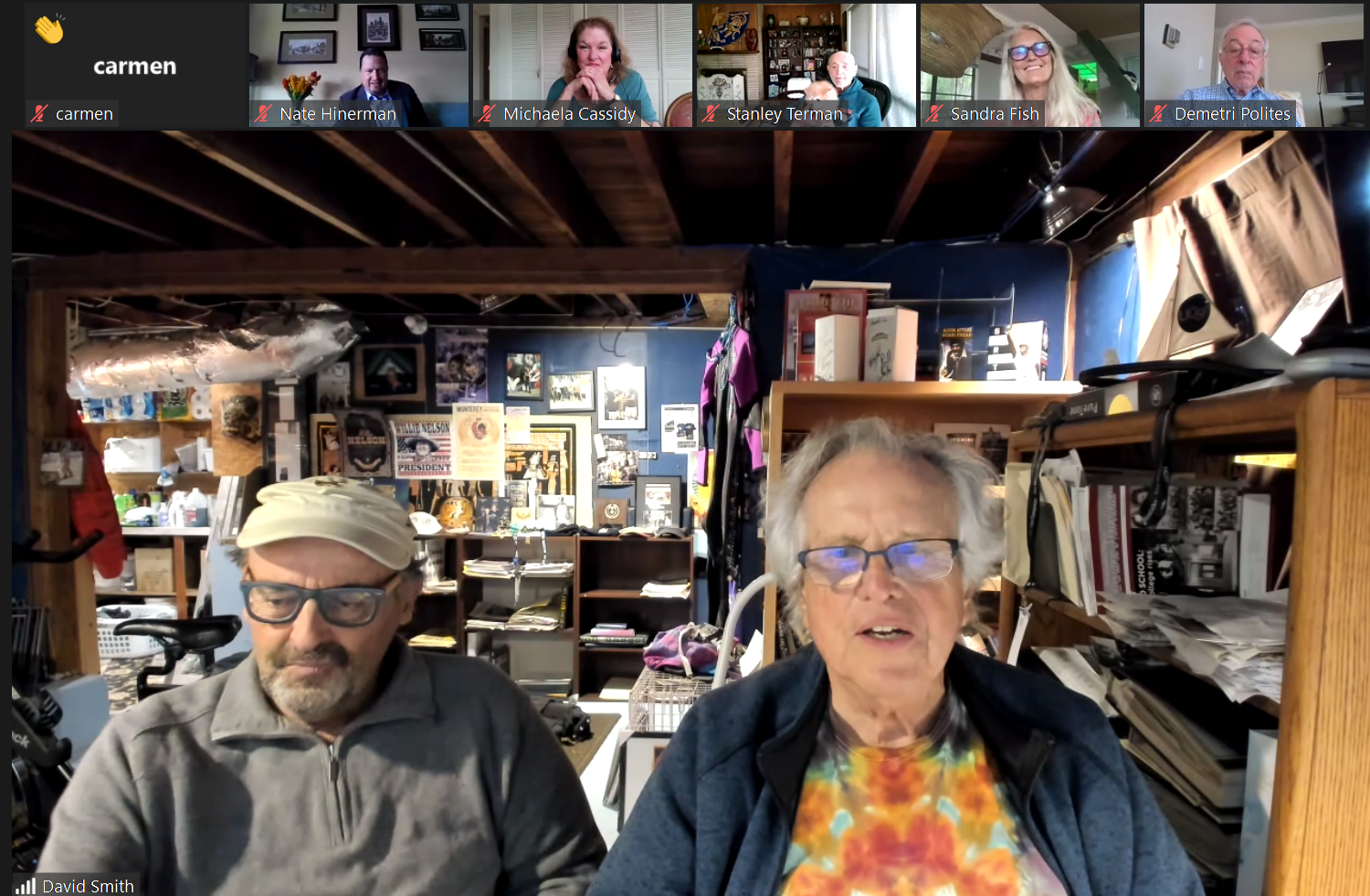
This month’s SF End-of-Life (SFEOL) Network meeting on The Psychedelic Medicine Resurgence: An Informal Professional, Historical, and Personal Chat with David E Smith, MD, in his basement with SFEOL co-founder Steve Helig. SFEOL co-chair Nate Hinerman introduced “Dr. Dave” as a living legend, who right out of UCSF medical school founded the famous Haight-Ashbury Free Clinics in 1967 Summer of Love, sparking a national free clinic movement; his clinic motto “Healthcare is a Right, Not a Privilege.”
Dr. Dave
discussed use of psychedelics (LSD, MDMA, psilocybin, ketamine, etc.) for
treating depression, PTSD, and EOL issues such as fear and anxiety over death
and dying that can aggravate medical issue; psychedelics help transcend
guilt/shame toward a spiritual recovery, which is a search for authentic self.
“I
believe psychedelics are wasted on the young. Their real value comes when you’re older. One, because many people as they age get
interested in spiritual questions, and psychedelics are a way to explore the
spiritual side of yourself.
And two, older people tend to get stuck in grooves of behavior that are sometimes quite destructive. The research suggests that one of the things that psychedelics are good for is breaking old habits and forming new ones.”—Michael Pollan, author of How to Change Your Mind: What the New Science of Psychedelics Teaches Us About Consciousness, Dying, Addiction, Depression, and Transcendence (2018), Q&A, AARP Bulletin (July/Aug 2021)

“Every human being has a true, genuine, authentic self. And the healing is the reconnection with it.”—Gabor Mate, MD, The Wisdom of Trauma (2021)
In The Wisdom of Trauma documentary, Canadian Dr. Mate takes a holistic approach to treating a patient who has cancer with ayahuasca, traditional Amazonian plant medicine with psychedelic effects, as he explains people diagnosed with cancer have unexpressed emotion that deprives them of energy and ayahuasca therapy seemed to liberate patient and cancer gone! (See related Radical Remission: Surviving Cancer Against All Odds (2014), Kelly A. Turner's book based on her PhD research that describes use of psychedelics in releasing suppressed emotions, increasing positive emotions, deepening your spiritual connection, and having strong reasons for living.)
The WaPo reported on correlation between 9/11 first responders with PTSD and dementia; ongoing studies on role of psychedelics in treating dementia. California is moving towards decriminalization of psychedelics via SB 519 for consideration next year and a voter initiative recently approved for signature-gathering.
“Still
Going Strong”

Back in May, CDC launched Still Going Strong campaign to remind older adults that “getting older doesn’t have to mean giving up the activities you enjoy.”
· Lois Smith is still acting, becoming the oldest person at age 90 to win a Tony trophy for acting in The Inheritance.
· Betty Soskin is still working as national park ranger at age 100
· Virginia Oliver at age 101 is still hauling lobster

Filmmaker Sky Bergman was inspired by her nonna Evelyn Ricciuti (1912-2018), who was “still working out” at age 99, to make Lives Well Lived (2018) documentary.
In honor of National Grandparents Day, PBS streamed Lives Well Lived, featuring 40 older adults age 75+ representing 3,000 years of collective life experience; most appear to be aging in place with “dignity, grace, energy, and purpose.”

“Happiness is a state of mind … be happy with what you have. We grew up during the Depression, we didn’t have very much. So, we learned to be economical and frugal, but we were very secure. We had food on the table, we had a comfortable bed, clean clothes. You don’t need much more.”—"Lucky Louie” Tedone (1923-2021), mozzarella maker since 1941, MD since 1953, on-call 24/7, seeing average 45 patients daily in summer, 60-65 patients daily in winter, “the harder I worked, the luckier I get”

Blanche Brown, 78, “still dancing, still teaching” as Bionic Woman with pacemaker and titanium knee. She had been housewife until age 35, then enrolled at SFSU, studying and then teaching Wajumbe dance. Notably, after she was denied open house showing at Forest Knolls by developers who refused to show homes to Blacks in 1961, she staged SF’s first sit-in demonstration with her hubby Willie Brown, whom she is “still separated” since 1980; now says she enjoys being able to “sit still and enjoy the present.”

https://www.youtube.com/watch?v=JMdv66pDSEA
Welcome to Shirley Serban’s latest parody song on choosing to feel good about aging!
I
used to think aging was ugly
Now,
Baby, I’m sure
But
I won’t get dragged down
By
things I can’t do anymore
I’m
rusty and creaky from hard knocks
Why
should that hold me down?
Why
not celebrate? Each day’s great
When
I’m not in the ground…
Hey,
all right now
I’m gonna choose to feel good!
--Shirley Serban, “Walking on Sunshine” parody song about aging (Sep. 21, 2021)


