Showing posts with label aging with disability. Show all posts

Wednesday, September 30, 2015

Aging + disability: equal opportunities

Americans with Disabilities Act (ADA) and Older Americans Act (OAA) are equal opportunity laws that support full participation in community living. Americans also have equal opportunities to become Americans with disabilities and older Americans.
                                             
Aging with disability

Americans, including those with disabilities, are living longer.  As Eli Gottlieb wrote in The New York Times opinion piece, “Adult, Autistic and Ignored,” parents of dependent children with disabilities fear: What will happen to them when I’m gone?  After his mother died, Eli became guardian of his older brother Joshua who has autism and lives in an institution.  Like his mother, Eli became an advocate critical of the disability cliff when children with disabilities age-out of “special education” and the need for more attention to elderly autistic people like Joshua.  
At 5th Annual Legacy Film Festival on Aging (LFFoA), LFFoA Director Sheila Malkind facilitated Caring program discussion with Dr. Toni Miles and Mimi and Dona documentary filmmaker Sophie Sartain. 

Sophie began filming her documentary in Dallas six years ago when 92-year-old Mimi (Sophie’s maternal grandmother) was no longer able to care for her 64-year-old daughter Dona (Sophie’s aunt) who was diagnosed with “mental retardation” in the 1950s (though Sophie suspects undiagnosed autism).  When Dona was asked to leave public school after 2nd grade, Mimi sheltered Dona at home instead of the prevailing practice of sending her “retarded” child to a mental institution. 

Mimi makes the difficult decision to place Dona into Denton State-Supported Assisted Living Center, a long-term care facility that serves people with intellectual and developmental disabilities.  While Mimi thrives as she continues to live at home in the community, Dona deteriorates precipitously in the institution.  Spoiler alert: Dona’s condition improves, but she is also diagnosed with early Alzheimer’s; documentary ends with death of one.  Save this date: On November 23, Mimi and Dona will have its Independent Lens premiere on PBS. 

Family caregiving theme is constant: Sophie’s mother provided care for Sophie’s father who had multiple sclerosis during the last 20 years of his life; Sophie’s brother has a son with autism (“you need to live forever or outlive your kid”); and back in Los Angeles, Sophie learns that her own son is diagnosed with autism.  The main difference between Dona’s generation and today’s children with autism are disability civil rights laws, such as Individuals with Disabilities Education Act (IDEA) ensuring that children with disabilities have an opportunity to receive free appropriate public education in the least restrictive environment.

Now there is greater public awareness of disabilities that survive into old age. In The New York Times article, "Is It Old Age, or A.D.H.D.?", Judith Berck reported on the dearth of research on older adults with A.D.H.D. and the challenge of treating them with the same drugs given to children.
At 19th Annual Golden Gate Self-Advocacy Conference: Give It to Me Straight! Current Happenings in Our Developmental Disability Community, keynote speaker Santi Rogers, Director of California Department of Developmental Services, holds up Lanterman Act, California law passed in 1977, that gives people with developmental disabilities the right to services and supports to enable independent living.  He previously announced decision to close the remaining state-run developmental centers in California and transition participants into community living. 

More ADA celebrations! Doing disability justice

Steve and Lillian Gonzalez Brown, co-founders of Institute on Disability Culturegreeted me at Disability Rights Education and Defense Fund (DREDF)’s 36th Anniversary Celebration Honoring the 25th Year of ADA & Charting the Next 25 Years of Disability Rights at Ed Roberts Campus. 
Thanks to DREDF Director of Development Ingrid Tischer, I was able to attend the Celebration fundraiser as volunteer. 
Caramelized chocolate ganache with sea salt bars welcomed guests to tables. DREDF Senior Policy Analyst Marilyn Golden urged us to sign cards (on tables) opposing HR 2646 because “it would take away legal representation for people with mental illness, reduce privacy rights, and promote institutionalization.” 
Celebration co-sponsor Google Impact Challenge: Disability hosted Bay Area Makeathon weekend to design a more accessible world. 
Google also unveiled portraits and videos of disability rights leaders like Ed Roberts. 
ACLU attorney and DREDF Board of Directors President Claudia Center called for donations, suggesting $25 in honor of 25th anniversary of ADA; she said her personal donation formula was doubling 25, for her birthday this year, times ten! 
Evening’s program capped with intergenerational discussion about ADA’s impact 25 years after its passage, and advances we want in next 25 years, particularly on issues affecting people who live with invisible disabilities and intersectional effects of race, gender and disability. Christina Mills, Deputy Director of California Foundation for Independent Living Centers, moderated the discussion among all-women panelists: Maddy Ruvolo of Marin Center for Independent Living; Yomi Wrong of Palo Alto Medical Foundation/Mills-Peninsula Health Services; Nubyaan Scott, DREDF 2015 Summer Intern; and Mary Lou Breslin, DREDF Co-Founder/Senior Policy Advisor.


Yomi discussed her concerns about aging with disability, long-term care and still being in charge of her life, who will care for her as she has no plan to "go quietly to an institution, but if I do, what will it look like?" She noted ADA's influence on the built environment, yet need to reduce health disparities, adding that “death with dignity is such crap because if people have better choices, they don’t think to kill themselves.”
Disability Organizing Network (DOnetwork) presented California#ADA25 Conference: Access, Availability, Advocacy and Civil Rights! at UC Hastings College of Law.  This multigenerational view of disability justice covered:
  • access: equal opportunity to participate in all aspects of everyday life;
  • availability: options and choices which increase independence and freedom; 
  • advocacy: our history and courageous actions of leaders that lead to today's inclusion; and
  • civil rights: our just claim to equal citizenship
The conference's lunch program featured video clips of Alice Wong’s Disability Visibility Project: “Recording disability history, one story at a time.”   
ADA: Reflections on Success panel moderated by Yomi Wrong:
·         Arlene Mayerson, DREDF Directing Attorney, was a principal architect of ADA 25 years ago.  In order to have equal opportunities for people with disabilities (PWD), they had to have accommodations which meant they have to be treated differently. After ADA, PWD no longer asked for charity or favors, but for accommodation as a matter of right.
·         Paul Grossman, education civil rights attorney talked about Lau v. Nichols (1974 U.S. Supreme Court case finding that lack of language appropriate accommodation denied Chinese students equal educational opportunities because same treatment is not equal opportunity) and the 504 sit-in laying the groundwork for ADA.  He added that the second most exciting moment in disability rights has been since ADA Amendments Act of 2008 expanded the definition of disability (medication and other interventions that deal with effects of disability cannot be factors in determining whether individual is disabled), so disability-based discrimination cases can be heard on their merits.
·         Jim Patterson talked about “associational discrimination”: being pushed out of foreign service career because his employer viewed his daughter’s disability as a liability.  After The New York Times published an article, “Whose disability is it anyway?” he returned to work as a full member of the diplomatic corps and became an advocate for employment equality.
Do You Know Your Disability Civil Rights History? HolLynn D’Lil, author of Becoming Real in 24 Days: One Participant's Story of the 1977 504 Demonstrations, took over 350 black and white photos chronicling the takeover of the San Francisco Federal Building to demand that President Carter's administration implement regulations to Section 504 of the Rehabilitation Act, the first federal civil rights law for people with disabilities. At the time, Congressman Phil Burton said, "To have to demonstrate during a Democratic administration to fulfill a Republican promise is a painful irony."
Ted "can I get an accommodation?" Jackson, Community Organizing Director at California Foundation for Independent Living Centers (CFILC), moderated discussion during Breakfast with the Author Tony Coelho, who entered politics as his ministry after he was denied from pursuing Catholic priesthood based on his epilepsy. While serving in U.S. House of Representatives, he was principal author of ADA, which got bipartisan support due to supporters' personal relationships with PWD.  He noted 52 countries now have disability laws based on ADA.
Indigo Mind features artists celebrating the work of neurologist Dr. Oliver Sacks.  
Connie Barker founded Environmental Health Network (EHN), which provides support, advocacy and information to the chemically and electrically injured: “If it’s not healthy, it’s not green.” In addition to her own site http://ehnca.org/, she offered the following resources:
Access Kids perform on entertainment stage

Aging + disability-friendly communities 

Under disability laws, the person with disabilities has the burden to disclose his/her disability and ask, "can I get an accommodation?"  Sometimes, people with "invisible disabilities"--like chemical sensitivities--might resist disclosure to avoid stigma ("it's all in your head").  As a more proactive approach to move beyond individual accommodations, universal design creates inclusive environments for everyone by placing the burden for accessibility on architecture. 
ADA Conference workshop included Homesick Living with Multiple Chemical Sensitivities: Finding Accessible, Available, Affordable Housing, presented by Connie Barker of EHN.  Connie talked about 11-room Ecology House, the nation’s first HUD-funded housing for people with multiple chemical sensitivities (MCS) that was built over 20 years ago in San Rafael, and then showed documentary, Homesick (2013) about director Susan Abod’s road trip to discover how people with MCS find safe housing and cope with their disability. 
Ed Roberts Campus was ideal to host At Home With Growing Old (AHWGO) program, Dementia-Enabling Spaces: Bodies, Networks, Environments.  Panelists were:
  • Susan Stadler, architect and AHWGO co-founder, substituted for Clare Cooper Marcus and discussed gardens for people with dementia like Portland Memory Garden 
  • Dr. Mehrdad Ayati, geriatrician and author of Paths to Healthy Aging (2014), prescribed social interactions (“live like an Italian: engage brain in conversation, talk with hands”), value and respect elderly because “You cannot replace experience with knowledge (internet),” more geriatric training (completed by only 3% of U.S. medical students) and interdisciplinary teams in geriatrics 
  • Debora Tingley and Patricia Ris discussed Memory Care CafĂ©, a weekly social club for people with forgetfulness and their care partners.
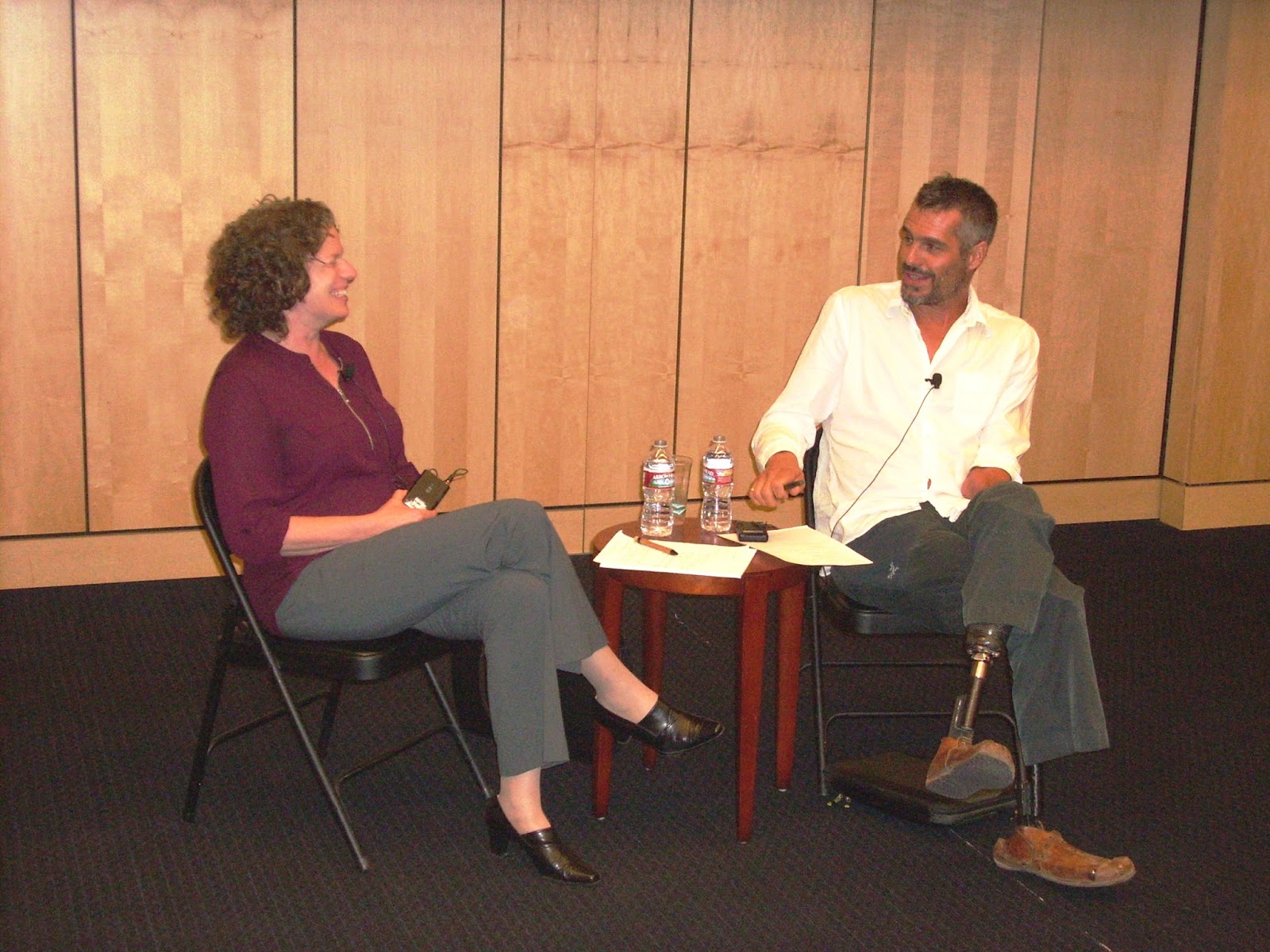
The shift from the medical model of aging and disability continues to end-of-life: life and death are natural v. medical events.  UCSF Osher Center for Integrative Medicine hosted a screening of the PBS Frontline documentary, Being Mortal, followed by a discussion on end-of-life planning with Shelly Adler, PhD, Osher Director of Education, and BJ Miller, MD, palliative care physician and Director of Zen Hospice Project.  They discussed when cure is not possible at the end of life, we can reduce suffering for a “better death.”  BJ said a doctor can tell the truth in a supportive way that does not rob hope, but informs. In BJ’s TED talk, What Really Matters At the End of Life in March, he talked about patient meaning one who suffers, so we are all patients, and how most people fear, not death but, suffering; yet suffering unites us when we share this experience.

Sunday, December 30, 2012

Successful aging

At last month’s GSA meeting, I attended several sessions on successful aging and disability.  I was particularly interested in exploring the intersection of aging and disability because I was preparing for a class debate on assisted suicide at the time. 

What is successful aging?

In the influential MacArthur Foundation Study of Aging in America, begun in 1987 with findings published in their Successful Aging book in 1998, Rowe and Kahn defined successful aging as the ability to maintain three key behaviors or characteristics:  1) low risk of disease and disease-related disability, 2) high mental and physical function, and 3) active engagement with life.  While Rowe and Kahn noted the achievements of persons with disease-related disabilities (Stephen Hawking, Mother Teresa, Franklin Roosevelt), they maintained that freedom from disease and disability is a positive thing.  Compression of morbidity is a goal of disease prevention initiatives. 

Yet, the minority view of disability challenges any implication that disability is a negative outcome.  In addition, this successful aging definition has been criticized for assuming individual autonomy/control and lifestyle choices, without considering subjective/cultural perceptions and broader socio-economic conditions facing older adults that may limit their options in life.  In Outliers: The Story of Success, Malcolm Gladwell emphasizes opportunity and legacy—no one ever makes it alone.

Clearly, there is a need to revise this definition of successful aging to be more inclusive and to encompass factors such as resilience and adaptation to aging processes (Baltes’ selective optimization with compensation, Kahana’s preventive and corrective proactivity).  To join the lively conversation, the presenters in Public Health Implications of Healthy and Successful Aging (BSS) symposium posted their presentations online at http://healthyandsuccessfulaging.wordpress.com/. 

Next year’s GSA annual meeting theme is Optimal Aging Through Research (http://www.geron.org/images/pressreleases/2012/rubenstein.pdf)

What’s new about disability?

New Investigations of Aging with Disability (BSS) symposium featured data from National Institute on Disability and Rehabilitation Research (http://www2.ed.gov/about/offices/list/osers/nidrr/index.html).  While persons with disabilities are living longer due to advances in medicine, rehabilitation, public health and technology, they are experiencing an earlier onset of age-related conditions (osteoporosis, diabetes, obesity).  About 12 million Americans with disabilities acquired in early or mid-life are over age 50, thus aging with disability. 

Ivan Molton (
http://agerrtc.washington.edu/) noted that secondary health conditions are frequently described as more significantly disabling than the original condition itself; for example, a person diagnosed with multiple sclerosis often copes with secondary conditions like chronic neuropathic pain, spasticity, gait/balance problems with greater fall risk, cognitive impairment, higher risk of infection, hypertension, accelerated arthritis, etc.  Middle-age is “lousy” for individuals aging with long-standing disability conditions because this is when highest demands meet new limitations; fatigue and pain are the most frequently reported and impairing; and falls are prevalent and injurious.  These secondary health conditions can be addressed with multidisciplinary pain treatments; interventions for fatigue and cognitive impairment; and falls prevention.
Tamara Heller (http://www.ihrp.uic.edu/researcher/tamar-heller-phd) created these word clouds for Aging and Disability, highlighting the prominence of health, exercise and program as common themes in health promotion interventions.  Disability can learn from aging’s greater focus on interventions for specific diseases/conditions and use of peer leaders delivering health promotion interventions.  Aging can learn from disability’s programming for people with cognitive impairments, adherence to principles of self-determination and adaptation of equipment for people who have physical disabilities.

Assisted suicide: autonomy or aging & disability risk?

For my Aging in Multidimensional Context class, I was assigned to a debate team opposing the legalization of assisted suicide.  Our major arguments were based on traditional morality that prohibits killing innocent human lives, the sanctity of a physician’s Hippocratic oath, the slippery slope effect that foresees the gradual devaluation of human life with risk to vulnerable groups, and alternatives available (hospice/palliative care for comfort and pain management, psycho-social counseling for depression/fear of losing control/adapting to impairments, etc.) to address an individual’s reasons for even considering assisted suicide.

Here’s what I had to say about assisted suicide’s risks to vulnerable groups like the elderly and persons with disabilities:
On a micro level, assisted suicide impacts the patient-physician relationship and vulnerable patients who can be manipulated into assisted suicide that’s not really their own choice.  A 1998 study by Georgetown University's Center for Clinical Bioethics found a strong link between cost-cutting pressures on physicians and their willingness to prescribe lethal drugs to patients – were it legal to do so.  The American Medical Association has opposed assisted suicide as being inconsistent with the physician’s role as healer, such as killing pain (Hippocratic “do no harm” oath), versus role as partner in assisted suicide to intentionally kill patients; how can a physician act in a patient’s best interest once a physician is given license to kill?  Does it make sense to hasten death when medical breakthroughs for treatment or cures are possible, while death is irreversible?

Proponents argue assisted suicide is about autonomy, that doctors should respect a competent and informed patient’s wishes and choices.  They attempt to draft laws to provide safeguards so assisted suicide is available to persons who are competent and informed.  Yet, one’s ability to make rational decisions is compromised by experiences of pain, isolation, depression, fears of disability/dependency and losing control, worry about being an undue financial and caregiving burden, prognoses about terminal illness and estimates of remaining life expectancy that can be unreliable.  When emotions are raw and continually evolving, one’s judgment is understandably impaired.  If a rational person is determined to commit suicide, it’s possible without legalizing assisted suicide to involve a physician. 
On a mezzo level, assisted suicide impacts the following groups:  patient’s family and friends who are concerned about a patient’s time left to live; elderly and persons with disabilities who see themselves as targets in assisted suicide laws that apply to terminally ill and/or those suffering incurable diseases and painful conditions; and the poor who become easy targets when assisted suicide is used as a form of medical cost containment in decisions on whether to prolong or shorten their lives. 
On a macro level, assisted suicide impacts religious groups (except Unitarians) that respect the sanctity of life for all persons (appreciating their remaining capacities versus the biomedical view that illness/disability diminish quality of life and the capitalist view that productivity determines the value of life); health care financing that would promote assisted suicide as a cost-cutting measure; and the public that may become accustomed to the idea of assisted suicide when the state sets a dangerous precedent by legalizing assisted suicide and eventually becomes desensitized to the very nature of assisted suicide.

As we have seen in European countries, legalizing assisted suicide sets the stage for the beginning of a slippery slope that expands to active euthanasia, as well as extending assisted suicide beyond the terminally ill to devaluing the lives of the elderly, infirm, disabled and other vulnerable groups who would be denied access to life under assisted suicide.  Since 1942, Switzerland has allowed assisted suicide if the motive is not selfish, and has even applied assisted suicide to the mentally ill. In 2001, the Netherlands legalized both assisted suicide and active euthanasia in cases of “hopeless and unbearable” suffering from serious medical conditions and considerable pain. In 2002, Belgium followed the Netherlands.  In 2009, Luxembourg legalized assisted suicide and active euthanasia for the terminally ill and those with “incurable diseases or conditions.” Since 2010, a citizens group in the Netherlands has campaigned for “Out of Free Will” initiative to extend assisted suicide for people over 70 years of age who feel “tired of life” (http://www.rnw.nl/english/article/right-die-elderly-back-centre-dutch-debate).

Those who support assisted suicide are primarily white people who are accustomed to power and privilege in their lives, and they want autonomy/control over how to die.  During Oregon’s Death With Dignity Act’s first 14 years (1998-2011), there were 596 patients who died after taking lethal meds: median age was 71 years, 98% were white, 81% had terminal cancer, 90% enrolled in hospice care, and all but 10 had health insurance.  Major end-of-life concerns were:  91% losing autonomy, 88% being less able to engage in activities making life enjoyable, and 83% loss of dignity.  About 23% reported concerns about pain (http://public.health.oregon.gov/ProviderPartnerResources/EvaluationResearch/DeathwithDignityAct/Pages/index.aspx).  These psycho-social reasons for seeking assisted suicide suggest that perhaps we need to create more compassionate and supportive environments to dignify terminally ill persons? 

States, which represent society’s rights for the common good, should not legalize assisted suicide to benefit the rights of individuals in this elite group.  Doing so is dangerous because we live in a society of growing socio-economic inequality and prejudice in which the delivery of health care in a profit-driven system already creates disparities in treatment and pain control.  If vulnerable groups aren’t even getting health care they need while living, it’s doubtful they’d get more sensitive treatment when they’re dying.  It is unconscionable to talk about legalizing assisted suicide when low-income persons do not have access to comprehensive medical care including pain management and hospice care.  Putting the lives of so many vulnerable people at risk for the possible benefit of an elite group is unacceptable.

Individual patient autonomy/choice is an illusion.  In reality, assisted suicide is open to abuse by doctors and health insurance companies under financial pressure to contain costs of caring for the terminally ill.  In 2008, reports surfaced that the state-run Oregon Health Plan doesn't cover life-prolonging treatment like chemotherapy unless there is a better than 5% chance it will help the patients live for five more years; but it covers life-terminating assisted suicide, defining it as a means of “therapeutic treatment” or providing comfort, no different from hospice care or pain medication.  In its denials, Oregon Health Department informs patients about the availability of physician-assisted suicide; cancer drugs cost $3K-$6K per month versus lethal meds cost $35-$50 for one-time use (assuming no complications like vomiting)(http://abcnews.go.com/Health/story?id=5517492).  Under these pressured circumstances, can a patient truly exercise autonomy when given a “choice” between an offer of fully-paid assisted suicide and alternative of no affordable medical treatment?
Further, this loss of autonomy justification for assisted suicide is disturbing, especially to persons with disabilities.  The late SFSU Professor Paul Longmore wrote about his outrage over a state’s refusal to fund independent living for persons with disabilities, yet its willingness to support their assisted suicide (http://www.raggededgemagazine.com/archive/p13story.htm).  Where are our priorities when a state supports so-called Death with Dignity, but not Life with Dignity and compassion for all persons? 

Longmore provided this testimony against assisted suicide before the California Assembly, suggesting that tolerance of death for persons who live years with disabilities stem from fear and societal prejudice, and the need to reframe what autonomy and dignity means to replace any shame of needing help (http://www.independentliving.org/docs5/longmore1592.html): 


Fear of disability typically underlies assisted suicide. All but one Oregonian who died under that state's law feared, not pain, but losing autonomy or control of bodily functions. The advocates play upon that horror of ‘dependency.’ Said one, ‘Pain is not the main reason we want to die. It's the indignity. It's the inability to get out of bed or get onto the toilet....’ [People]...say, 'I can't stand my mother - my husband - wiping my butt.' That's why everybody in the movement talks about dignity.  If needing help is undignified and death is better than dependency, there is no reason to deny assisted suicide to people who will have to put up with it for 6 or 16 years, rather than just 6 months. Not that we favor assisted suicide if it is limited to terminally ill people. We simply want to ask, has this country gotten to the point that we will abet suicides because people can't wipe their own behinds?”  

Many people fear the three 3 D’s—Disease, Disability, Death—which has an upside of causing us to develop humility over these common experiences, forcing us to face the Big Questions about the meaning and value of life.  If this makes us live with more purpose and intention, then maybe this unlocks the key to successful aging.