Showing posts with label Hope Levy. Show all posts

Tuesday, April 30, 2019

Being older

Gerontologist Hope Levy presented Age as an Asset in Your Job Search workshop, at SF Main Library.  Lots of techies, who face job discrimination at younger ages, in attendance.  Workers age 40+ are protected under Age Discrimination in Employment Act (ADEA), and Congress is considering additional protection under proposed Protecting Older Workers Against Discrimination Act (POWADA).  
Hope’s presentation balanced the seriousness of challenging age discrimination in employment with moments of comic relief in cartoons by Randy Glasbergen.  My favorites:
·       Reality Check – hiring manager to job applicant: “We’re looking for someone with the wisdom of a 50-year-old, the experience of a 40-year-old, the drive of a 30-year-old, and the payscale of a 20-year-old.”
·       Advantages of Hiring Older Workers: “Don’t think of me as a 54-year-old job applicant.  Think of it as getting two 27-year-olds for the price of one!”
Take-aways:
·       Value your age and experience, which you’ve earned so emphasize your talents and abilities
·       Upgrade your skills strategically and identify resources that can help you do that
·       Target employers who will value your skills and experience
Employers who serve older adults generally value older workers.  Hope shared her experience when she was a 40-something being interviewed as to whether she might be able to relate to older adults age 55+ served at City College of San Francisco’s Older Adults Program.  Yes, she was qualified and hired! 
Sarah Cooper, former tech employee and author of How to be Successful Without Hurting Men’s Feelings: Non-threatening Leadership Strategies for Women (2018), advised that older job applicants avoid falling into the “trap of being proud of their age” like sharing information that might date them, if they want to avoid ageism. 
In conjunction with Chinese Historical Society of America (CHSA) exhibit, Towards Equality: California’s Chinese American Women, CHSA’s Acting Executive Director Jane Chin moderated Pioneering Leaders: Discussion Panel with Chinese American Women featuring Jaclyn Locke (biotech researcher since earning her bioengineering Ph.D. two years ago), Felicia Lowe (award-winning documentary filmmaker; former TV producer/director/writer/first female Asian news reporter at KGO-TV, and Miss Congeniality in 1965 Miss Chinatown USA Pageant), Lauren Marshman (2nd generation high school counselor for past 15 years) and Helen Zia (award-winning book author, investigative reporter and community organizer--“which is now a path to the White House”; former Executive Editor of Ms. Magazine, autoworker, construction worker earning hourly $10 versus $1.30 minimum wage at the time, Tufts medical school dropout, graduate of Princeton’s first co-educational class).  

In Amy Tan’s The Joy Luck Club tradition, Felicia and Helen were inspired to document the lives of their Chinese mothers whose immigration stories were secret until later life.  For the past 40 years, Felicia has shared the story of her family’s immigration to the United States in documentaries—China, Land of My Father (1979), Carved in Silence (1988), and then Chinese Couplets (2015) about her mother’s experience as a “paper daughter” during the Chinese Exclusion Act era.  Helen’s latest book, Last Boat Out of Shanghai: The Epic Story of the Chinese Who Fled Mao’s Revolution (2019), includes the story about her mother who was abandoned by her poor parents because she was a girl at age 6—unknown to Helen until she was in her 50s and her mother was in her 70s living in a retirement community.  They also talked about their choice of media – Felicia’s films and Helen’s books – from a desire for “shelf life.” 
Anna Wong of the SF Guzheng Musical Society played the guzheng, a traditional Chinese plucked string instrument.  Anna immigrated from Hong Kong in 1962 when she was 11 years old, thanks to Kennedy’s Emergency Immigration Act of 1962 that allowed 5,000 Chinese refugees to enter the United States. She lived and worked in sweatshops in San Francisco’s Chinatown through her early teens, and then put herself through school and became a clinical psychologist.
At 12th annual Art of Aging Gracefully at JCCSF, licensed acupuncturist Esther Gokhale and her daughter Monisha White presented No More Aches and Pains: For You, Your Family, and Your Community.  It’s not too late to reclaim our primal posture, challenging assumptions about aging means falling, rounding, shrinking, etc.
Based on her studies of populations with very little muscle and joint pain, our ancestors and how we moved as toddlers, Esther discovered how we are meant to stand, sit, bend and move using our natural J-shaped spines. 
Wendy Zachary, MD, introduced Acute Care for the Elderly (ACE) Unit at California Pacific Medical Center’s Mission Bernal Campus. 
Open since last August, ACE is a specialized unit for older adults age 70+ focused on preventing functional decline and improving patient experience.  ACE units have resulted in shorter length of stay, reduced 30-day readmissions, reduced costs, increased patient satisfaction, and increased retention of functional capacity. ACE team consists of geriatric trained healthcare professionals: medical doctor, NICHE-trained nurses and certified nursing assistants, social worker, case manager, physical therapist (PT), occupational therapist (OT), speech therapist, activities therapist, registered dietitian, pharmacist, etc.  This interdisciplinary team reports daily using SPICES (Sleep, Problem eating, Incontinence, Confusion, Evidence of falls, Skin breakdown) tool. 
Sara Cohen, RN, AGCNS-BC, talked about community partners that included On Lok, Inc. 30th Street Senior Center’s Health Promotion!  Volunteers trained in HELP (Hospital Elder Life Program) also contribute to improved outcomes by providing core interventions: daily visitors, frequent orientation, cognitively therapeutic exercises, personal feeding, early and frequent mobilization, non-pharmacologic sleep protocol, review of medications, and assessment of cognitive status.
One of 34 private rooms in ACE unit.  Sleep promotion policy means no wake times 12 am to 6 am, unless absolutely necessary for vitals/meds/labs. (Like Medicare for All, let's have Sleep Promotion for All!) Tour included visits to gym for PT/OT and activity room for shared meals and activities.  During their stay, patients have access to supplies, such as iPad with interpreter services, pocket talkers, hearing aid batteries, tilt-in space wheelchairs, reading glasses, large print newspaper subscriptions, essential oils, etc. 
Tax dollars at work:  Surveyors announced their annual Medicare/Medicaid inspection in this poster at skilled nursing facility.
SF Main Librarian Janet Tom organized How Different Faith Traditions View Death, as part of Death and Dying series.  

Thursday, May 31, 2018

Older Americans Month: Engage at Every Age


The theme of this year’s Older Americans Month, Engage at Every Age, was announced on the Administration for Community Living website

“… you are never too old (or too young) to take part in activities that can enrich your physical, mental and emotional well-being and celebrates the many ways older adults make a difference in our communities.
Participating in activities that promote mental and physical wellness, offering your wisdom and experience to the next generation, seeking the mentorship of someone with more life experience than you—those are just a few examples of what being engaged can mean.”

The Vintage Yearsengagement in fine arts
Older age provides advantages to engage in the fine arts, according to Francine Toder, PhD, author of The Vintage Years: Finding Your Inner Artist (Writer, Musician, Visual Artist) After Sixty (2013).  In her presentation, Stimulating the Brain and Psyche: Benefits of Finding/Practicing a Fine Art Form After Sixty, Francine viewed the vintage years as a reward for decades of hard work, allowing more time and focus for fresh perceptions and new exploration.  Following the multi-tasking overload of our midlife years, our vintage years are characterized by a slower pace, steadier hormones, calmness/more emotional stability, laser sharp focus, more time flexibility, fewer demands on time, and the sense of “if not now, then when?” (like the Tracy Chapman song!)  
Francine’s book opens with Chapter 1, “The Time of Your Life: Now or Never,” about 89-year-old Matty Kahn, who had no musical knowledge before volunteering for Never2Late project, to begin learning to play the cello in a month’s time.  Matty succeeded after meeting 8 hours a day, one day a week, for one month, with cello teacher Bianca Kovic, who documented this experience in a 15-minute film, Virtuoso: It’s Never Too Late to Learn (2008).  Francine shared her own similar experience of taking up cello playing, though she was 20 years younger than Matty, setting aside self-doubt by reasoning, “If she (Matty) can do it, so can I!”  However, instead of cramming, Francine explained that older adults learn best with spaced learning: short daily practice sessions over a long period of time, to reinforce short-term memory so that it can convert to long-term memory. 
Francine noted that “our mature brain thrives on the very things that are pleasurable and add zest to life: creativity and physical, social and mental activity.”  Specifically, Francine’s research found that after midlife, our brain’s right and left hemispheres become better integrated, more interdependent and more functionally intertwined; patterning that facilitates problem-solving in mature brains are based on generic memories that accumulate with age.  The fine arts also offer an abundance of the "magical triad"—novelty/newness, complexity, and problem-solving—for our mature brains to continue developing, according to brain plasticity research.  In addition to supporting brain health, Francine shared the numerous psychosocial benefits of taking up the fine arts:  greater life satisfaction, increased passion, enhanced sense of well-being, increased ability to focus sharply, and an expanded social community.

Francine also practices the fine art of writing daily; her next book is tentatively entitled, Inward Traveler: 51 Ways to Explore the World More Mindfully.


Wonder:  engagement in musical theater
Older adults from Stagebridge Theater were fully engaged in this production of Wonder, “a theatrical curiosity on the impermanence of self” adapted from Alice’s Adventures in Wonderland by Lewis Carroll.  In this “musical fantasia on dementia,” the audience follows Alice, a retired math teacher who is newly admitted to a Memory Care unit.  
Furious at losing her logical mind, Alice can’t seem to adapt to her new surroundings … after swallowing too many of her meds, Alice is taken on a hallucinatory trip into her imagination revealing many different sides of herself (“I’m not the same person—who am I?”).  Alice is played by an actor dressed like “Tootsie” and the cast starts dancing to “White Rabbit” sung by Grace Slick. 
Audience joined Stagebridge cast on stage, dancing in finale of Wonder.  All four shows of Wonder at Phoenix Theater sold out!  
Wonder was conceived/directed/choreographed by Bruce Bierman, and created with Stagebridge Viewpoints/Composition Class by sharing stories of family and loved ones who have gone through some kind of memory loss.  Bruce is an art prodigy who doesn't have to wait until he's past 60 to quit his day job and practice Art!


Engagement in health and well-being
Tiffany L. Chan, OD, presented Vision Care for Older Adults as part of Healthy Vision Month.  She discussed the most common eye conditions that lead to vision loss (age-related macular degeneration, glaucoma, cataracts, diabetic retinopathy) and low vision rehabilitation (magnifiers, orientation and mobility, home modification, etc.).
Gerontologist Hope Levy of American Bone Health (ABH) presented Freedom from Fractures in conjunction with Osteoporosis Awareness Month.  Some highlights of her talk:
·       Osteoporosis only accounts for about 50% of overall risk for fractures
·       Rapid bone loss occurs in women at menopause and in men at about age 70
·       Warning signs of osteoporosis are loss of height and a fracture
·       About 1 in 2 women, and up to 1 in 4 men, age 50+ will break a bone due to osteoporosis
·       ABH Fracture Risk Calculator https://americanbonehealth.org/calculator/ estimates 10-year risk of breaking a bone, based on personal factors (age, gender, BMI, race), lifestyle factors (smoking tobacco, drinking excess alcohol), medications taken (prednisone or steroid pills, high doses of thyroid medicine), medical conditions (rheumatoid arthritis, diabetes, cancer, serious hormone deficiencies, organ transplant, longstanding malnutrition/malabsorption, chronic liver disease) and fracture history.
·       Fracture risk can be reduced by osteoporosis medicine (if high risk), sufficient nutrients (calcium, vitamin D, protein), movement (weight-bearing, muscle-strengthening), and fall-proof home.
Lizette Martinez and Maria Guillen of Community Living Campaign presented The Informed Patient: Your Rights during a Hospital Stay.  Some highlights:
·       hospital patient rights 
·       proactive patient checklist 

Engagement in social services
Woo-hoo! This month’s 31st annual Meals on Wheels San Francisco (MOWSF) Star Chefs and Vintners Gala raised a record $3.3 million to support home-delivered meals and social work services to homebound older adults!  In addition, MOWSF has raised more than $19 million on a $35 million capital campaign to build a new kitchen to serve the growing population of older adults who wish to age in place.  In the past year, MOWSF delivered almost 2 million meals to more than 3,600 seniors. With almost 75% of MOWSF clients living below the Federal Poverty Line, MOWSF provides a crucial safety net.  
Robin, Lara and Regina of MOWSF Social Work Department connected with Patrick Arbore, founder of Friendship Line at its 45th Anniversary Celebration at Institute on Aging.  Today the Friendship Line is the only 24-hour, toll-free, accredited crisis intervention telephone line (1-800-971-0016) for older adults and adults with disabilities.  Friendship Line volunteers make and receive an average of 12,000 calls every month. 


Engagement in advocacy works!
Residents from Rhoda Goldman Plaza saw resolution to pedestrian safety concerns raised last December during a walk audit with Walk SF and SF Municipal Transportation Agency (MTA) over uneven sidewalk and not having enough time to cross the streets outside their senior living community.  This month, the uneven sidewalk was patched up with asphalt (photo above) and SF MTA pledged to retime traffic signals allowing an additional one second per feet to cross streets. 

Sunday, September 29, 2013

Mindfulness

In this age of 140-character tweets, my biggest academic adjustment over the past year has been to adopt the “SF State of Mind,” which seems to emphasize brevity, or KISS (Keep It Simple Sweetie, as one gentle professor reminded my class): course assignments were typically 2’ x 3’ posters; research papers ranging from 5 to 8 pages (like executive summaries); and oral presentations allowed only 2 to 5 minutes on average, and 10 minutes maximum.  

For an introvert like myself, who prefers gray matter – complexity versus black/white simplicity, deep discussions versus chit-chat or sound bites, I had to constantly remind myself to be less intense and think like a blogger instead. . . Now in my second (and, I hope, final) year in graduate school, I felt rewarded upon learning that my culminating experience assignment would be 30 pages! 

Outside SFSU, I use this blogspot for freely wandering and wondering -- without paying attention to length and time restrictions :-)

Senior & Disability Action: Putting the "D" in SDA! Mind your manners

SDA staff use popular education in this skit to cover what to do and what not to do in interactions with persons with disabilities.
Moderator Donna held up a STOP sign to de-brief after each scenario of Jessica (in wheelchair) and Tony (standing as her companion) when they encounter Sarah and James at a meeting.
  • Don’t treat a person in a wheelchair as though she's not able to speak for herself 
  • DO speak directly to the person in a wheelchair, on the same eye level if possible
  • Don’t assume low expectations of a person in a wheelchair by making over-the-top comments like “wow, it’s so inspiring how you actually got up and left the house to come here,” as if doing everyday activities is exceptional
  • DO remember the person is not a disability
  • Don’t be patronizing or pity a person in a wheelchair by offering to “pray so you can be a whole person”
  • DO treat all persons with respect and dignity

Aging While Black Forum
Deloris McGee and Marie Jobling of Community Living Campaign organized their second annual Aging While Black Forum at I.T. Bookman Community Center.  OMI Community Connector Deloris initiated last year’s Forum in response to her community’s request for a culturally sensitive program in the OMI community because blacks are “sicker, poorer, and have more issues to deal with when born into a pre-existing condition of racism and discrimination.” 
Highlight was hearing from Dorsey Nunn, Executive Director of Legal Services for Prisoners with Children (LSPC), who didn’t find humor in a previous speaker’s “joke" about sending seniors to prisons where they can get their basic needs met including video monitoring and guards.  Some audience members actually laughed at this "joke," which made me uncomfortable to think that the invisibility of persons in institutions like prisons and nursing homes might lead to insensitivity and ignorance about true conditions.

Formerly incarcerated as a 19-year-old, now 61-year-old Nunn said that depicting prison as a luxury vacation is like characterizing slavery as good for jobs – the reality is no freedom in prison and slavery.  He invited us to celebrate LSPC’s 35th anniversary next month with Michelle Alexander, author of The New Jim Crow: Mass Incarceration in the Age of Colorblindness, which presents evidence that more Blacks are enslaved behind bars today than were enslaved on plantations in 1850, a decade before the Civil War began and the Emancipation Proclamation was signed.

Nunn also talked about the realities of aging in prison, like a 70-year-old struggling to climb to the top of a bunk bed, defecating on himself, not being able to defend against younger prisoners who play loud hip-hop, falling inside a cell with no one to check on him, etc.  Read LSPC’s report, Dignity Denied: The Price of Imprisoning Older Women in California, by Heidi Strupp and Donna Willmott (note: same Donna as the SDA moderator above).  Consistent with the program’s theme of community building, Nunn also brought attention to the recent prisoners' hunger strike to protest solitaryconfinement.  


On Lok Lifeways Sustainable Long-Term Care: Matter Over Mind?  

Mind matters! Raised in the holistic (mind-body connection) practice of Traditional Chinese Medicine (TCM), I find the Cartesian mind-body split puzzling.  I also find puzzling the notion of emotions being either “positive” (encouraged) or “negative” (discouraged).  According to the Nei Jing (Chinese medical text), the seven emotions—joy, anger, sadness, grief, pensiveness, fear and fright—all appear in healthy individuals, and cannot be separated from the physical.  In TCM, moderation and balance are key, so emotions are acknowledged and expressed appropriately; but when an emotion is either excessive or suppressed, then this disharmony results in compromised health. 
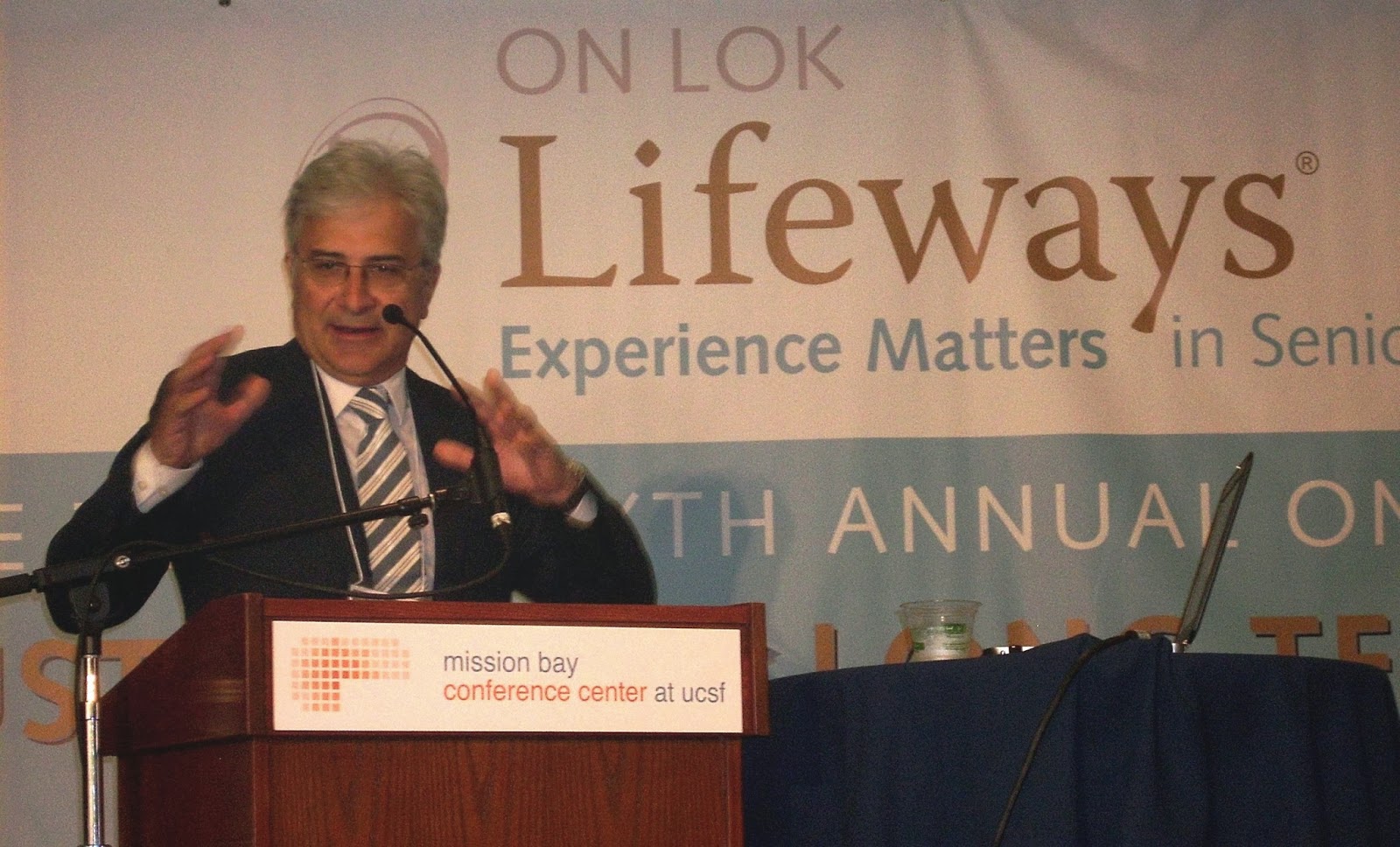
On Lok Lifeways CEO Bob Edmondson welcomes 300+ conference attendees

When I received this year's invitation to the 6th annual On Lok Sustainable Long-Term Care Conference focused on “the latest developments and innovations in meeting the mental health needs of older adults,” I was intrigued by the “Matter Over Mind?” theme, but somewhat disappointed that this emphasis on the “latest” meant there was no presenter representing the “traditional” Chinese medicine perspective.  (Nonetheless, I registered for the conference—just as I did last year because I couldn’t resist the student discount rate!) 

After all, the holistic Chinese perspective influenced On Lok to pioneer the model of coordinated care for older adults with chronic care needs in community settings, rather than institutions, in San Francisco’s Chinatown over 40 years ago.  Based on traditional Chinese “it takes a village” and preventive health services model, On Lok (which means “peaceful, happy abode” in Cantonese) provides high-quality, culturally appropriate one-stop shopping:  medical and social supportive services, like nursing and physical, occupational and recreational therapies; meals; nutritional counseling; social work; home health and personal care; prescription drugs; respite care, etc.  On Lok’s model was so cost-effective while reducing nursing home admissions for participants that it was replicated under a new name, Program of All-Inclusive Care for the Elderly (PACE), in 1987 and then made a permanently recognized provider type under the Medicare and Medicaid programs in 1997.  (In 2006, On Lok renamed its PACE program to On Lok Lifeways.)  
AgeSong CEO/Founder Nader Shabahangi's conference moderator role was rather limited to introducing presenters and fielding questions from the audience.  I thought he would be an interesting presenter himself – especially as I was interested in learning more about AgeSong’s new partnership with University Mound Ladies Home.
Pop psychiatrist Daniel Amen on Preventing Alzheimer's Disease - Former X-ray technician Dr. Amen said the important question is: how do you know what’s going on in the brain unless you look?  He uses single-photon emission computed tomography (SPECT), a form of nuclear imaging test that measures blood flow to the brain.  His belief is that the brain does not deteriorate, but behavior can accelerate or deteriorate the brain, so we have a choice how fast the brain ages and can reverse brain damage.  But often we do not care because we can’t see.  Dr. Amen said we need to start by knowing the health of our brain, as revealed by SPECT scan, and losing belly fat because “the obesity epidemic is the biggest brain drain.”  The rest of his presentation was common-sense advice to reduce risk factors (avoid anything that hurts brain, engage in regular brain-healthy habits).  Yet, Dr. Amen remains controversial due to his use of SPECT to diagnose individuals, and the lack of peer-reviewed studies of his work. 

The next two speakers provided an interesting counterpoint with their emphasis on peer-reviewed research.  Psychotherapies are about as effective as medications in reducing symptoms of clinical depression or anxiety disorders, but without meds’ side effects. 
UCSF clinical psychologist Patricia Arean, on Behavioral Interventions for Late Life Depression, Anxiety and Chronic Illness Management, talked about the evidence-based research to support psychotherapy for older adults: cognitive behavioral therapy, interpersonal therapy, and problem-solving.
On Lok Lifeways Chief Medical Officer Jay Luxenberg on Drugs and Other Therapies for Mental Illness in the Frail Elderly: What is the Evidence?
Next up was a more touchy-feely presenter, Khatera Aslami, who is President of the Board of Directors at Copeland Center for Wellness and Recovery, on Wellness and Recovery Action Plan (WRAP) and Eldercare.  WRAP is a strengths-based approach founded on the principles of hope, personal responsibility, education, self-advocacy and support.  WRAP includes wellness tools, daily maintenance, action plans for triggers/early warning signs/when things are breaking down, crisis planning and post-crisis planning.  Aslami didn’t really address eldercare, other than to briefly mention that Alzheimer’s might prevent new learning to make good decisions about lifestyle, relationships, health care, leisure, etc., and isolated older adults might find it more challenging to have at least five key supporters to call upon when needed.  But her presentation was a good WRAP review as last year I took an introductory class on this recovery model at City College of San Francisco, where I continue to take coursework in its Community Mental Health Worker program
Engineer Joseph Choi founded TheraBaby, life-sized baby dolls that serve as companions for seniors living with dementia.  His own mother, who had late-stage Alzheimer’s disease, had dramatically improved her quality of life after bonding with the first TheraBaby, which also sparked social interaction among other residents.  In July 2012, Choi launched TheraBaby as a social good project by finding sponsors to adopt TheraBaby into senior care organizations in the Bay Area and Hawaii.  At this time, TheraBaby appears with blue eyes only, though Choi says he would consider different looks as his project grows.
Brain-friendly Mediterranean lunch of salmon on bed of greens: what's good for the heart is good for the brain
Psychiatrist Roberto Mezzina on An Open Door/No Restraint System of Care for Recovery and Citizenship in Trieste, Italy, reported that Trieste was able to dramatically reduce hospitalization/institutionalization with community services to promote aging in place, even when more than 27% of the population is over age 65! 
Stanford research psychologist Philippe Goldin on Science and Practice of Mindfulness Meditation, began a meditation exercise when I excused myself to head over to my late afternoon gerontology research class at SFSU.   

I also missed the last presentation on Harnessing Neuroplasticity of the Older Brain to Enhance Cognition, by UCSF neuroscientist Adam Gazzaley.  However, I’d read about Gazzaley’s study suggesting that older adults can improve cognition by playing video games, which are fast-paced and unpredictable, adaptable in difficulty, and challenging to working memory, attention and processing speed.  Sure, this might be one of the “latest developments and innovations,” but I prefer to engage my brain from traditional social interactions in the real world rather than games in the virtual world.  The former is intrinsically rewarding, while the latter is just a means to an end—much like how I prefer getting my nutrition from traditional whole foods, rather than supplements or fortified foods.

Brain Fitness
Psychologist Charles Vella presented Aging, Dementia and Brain Health in gerontologist Hope Levy's popular Brain Fitness series at the Main Library through City College of San Francisco's Older Adults Program.  Here are Dr. Vella’s Ten Commandments for Brain Fitness:
1.     Thou shall exercise daily.
2.     Thou shall minimize risk factors for cerebrovascular disease (hypertension, hyperlipidemia, diabetes, overweight, smoking)
3.     Thou shall eat Mediterranean diet.
4.     Thou shall choose thy parents wisely.
5.     Thou shall maintain intellectual engagement throughout life.
6.     Thou shall cultivate and sustain friendships and good company.
7.     Thou shall obtain restful sleep.
8.     Thou shall enjoy only one drink of alcohol.
9.     Thou shall manage stress effectively.
10.Thou shall not text or use cell phone while driving.

Mindful Eating 
Neuropsychologist Nancy Hoffman on Food and Mood: How the Food You Eat Affects the Way You Feel, at Life Planning Network meeting, hosted by Lee Abel, at AgeSong's rooftop garden.  Hoffman based her talk on nutritionist Elizabeth Somer’s book, Food and Mood, focusing on food sources of neurotransmitters like mood-enhancing dopamine (meat, milk, eggs, fish, beans, tofu), calming serotonin (tryptophan with complex carbs), pain-killing endorphins (high protein, daily exercise) and acetycholine for memory/new learning/attention (egg yolk, wheat germ, soy, cauliflower, chicken).  It was very similar to Marin County psychotherapist Julia Ross’ The Mood Cure, which I read while studying holistic nutrition.

Moving Meditation 
I get my qi flowing during Da Yan Qi Gong class at Botanical Garden inside Golden Gate Park.