Wednesday, October 31, 2018

Models of care

At the 53rd annual meeting and conference of the Society for Social Work Leadership in Health Care (SSWLHC) in age-friendly Portland, more than half of the over 300 attendees were new members, including yours truly. The four-day conference theme, Transforming Health Care Through Social Work Leadership and Advocacy, covered the entire lifespan with emphasis on mental/behavioral health and later life.

Older adults who are hospitalized often risk functional decline and more disabilities due to hospital routines such as bedrest (wastes muscles, causes blood and other fluids to redistribute in ways that can cause dizziness and balance problems, leads to pressure sores), sleep disruption (contributes to delirium), sleeping pills (potential for polypharmacy and falls), bladder catheter (risks infection and incontinence), etc.  As part of the Affordable Care Act, Medicare’s Independence at Home Medical Practice Demonstration Program is testing an innovative home-based primary care model targeting Medicare beneficiaries with multiple chronic conditions and a substantial burden of functional limitations.  In addition, Medicare’s Hospital Readmissions Reduction Program (HRRP) attempts to link payments to quality of hospital care by penalizing acute-care hospitals with relatively high 30-day readmission rates for targeted conditions.
  
However, social factors—such as poverty, living alone and older age—may have a greater role in hospital readmissions than hospital quality of care. Therefore, medical social workers/patient advocates can address social determinants of health (SDOH) in care coordination/discharge planning with linkages to community resources (social, financial, nutritional, logistical support).  This social model considers the person-in-environment context to promote holistic health (“complete physical, mental and social well-being, and not merely the absence of disease or infirmity” per World Health Organization) and health equity, while the dominant medical model emphasizes diagnosis and treatment of disease.

For example, I work with one resident who was admitted over a year ago to a skilled nursing facility (SNF) following a cerebral infarction (stroke).  Under the medical model, resident was diagnosed with dysthymia (persistent depressive disorder) and treated with psychotropics and electroconvulsive therapy (ECT).  In addition to adjusting to functional losses on the right side of her body and life in a SNF, the resident has been grieving over separation from her BFF (Best Friends Forever) dog. The social model includes periodic dog visits by volunteers from SPCA Animal Assisted Therapy (AAT) program in resident’s care plan. However, resident longs for more routine interaction with a dog rather than pining for monthly dog visits, so I have been exploring ways to make this happen (though I am allergic to most furry animals).  After all, human-animal bonding interactions produce oxytocin, endorphins and serotonin—all hormones that reduce stress and elevate moods, and may even improve motivation to participate in treatment protocols like physical therapy.  Mental health counselors incorporate AAT into traditional therapies to promote comfort and sense of safety, as well as normalize life and add to quality of life.  In long-term care environments, Dr. Bill Thomas made the presence of house pets one feature of his Eden Alternative movement to de-institutionalize sterile nursing home culture.

“There’s no psychiatrist in the world like a puppy licking your face.” – Sir Bernard Williams (1929-2003)   

The SSWHLC conference did not specifically address AAT, but offered other practice ideas for the role of geriatric social workers within an interdisciplinary health care team in addressing SDOH (home and community resources), integrating behavioral health, discussing end-of-life (including medical aid-in-dying), understanding “medical” conditions (pain, post-intensive care syndrome) relating to behavioral changes for care coordination/discharge planning, etc.  With mid-term elections just a month away, there was no mention of politics at this conference as the focus was primarily clinical social work (“micro”) than advocating for systemic/policy changes (“macro”).  Conference presenters were mostly social workers or health practitioners, instead of academic researchers, so gained practical information for everyday practice.
As a newbie, I attended Orientation to learn the history of SSWLHC, which began in 1965 (Medicare and Medicaid passage!) for Hospital Social Work Directors and expanded in 1997 to its current name to include all levels of social workers who are leaders.  In 1986, Medicare Conditions of Participation required that hospitals provide social work services and ongoing discharge planning program.  Members took the stage to share testimonials about membership benefits like networking and continuing education.
Hands on Greater Portland set-up station for DIY! Love Letters for Meals On Wheels and Lift Urban Portland that deliver food to homebound seniors and low-income residents – offering conference participants a nice break from power point presentations to create personalized greeting cards to cheer up food recipients!
Immediately after Orientation, enjoyed Reception which featured build-your-own ramen bowl.
Kermit B. Nash Lecture, Keeping Client at the Center: How Social Determinants of Health Have Driven One Organization’s Growth & Innovation, presented by Associate Medical Director Eowyn Rieke and Chief Housing and Strategy Officer Sean Hubert of Portland-based Central City Concern (CCC).  Since 1979, CCC has provided comprehensive solutions to ending homelessness by integrating affordable housing (now 1,800 units), health care (including primary care, substance use disorder treatment and behavioral health services), and employment. 
Not surprising, housing is the greatest of social needs:
·       National research shows a connection between rent increases and homelessness: $100 increase in rent is associated with a 6% to 32% increase in homelessness 
·       America’s affordable housing crisis is driving its homelessness crisis         
This Recuperative Care Program (RCP) is an intervention addressing SDOH with the basics after hospital discharge:  low-barrier short-term housing and intensive case management for homeless people with a severe medical condition that could benefit from stabilization.  In 2016, CCC launched its Housing is Health project: six health organizations providing funding for a new clinic and 379 new units of housing, which are scheduled to be completed by July 2019.
Oregon’s Death with Dignity Law: Twenty-One Years and Lessons Learned keynote presented by Susan Hedlund, Manager of Patient and Family Support Services at Oregon Health & Sciences University (OHSU), which developed POLST.  Oregon made history by passing its controversial law (which didn’t take effect until 1997 when repeal referendum defeated) allowing terminally ill Oregonians to obtain medication to end their lives.  To date, six other states (Washington and Montana 2009, Vermont 2015, Colorado 2016, California 2016 but pending appeal, Hawaii 2018) and the District of Columbia (2015) allow medical aid-in-dying (MAID).

Lawmakers and health care professionals often look to Oregon to guide the process of MAID implementation.  Yet the Pacific Northwest is unique, with its pioneer spirit, rugged individualism, very white population, least “Churched” state in the nation, and end-of-life practices (88.6% die at home, 88.7% enrolled in hospice, 99.2% had some form of health insurance; first state to combine Advance Directive and Healthcare Power of Attorney in 1980; Right to Hospice and Comfort Care in 1989; Right to Pain Relief in 1993; and Right to Refuse/Withdraw Treatment in 1993). 
17% of Oregonians potentially interested in Death With Dignity Act (DWDA), only 1-2% actually request it—mostly for reasons related to maintain independence, self-care and quality of life.  Significantly depressed patients seem to lack wherewithal to follow through process.  Some practice take-aways:
·       If patient inquires about, or indicates desire to pursue, Oregon’s DWDA, then this offers the opportunity to explore more deeply: reasons for request, meaning behind it, other issues that need to be addressed (symptom management), existential concerns, etc.
·       Desire to die in terminally ill people may be expressions of depression, suicidal intent, or coping
·       Person’s desire to die talk as coping: used to promote feelings of control, invite discussion of existential concerns, elicit help, express “readiness”
·       Professional must be aware of own reactions to desire to die statements because these will influence conversations: if unable to support MAID, important to refer (last year, family of deceased cancer patient Judy Dale filed lawsuit against UCSF for its alleged "backtracking" in obtaining medication to help her die under California's End of Life Option Act); find meaning in patient’s words and continue to assess concerns, mental health and intent; “sit with suffering,” bear witness to questions and concerns, and tolerate not being able to fix everything 
Transforming Mental Health Care in Emergency Room, presented by Amal Elanouari and Ashley Hartoch, discussed Stanford Hospital Emergency Department (ED)’s 2015 introduction of a new model of collaborative case management and integrative care by replacing its nurse case manager/social worker team with a mental health complex care manager (MH-CCM), a LCSW with expertise in mental health to provide comprehensive crisis intervention services to those with psychiatric illnesses.  This MH-CCM model addresses the growing challenge of treating patients with mental health conditions who visit hospital ED, and has facilitated improved patient flow to inpatient psychiatric units or community placements, reduced patient lengths of stay in the ED, and greater satisfaction for patients and family member. 
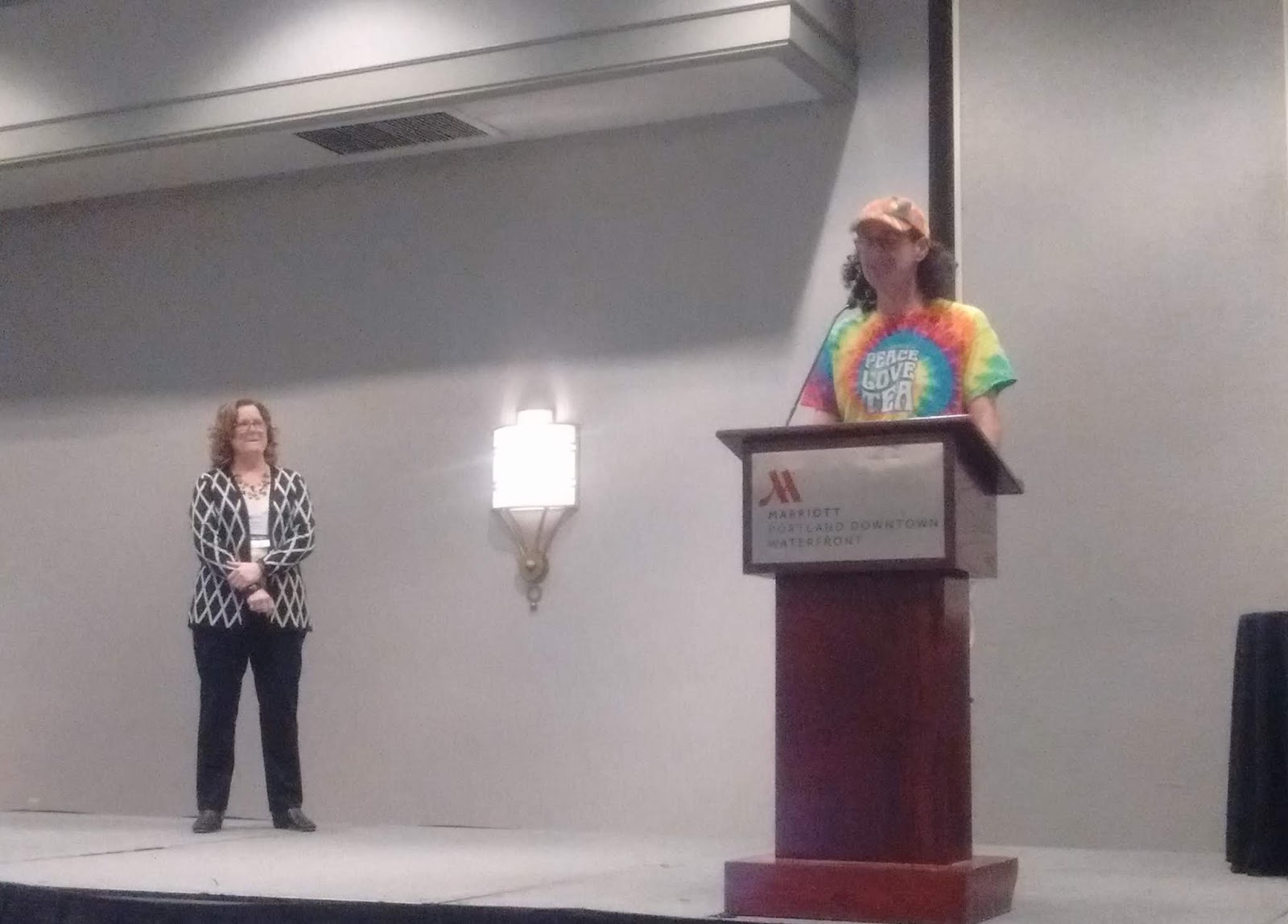
Comic relief: Groovy Guy in tie-dye shirt welcomed us Beautiful People to the Commune of Portland, inviting us to free food and join love-in at Mellow Marriott, so don’t be a Conscientious Objector, buy tickets before they sell out to Funky Foundation fundraiser event with lava lamps, brownie recipes and lifetime membership to Sierra Club.  Go with the flow! 
Networking and roundtable topics lunch: nothing geriatric so joined mental health table. 
Carby lunch of pasta and veggies
AARP table offered age-friendly publications
Community Care Management: Keeping our Patients Safe at Home, presented by June Simmons, President/CEO/Founder of Partners in Care Foundation.  She also appeared on The Journal of America’s Physician Groups (APG) cover story, “Letting Doctors Focus on Medicine,” discussing APG’s partnership with her organization’s network that provides SDOH services.  Thanks to the Creating High-Quality Results and Outcomes Necessary to Improve Chronic (CHRONIC) Care/Advancing Chronic Care, Extenders, and Social Services (ACCESS) Act of 2018, Centers for Medicare and Medicaid Services (CMS) allow Medicare Advantage plans to provide SDOH services, such as home modifications/renovations, transportation, nutrition, care management, and evidence-based health promotion and disease prevention programs.  
June reminded us that health happens at home, so Community Integrated Health Care System 3.0 seeks integration of medical care and home/community-based social services to address SDOH. Community-based organizations (CBOs) are the “eyes and ears” in the home:
·       gathering data and information typically not shared in a medical setting (comprehensive psychosocial and functional assessment, home safety and fall risk evaluation, link medication issues with evidence-based pharmacist intervention, advance directives)
·       service coordination and connection to benefits/discounts
·       attention to caregivers: education/training, support, respite
·       evidence-based health self-management and fall prevention workshops to empower consumers 
Engaging Social Work in Social Determinants of Health Screening Initiative, presented by Meredith Brink of Nationwide Children's Hospital in Columbus.  Because SDOH influence about 80% (40% socioeconomic factors + 30% health behaviors + 10% physical environment) of health outcomes, social work leadership at Nationwide Children’s Hospital rolled out a universal SDOH screen to all ambulatory and inpatients once a year to identify needs, compile and analyze data, and offer resources in one-page handout.  Four questions asked:
1.   Food: Within the past 6 months, you worried that your food would run out before you had money to buy more?  If urgent, do you need help getting food now? Do you need emergency food today?
2.   Housing: Do you think you are at risk of becoming homeless?  If urgent, are you currently homeless?
3.   Transportation: In the past 12 months, has lack of transportation kept you from medical appointments or from getting medications?  If urgent, do you need help with transportation today? Do you have a plan to get home today?
4.   Utilities: In the past year, has the utility company shut off your service for not paying your bills?  If urgent, are your utilities shut off now?
Post-Intensive Care Syndrome (PICS): What Social Workers Need to Know plenary presented by Kimberly Joseph, MD, from Society for Critical Care Medicine (SCCM).  
Roughly 30-50% of Intensive Care Unit (ICU) survivors may not be able to return to work after a year due to cognitive (problems with memory and attention, nightmares), physical (weakness, low energy, pain, trouble walking, breathing problems) and psychological (depression, anxiety, PTSD) impairments from PICS. Patients with PICS may go to rehabilitation facilities or home with significant home care needs after discharge.  Social workers can promote resilience, coping and recovery strategies that capitalize on existing strengths, and coordinate continuity of care. (Aging and PICS covered at AAGP conference.) In particular, social workers in ICU can advocate for patient and family, help healthcare providers recognize discharge issues, encourage communication between ICU team and those who will care for patient after ICU (primary care physician, nurse practitioner, rehab team, etc.). 
Putting the “Medical” in Medical Social Work, presented by Rachel Union from Dell Children's Medical Center in Austin.  Many behavioral changes may have medical etiologies that are often overlooked by medical providers and mistakenly diagnosed as psychiatric disorders. (See Missing the Diagnosis: The Hidden Medical Causes of Mental Disorders, by William Matteson.)  Psychosocial stressors can result from medical illness, so ask about the patient’s medical history.  In conducting holistic “bio-psycho-social-spiritual” assessments of patients, medical social workers can consult with medical professionals to rule out possible medical conditions that may otherwise be missed (“Is it possible …?”)  Rachel provided presented several case studies to illustrate examples of how multiple medical illnesses can manifest through psychological symptoms, such as anxiety, speech irregularity and hallucinations.  For example, an older adult with a bladder infection, which is hard to detect, might present as delirium.
Piloting a Hospital Social Work Liaison to a Medical Home to Address ER “Super-Users”: A Stanford Health Care-Ravenswood Family Health Center Collaboration, presented by Loretta Sun. She shared her experience as a social worker to reduce over-usage of the ED and avoid unnecessary readmissions of ED “super-users” by care coordination (health, behavioral health, social services), patient and family engagement and empowerment as patients were assigned to Ravenwood for primary care and Stanford for specialty care.  
Implementing a Complex Discharge and Transition Team for the Hardest to Discharge Patients: Using a Centralized Model to Efficiently Manage Resource Intensive Cases to Reduce Length of Stay, presented by Ashley McLoud from University of Washington Medical Center, which piloted a Complex Discharge and Transition Team (CDTT) with the goal of reducing length of stay for the hospital’s most resource intensive patients.  LACE (Length of stay, Acuity of Comorbid Emergency visits) + risk assessment tool to predict pre-admission risk based on factors such as homelessness, polysubstance, ESL, high risk meds, social isolation, no funding, estimated stay > 30 days, undocumented. 
Reducing Mental Health Readmissions-Hospital, Post-Hospital & Collaborative Community Interventions, presented by Janis Seiders, RN Coordinator of READY Program and Karen Sandnes, LCSW Manager of Social Services from Pennsylvania Psychiatric Institute, which provides a continuum of care (ages 65+ are called “mature adult”).  Of the top 10 most common Medicaid 30-day readmissions for patients age 18-64 in 2011, four involved behavioral health:
·       #1 Mood disorders – 41,600 total readmissions at cost of $286 million
·       #2 Schizophrenia & other psychotic disorders – 35,800 total readmissions at $302 million
·       #5 Alcohol-related disorders – 20,500 total readmissions at $141 million
·       #10 Substance-related disorders – 15,200 total readmissions at $103 million

Janis and Karen adapted evidence-based processes (AHRQ Re-Engineered Discharge Tool Kit) used with medical patients to a mental health population in a Discharge READY (Resources Education Aftercare Direction Your recovery) Manual:  patient input, follow-up services within 7 days of discharge, medication and illness education, medication reconciliation, supportive calls after discharge (information absorbed, services started, barriers reduced/eliminated), warm line to call, resources to support recovery (e.g., pill boxes, fridge magnets to hold reminders, recovery tools developed in hospital using natural and formal supports).  They provided a handout of 5 things to consider to reduce the likelihood of readmission:
1.   Assess for suicidality or homicidality, use Columbia or PHQ-9 for depression screening.
2.   Assess if issue is relationship that could be resolved.
3.   Assess if there are issues that if solved, would reduce feelings of hopelessness.  Identify needs and work to resolve top 1 or 2.
4.   Assess for substance abuse issues.
5.   Educate on Meds, Diagnosis, and Recovery.
Development of an Innovative Palliative Care Program, presented by Keisha Berglund of Mount Sinai Palliative Care Institute in New York.  She shared her experience of starting an early palliative care intervention to support patients at diagnosis, with social work’s role in promoting ongoing communication and information sharing between family and medical team during the illness trajectory.  This service can improve patient quality of life, reduce length of stay in the hospital and avoid re-hospitalization after discharge. Three step process:
1.   Explore (1st visit) – prior to meeting patient, review with primary team for medical background, understand medical condition, treatment options including benefits/burdens, prognosis with/without therapies, recommended plan and expected timeline for hospitalization; next, patient assessment of advance care planning (ACP) for conversation preferences, understanding, impact of disease on quality of life, priorities, treatment preferences, current goals and limitations (“Given this, what are you hoping for as you look toward the future?”), feedback to interdisciplinary team; refer to additional in-house supports
2.   Align (2nd visit) – interdisciplinary patient and family discussion of medical update, facilitate discussion regarding patient goals, align treatment goals to these long-term goals, complete ACP documents
3.   Confirm (subsequent visits) – follow-up meeting; assess understanding; continue collaboration; transition planning support; grief/bereavement support

Educational resources:
·       Center to Advance Palliative Care (CAPC) 
·       State-by-state advance directives: EverPlans 
·       Mastering Communication with Seriously Ill Patients (2009) by Anthony Back, Robert Arnold, James Tulsy 

Older adults are more likely to have higher levels of pain compared to younger populations, so looked forward to last session on Increasing Social Work’s Role in Chronic Pain Care, presented by Katie Levy of University of Washington Medical Center for Pain Relief.  She facilitates a support group for patients living with chronic pain and explained social work’s roles in pain care: psychosocial assessment (incorporating pain-specific questions), education about chronic pain (retrain the brain), mental health training for co-occurring disorders, crisis management (suicidal ideation), care coordination and resources (psychology, physical therapy, and insurance barriers).

Since 1990s, opioid has become treatment of choice: however, after 90 days, benefits of opioids shrink and can cause opioid-induced hyperalgesia; instead, buprenorphine treats pain as well as opioid use disorder.  She shared assessment tools for pain, both physical and psychological.  Evidence-based treatments are multidisciplinary involving medical doctors, complementary medicine, physical therapy, pain psychology, care coordination, cognitive behavioral therapy (gold standard), dialectical behavioral therapy, acceptance and commitment therapy, hypnosis, mindfulness based stress reduction, and support groups. 

Age-friendly Portland!

Portland was the only U.S. city to collaborate with the World Health Organization (WHO) in its Global Age-Friendly Cities project in 2006, and then a pioneer member of the WHO Global Network of Age-Friendly Cities in 2011. 
As usual, I skipped the conference site hotel in favor of lodging at a hostel ($33 per night, plus complimentary breakfast and live music like traditional American old time jam).  Located 1.5 miles away from conference site, so very walkable even in the rain.  Trimet 1-day pass was $5.
Design Museum Portland is a nomadic museum with no gallery space, dedicated to design exhibits all over town to bring communities together. StreetSeats: Urban Benches for Vibrant Cities was exhibited at the World Trade Center Portland, within walking distance from the conference venue.  Fern bench designer Jingyie Liang of Helsinki said, “To some extent, a bench to a city is just like the fern plants to an area of forest. They are growing lower on the ground, and everywhere.” 
Portland-based Kyle and Alyssa Trulen designed A Quiet Place to Sit and Rest, referring to the an old man’s use of a tree stump after the tree had given fruit and building materials for a house and ship during his lifetime, inspired by Shel Silverstein’s The Giving Tree book.  The couple designed their stump with a protective ring, made of thermally treated pine and ash, to reflect hope for a healthier, reciprocal relationship between people and a tree.
B_tween (“celebrating diversity one bench at a time”)  focuses on inclusivity to enable a wheelchair user to sit in the middle rather than on the side, designed by Gamma Concepts and inspired by Benji Borastero, a Paralympian and accessibility advocate.  B_tween also gets bonus points for its use of sustainable building materials: scavenged, recyclable steel and reclaimed wood.
Folio team designed this colorful LOOPLAY, engaging people of all ages and activities to sit, lie down, crawl or play.

Several museums offered free admission on first Thursday of the month!
Portland Chinatown Museum opened Descendent Threads – the first group exhibition by Asian American female artists in Portland!  My favorites by Roberta May Wong:
All Orientals Look Alike (1984) in funerary setting to mourn the loss of identity imposed by stereotypes but shows collective power of individuals to shatter stereotypes by the middle interwoven image, a composite of the four individual portraits.  
Red, White and Blue (2004) represents occupations by Chinese immigrants: three aprons soiled by cooks hanging below folded aprons cleaned by laundry workers.  All-American (2003) cleaver chopping braided queue on round block represents immigrants who sacrifice part of their cultural identity to become hyphenated Americans.
Chinks III (2004) is wall of books whose foundations built on encyclopedia sets from 1950s purchased by artist’s immigrant father but books were full of “chinks” – missing histories of racial minorities. 
Oregon Jewish Museum and Center for Holocaust Education (OJMCHE) 
Second floor core exhibit, Discrimination and Resistance, An Oregon Primer 
Home … Who are you? How do you express your culture?
Three dozen donuts fit inside this coffin at 15-year-old Voodoo doughnut shop
Old Dirty Bastard with decadent chocolate frosting, oreo cookies and peanut butter
Keep Portland Weird? Make Portland Age-Friendly!
GrayDogz music at Saturday Portland Farmers Market on Portland State University campus.

Sunday, September 30, 2018

Wellness

Due to my work with mostly homebound older adults over the past three years, I have been missing-in-action from many community events.  Last Friday afternoon, I caught up with former colleagues when I returned to campus for Department of Aging & Adult Services (DAAS) Community Training and San Francisco State University (SFSU) Gerontology Program’s inaugural Silver Lining Lecture Series: Aging, Health & Wellness in San Francisco.  When people ask where have I been “hiding”, I respond that I’ve been working with older adults in facilities.
fa·cil·i·ty (fÉ™-sÄ­l′Ä­-tÄ“)
n. pl. fa·cil·i·ties
2. often facilities
a. A building, room, array of equipment, or a number of such things, designed to serve a 
particular function: hospitals and other health care facilities.
b. Something that facilitates an action or process: The region has very poor transportation
facilities.
3. facilities Informal A restroom or public toilet.
facility. (n.d.) American Heritage® Dictionary of the English Language, Fifth Edition.(2011). Retrieved September 30 2018 from https://www.thefreedictionary.com/facility

My response was a surprise to some who knew me as a gerontology student, focused on home- and community-based services to facilitate aging in place.  But as a gerontologist three years after graduation, I decided to be intentional in gaining experience at every level in the continuum of care which includes facilities, such as Residential Care Facilities for the Elderly (RCFE, aka Assisted Living) and Skilled Nursing Facilities (SNF).  I have avoided working at for-profit facilities because resident care means more than profits (though I was fine working at for-profit accounting and financial organizations prior to launching my gerontology career).  Also, I have observed how residents with complex medical needs are underserved at RCFEs, and ought to receive more appropriate care at SNF.  In any case, I have remained focused on health promotion and wellness throughout the continuum of care. 
SFSU Gerontology Program Coordinator Darlene Yee-Melichar and San Francisco Aging & Adult Services Commission Advisory Council President Leon Schmidt welcomed attendees in Library Special Events Room filled to capacity.  (Took photos from front row, where I was seated next to fellow SFSU Gerontology alumna and solo ager Betty Burr.)
Keynote speaker Scott Wiener, State Senator, discussed his Legislative Agenda for Seniors in the SF Bay Area: his authoring of SB 219 LGBT Bill of Rights in Long-Term Care (LTC) and SB 2021 Extending Prescription Drug Co-Pay Limits; ongoing efforts to ensure all seniors have access to housing, nutrition and health care; livable wage for IHSS workers so seniors can age in home; and “if they’re in assisted living or nursing home (facilities), make it a positive experience.” He also commended 30th Street Senior Center for its meals and supportive services so seniors are not isolated. 
SFSU Gerontology Advisory Council President and alumnus Tom Berry, with Openhouse co-founder Marcy Adelman and Darlene Yee-Melichar, presented Distinguished LTC Advocate Award to Senator Wiener.
 
Close-up of LTC Advocate Award 
30th Street Senior Center Director Valorie Villela and Beth Macleod, LCSW.
SFSU Gerontology alumna and Eldercare Advocacy Bay Area Founder Cristina Flores with her mother and daughter – three generations, though they appear to be from the same generation?! 
Professor Yee presented Developing Gerontology Workforce Competency to Promote Healthy Aging & LTC.  She predicted growth in nursing home care because demand will drive supply, as baby boomers age into the oldest-old (age 85+) with higher level of care needs in the next 10 to 20 years.  Graduate gerontology students can complete 480 hour internship as SNF Administrator-In-Training (AIT); without a master’s degree, the state requires completion of 1,000 hours SNF AIT. 
DAAS Program Analyst and urban planner Valerie Coleman presented Age & Disability Friendly SF, noting San Francisco is unique in including “Disability” to Age-friendly initiative that began implementation this year.
Hey, that’s my photo of Dance Generators (with Beth Macleod) performance at 2015 Party with a Purpose celebration of Long-Term Care Coordinating Council's 10th Anniversary, from blog post at http://geronature.blogspot.com/2015/10/aging-disability-friendly-san-francisco.html! 
Gwen Harris, SFSU Gerontology alumna and Geriatric Care Manager, presented on Palliative Care & Quality of Life.  She recommended that every 18 year old should be given voter registration and Advance Care Directive. 
At this month’s SF End-of-Life Network meeting held at Cypress Golden Gate (RCFE), Art for Recovery Program Director Cindy Perlis discussed her 30 years of art therapy with cancer patients at UCSF. 
Eat a rainbow of colorful doughnuts for breakfast at Pathways to Improved Care: Rehabilitation Symposium at Laguna Honda!  
Paul Christopher Focht, Aud.D., presented The Diagnosis and Treatment of Hearing Impairment.  He conducts otoscopic inspection of the ear canal for cerumen (aka “earwax”) buildup that can cause problems with hearing and balance, which increase risks for cognitive decline and falling.  When we age, cerumen impaction is more common because the cerumen is much drier so it gets hard and creates a plug.  As many as two-thirds of residents in LTC facilities may suffer from cerumen impaction, and Medicare covered nearly 1.7 million impaction removal procedures at a cost of more than $51 million in 2016! 

Older Americans (age 65+) continue to make themselves heard during elections.  In 2016, their turnout rate was 70.9%, the highest of any age group.  The majority (51%) voted for Trump, with the strongest support from older white men (59%) and older white women (53%). 
Ian Haney Lopez, UC Berkeley Law Professor and author of Dog Whistle Politics: How Coded Racial Appeals Have Reinvented Racism & Wrecked the Middle Class (2014), talked about The Future of Whiteness at Rights and Wrongs: A Constitution Day Conference at SFSU.  He presented a crash course on how political strategists have exploited racial pandering to build resentment toward government, manipulating voters into supporting policies that favor the wealthy.  Starting with the 1964 Southern Strategy, they could appeal to rising anxiety/fear among whites to break the New Deal coalition, bringing race into politics—not in name, but “code” such as law and order, state’s rights, Silent Majority, Real American, end welfare as we know it, etc.  
Similar to Reframing Aging, Ian seeks to reframe the Race-Class Narrative for cross-racial solidarity and shared prosperity.  High levels of inequality negatively affect even the affluent, possibly because inequality reduces social cohesion so everyone suffers.
Check out video, “We Must Talk About Race to Fix Economic Inequality.”  
Cal State University (CSU):"As the CSU got darker, funding got lighter"
When I invited Marc Dollinger, SFSU Richard and Rhoda Goldman Chair of Jewish Studies and Social Responsibility, to speak at a RCFE about his new book Black Power, Jewish Politics: Reinventing the Alliance in the 1960s, he cautioned that he sometimes found that “older crowds are not as excited or engaged” with his presentation because “it could represent a revision of their own memory,” and offered a less risky topic based on his three other books.  My response was bring it on! with excitement that Marc’s new book presented a challenging perspective that would take us out of our comfort zone and stimulate brain connectivity! We learned new vocabulary, filiopietistic (ethnic self-congratulations, like aren’t Jews great?) historiographic analysis (the interpretation of the writing of history over time).

Friday, August 31, 2018

Reframing aging

During last month’s American Society on Aging (ASA) webinar, Reframing Aging: Organizational Adoption & Integration in San Francisco, San Francisco Department of Aging and Adult Services (DAAS) Executive Director Shireen McSpadden discussed the catalyst for San Francisco’s Reframing Aging Initiative coming from:
·       growing older population (1 in 5 San Francisco residents is an older adult, and this will grow to 1 in 4 by 2030),
·       population parity (Dignity Fund for seniors and adults with disabilities, similar to Children and Youth Fund),
·       interest from foundation partners (Metta Fund), and
·       needs assessment findings that highlight need to improve awareness and understanding of services, and to mitigate ageism and ableism as barriers for older adults (who desire to be seen; feel safer and connected to community; safety and access to mobility in public transit and streets; respect need for accommodation).
Shireen talked about reframing aging as a challenge to ageism: reducing avoidance of aging due to fear, stigma and lack of knowledge; ensuring systems for engagement, inclusion and support as people age—instead of leaving people to figure things out on their own until there is a crisis.  She also mentioned Vision 2025: Sustainable Aging Services, which has the tagline, “Aging is All About Living,” adopted by California Area Agencies on Aging (C4A).
Shireen said DAAS is engaging service providers (more than 60 community-based organizations, including Self-Help for the Elderly whose CEO Anni Chung briefly presented during webinar) to develop buy-in and gain insight so all voices are heard. She talked about next steps to operationalize this initiative: form small working group of stakeholders, hire project manager to lead group process, implement outreach and train 380 department staff.  She concluded with this performance measurement list: creation of handbook, consistent language across DAAS programs and materials (acknowledging her use of “older adult” instead of “older person” word choice recommended by FrameWorks Institute), launch of citywide campaigns, biennial city survey, and media coverage of aging-related issues. 
This month’s follow-up ASA webinar, A Deeper Exploration of Research-Based Messaging Strategies for the Field of Aging, by FrameWork’s Reframing Aging Master Trainers framed aging, partly through a social work lens:
·       emphasize values of social justice and collective responsibility (e.g. “ageism leads to social injustice and unequal treatment or exclusion”) to tap emotions like curiosity, concern and can-do for policy thinking;
·       explain aging in person-in-environment context that shapes decisions and outcomes; and
·       ageism as problem can be solved (interventions in systems and supports can change outcomes).
This training included viewing a short video, The Student, from USC Annenberg Norman Lear Center’s Hollywood, Health and Society Program.  It showed a day in the life of an unseen, age-unknown person behind the camera who is on campus with younger students during the day, shopping for food and then sharing mealtime with older adults.  It ended with the words “Life is Ageless" and Rethink Aging.  While one trainer liked it (because "surprising that older Asian woman was on other side of camera"), I didn't really care for the age-segregation.  Perhaps the video should have been shot at San Francisco State University, where classes are filled with students of all ages.
  
Anyway, Reframing Aging training concluded “frailty is not the whole story…” with suggestions to “avoid discussing or showing older people as ‘vulnerable’” and place greater emphasis on the “more positive story of aging, too.”  After all, framing is about choosing how information is presented, including "what to leave unsaid" based on "what will that story do?" (Assisted living marketers rarely show images of residents using walkers and wheelchairs.)
Yet for the past three years, I have worked primarily with older adults who are frail, mostly homebound in private homes and assisted living, and they sometimes cycle in and out of hospitals, with limited opportunities to be seen and heard by the public.  As a gerontologist who advocates for community living opportunities, I think it’s important to spend time with older adults who are less visible in the continuum of care to avoid the perception of us versus them (aka "the other"). 

As a former Meals on Wheels San Francisco (MOWSF) social worker, I met so many interesting clients that I often referred them to our Marketing and Communications Director to profile.  Many oldest-old (age 85+) clients who outlived savings and peers were living in poverty and isolation, which would make any human vulnerable—at any age, so no shame in "discussing or showing older people as 'vulnerable.'" (Social workers are expected in help people in need, especially vulnerable and oppressed people; also, Older Americans Act programs are intended to protect "vulnerable elders" and target older adults with the greatest economic or social need.)  MOWSF presents these compelling facts about its homebound senior clients (aka "older people" by FrameWorks), which are important to understand why we need to support its mission to provide “a network of services that allow seniors to live in their homes with dignity and independence as long as possible”: 
·       75% of MOWSF seniors live below the Federal Poverty Level ($970/month)
·       67% of MOWSF seniors live alone (many are “elder orphans”)
MOWSF’s Friendly Visitor Program has an awesome video, “Need to spice up your friend demographics?” showing a cool homebound senior Violet playing the ukulele while describing her likes and interests, and appropriately, the song “Fast Friends” by Rocketship Park plays. 

Another awesome example is Flossie Lewis, who earned her PhD at age 73 after retiring as a high school English teacher, and resides with dignity in a retirement facility in Oakland (after a young friend playfully pushed and caused Flossie to fall at age 80).
Yes! Since Flossie Lewis appeared on PBS Newshour two years ago at age 91, her Brief but Spectacular take on growing old went viral with more than seven million views! I became an instant fan because Flossie was the real deal, telling us how “getting old is a state of mind”:
·       Perceived “real” (deficits): accepting the body is going to go (“there is indigestion and your teeth fall out and suddenly you need hearing aids”)
·       Ideal (strengths): but the personality and character doesn’t have to go (“You pick yourself up and you say, ‘I’m going to get through it because I have a reason to get through it’”)
·       Opportunities to keep stimulated: taking walks outdoors with her walker or wheelchair, writing for publication, watching politics
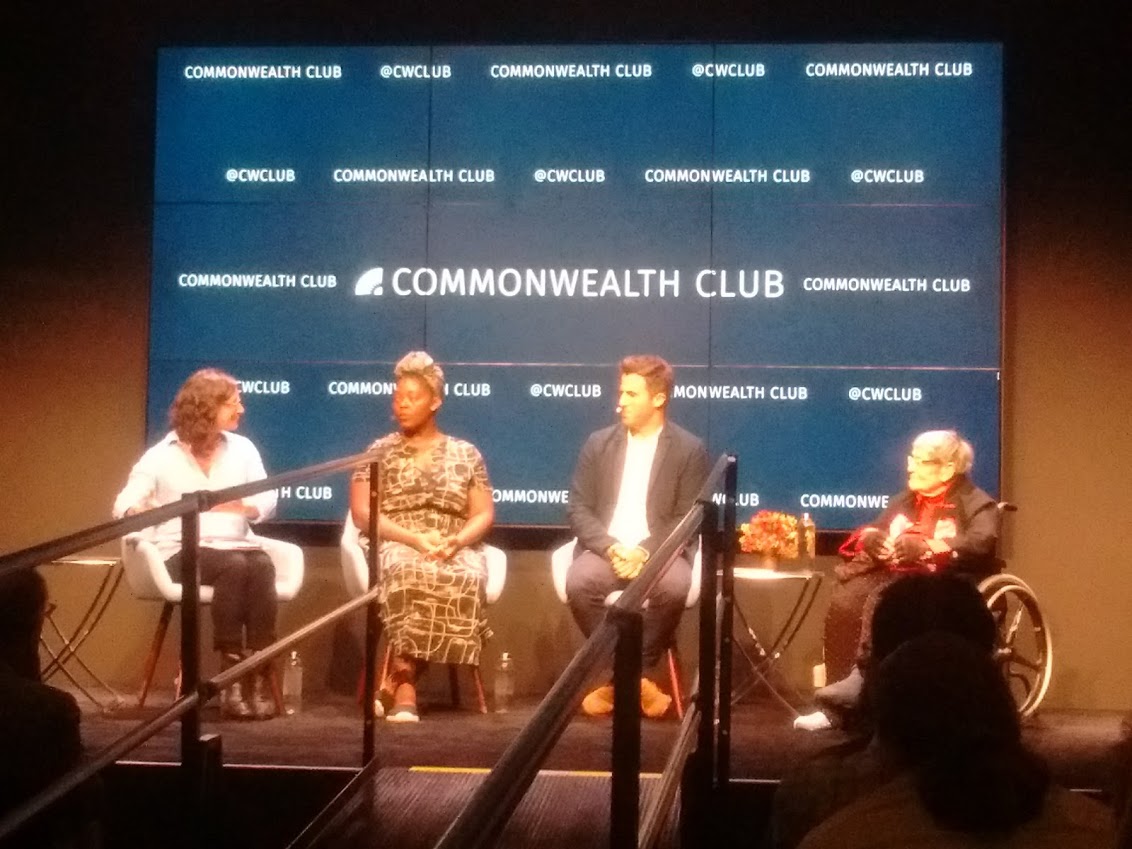
Over a hundred people, including yours truly who sat among Flossie's former Lowell High School students, turned out at the Commonwealth Club for Brief but Spectacular Stories, which kicked off with a 10-minute documentary screening of “Flossie Lewis: Back in the Classroom!” Afterwards, 94-year-old Flossie took the stage with Brief but Spectacular producer Steve Goldbloom and poet Mahogany Browne for a conversation with Inflection Point radio host Lauren Schiller. 

In this social media age of curated personalities, Steve searches for authenticity and found Flossie to be “an original force of nature.”  Flossie was critical of Twitter, not because of the President’s use of it but accepting it as a form of composition is moving toward “duckspeak” in 1984. (In contrast, much younger Mahogany has used Twitter as a writing prompt and published her collection of tweets in #Dear Twitter: Love Letters Hashed Out Online in 140 Characters or Less.) 
When Lauren asked, “How do you prioritize time, decide what to do each day with time left?” Flossie replied, “if you live in a retirement community, there are activities. You can participate, or you can sit; and if you sit, invariably you will fall asleep.” Then she talked about her participation in a poetry group.

 “We have to rethink what we value because so much of our life has reached fruition;...Now we have to find meaning in places we might not have bothered about when we were younger and half of a couple: solitude, friendship, bird and animal watching, and a closer following of music, painting, and theatre. This replacement alone can be a soul-wrenching shift that forces us to ask ourselves: What matters now?
…As with other old people, after I’ve finished the necessary examination of my life (knowing that living in the past is a trap), of death itself, and of my limited future, which will probably not be glorious, I have found myself quite inadvertently savouring the moment and focusing on it not as part of the spiritual and therapeutic practice known as “mindfulness” but as a natural development in and of the state of being old. It is through this attention to the moment that true joy in the wonders of being alive in the world, so rare otherwise in adulthood, finally comes.”
--Sharon Butala, “Against Ageism: It’s time to stop treating senior citizens as a burden,” The Walrus (April 6, 2018)