Showing posts with label Chinese. Show all posts

Tuesday, November 30, 2021

National Family Caregivers Month

According to Recognize, Assist, Include, Support, Engage (RAISE) Act Family Caregiving Advisory Council’s Initial Report to Congress (Sep. 2021): 

·       In USA, 1 in 7 people is a caregiver and more than 2/3 of people will need assistance with daily tasks as they age.

·       In USA, more than 53 million family caregivers provide approximately $470 billion in unpaid support annually for their loved ones to be able to live in their communities.

·       Family caregivers often provide support without a formal assessment of their needs or of the person receiving support; learn “on the job,” taking on complex medical, administrative and care coordination activities.

·       Lost income due to family caregiving is estimated at $522 billion each year.

Rosalynn Carter Institute for Caregivers’ Working While Caring: A National Survey of Caregiver Stress in the U.S. Workforce (Sep. 28, 2021) found that 1 in 5 full-time workers care for a family member with a serious illness/disability; nearly 20% of them quit a job to care for a relative, while 44% switched to part-time work. Rosalynn Carter has advocated for establishment of a new Office of Caregiver Health, within the U.S. Department of Health & Human Services, intended to improve coordination within the bureaucracy. 

My Administration is committed to strengthening American families and easing the burdens of caregiving.  That is why my American Rescue Plan provided an additional $145 million in funding for the National Family Caregiver Support Program,…also provided States with additional Medicaid funding to strengthen and enhance their home- and community-based services (HCBS) program.  My Administration’s Build Back Better agenda will build on this down payment by continuing to invest in the caregiving infrastructure for HCBS and increasing pay and benefits to address the direct care workforce crisis.  I will also fight to expand paid family and medical leave nationwide.  Each of these elements is critical to better supporting family caregivers.

--Joseph R. Biden, Jr., A Proclamation on National Family Caregivers Month (Oct. 29, 2021) 

It takes a village + infrastructure, like job-protected leave and healthcare coverage, to support family care partners.

·       Effective Jan. 1, 2022, California Family Rights Act (AB 1033) expanded to grant eligible employees up to 12 weeks of job-protected leave to care for parent-in-law with a serious medical condition. 

·       Effective Jan. 1, 2023, Parent Health Care Act (AB 570) will allow adult children to add their parents/step parents (who are not eligible for Medicare) as dependents to their individual health insurance coverage. 
https://twitter.com/CaregiverAction/status/1457888929127014402 

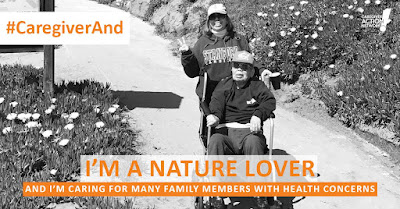
This year’s NFCM theme is #CaregiverAnd, which encourages family caregivers to “celebrate the passions and interests that enrich their lives.” 

During the COVID-19 pandemic lockdowns, many family caregivers were on their own without the usual respite supports from other relatives/neighbors/friends (as people formed their own pods/bubbles) and formal supports like home health/adult day centers/congregate care settings. Compared to non-caregivers during this pandemic, research found that family caregivers experienced higher rates of anxiety, depression and disturbed sleep; and reported less social interaction, more worries about finances and food, even after controlling for income and employment. Caregivers who fared the worst were female, young, lower-income, and providing care for people with cognitive disabilities (dementia) or behavioral/emotional problems. 

According to UCLA study, Who Is Caring for the Caregivers? The Financial, Physical, and Mental Health Costs of Caregiving in California (Nov. 29, 2021): 

·       In 2020, 1 in 4 California caregivers provided 20+ hours of care to a family member/friend in a typical week, yet only 1 in 11 received payment for any of the hours spent providing care

·       Majority of caregivers in California are women (57.7%), middle age or ages 26-64 (67.5%) and provide care to mainly older adults ages 65+(64.7%).

·       Nearly half (44.4%) of California’s estimated 6.7 million adult caregivers reported experiencing some level of financial stress in 2020 due to their role.

·       About 1 in 5 (20.9%) caregivers reported that caring for their relative/friend was somewhat to extremely financially stressful.

·       1 in 7 caregivers (13.5%) reported a physical or mental health problem within the past 12 months due to caregiving.

Aging boomers in later life have fewer family members to rely on for caregiving (due to never married, divorce, no kids, etc.). (China has recognized tradition of family caregiversand “Confronted By Aging Population China Allows Couples To Have Three Children.”) 

“I’m a single woman, so I say mom has me, but I don’t have a me.”—Lily Liu, who took “gap year” from her job to set-up infrastructure of care for her mom, featured in AARP documentary, Caregiving: The Circle of Love (2016) 


AARP hosted Beyond the Burnout: A Morning Forum for Caregivers. Lily Liu, former AARP archivist/historian, has been caregiver for her 90-year-old mother diagnosed with Parkinson’s disease for past 40 years and more recently dementia; she decided not to bring home care aides during pandemic due to risk of infection. Lily talked about her nuclear family’s immigration from China to USA (her parents came for graduate studies when she was a child), thanks to 1965 Immigration Act. As a 1.5 immigrant family caregiver, Lily was imbued with Chinese cultural norm of filial piety (“even if I didn’t read Confucius, there was an expectation to care for elders in the family”) and challenges like having no extended family members to help out (but “family by choice”—someone acting like “big sister” as “accountability coach” before she reached burnout), linguistic barriers (terms like “MRI, UTI, and ADL are hardly understandable in English” and interpreting in another language), shift in power dynamic when providing care (“almost become a parent of your parent”), exploring trauma for Chinese immigrant parents who lived during 20th century wars and civil strife, etc. 

(See Mission Local’s “For Mao survivors, the pandemic has been a cakewalk.” In 2015, Administration for Community Living awarded its first grant to develop “person-centered, trauma-informed” care for Holocaust survivors.) 
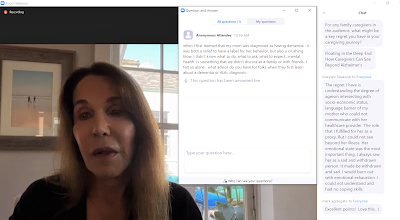
Patti Davis wrote her handbook + memoir, Floating in the Deep End: How Caregivers Can See Beyond Alzheimer’s (2021), based on her caregiver support group, Beyond Alzheimer’s (started in 2011) and caring for her father Ronald Reagan who died in 2004. After her attempt to license Beyond Alzheimer's into “AA of caregiver support” fell through, she decided to write her book to share lessons, like addressing grief (“you’re well-served to inhabit and surrender to grief early on…grief is not biodegradable, it will wait and come find you…”), looking beyond disease to essence of person (“Alzheimer’s is stripping away of façade… my father was sweet, gentle person so it was easier”), educating about disease and acceptance to take on challenges like taking away car keys (avoid 86-year-old George Weller’s 20-second drive through farmer’s market in Santa Monica killing 10 people, and injuring many others.) She broadly viewed a caregiver as someone who shows up to provide support; her father received homecare from paid caregivers when he was “bedridden” during last three years of his 10-year illness.

Kupuna edge”

“When you’re a caregiver … you’re the nurse, you’re the physician, you’re the lawyer, you’re the chauffeur, you’re the accountant. You play all of these different roles that most people go to school and get a degree for, and you are expected as the caregiver to become all of that overnight and as the disease progresses.”— Poki‘i Balaz, geriatric NP, “Our Kūpuna, Our Kuleana: Senior Care Crisis in Hawaiʻi,” Hawai’i Business (Feb. 4, 2020) 

Growing up with kupuna (grandparents) in the same household, family caregiving was reciprocal: my grandparents cared for me and my siblings (while my parents worked outside of our home) until we became more independent, and then we reciprocated as my grandparents with dementia became more dependent on us for activities of daily living. This caregiver experience was more like something we grew into as needs arose, rather than “overnight.” And I suppose it helped that my grandparents had more than a single caregiver playing different roles, and benefited from many family caregivers with specialized roles including physician (though trained in OB-GYN; my cousin didn’t become a geriatrician until after grandparents died), lawyer, accountant, and we were all (non-degreed, but licensed) chauffeurs!

Last month, Hawaii Business magazine covered the role of kupuna in caring for grand keiki in a series of articles about Hawaii’s so-called kupuna edge:

·       "Grandparents Help Hawai‘i Parents Get the Job Done: Grandmothers and grandfathers are storytellers, sources of wisdom, keepers of family legacies and teachers. But perhaps their most important role in Hawai‘i is to help working parents raise their keiki.” 

·       "Do’s and Don’ts of Using Grandparents for Child Care: Lessons learned from both grandparents and parents about navigating these relationships.” 

·       "Grandparents Are Great, But They Can’t Solve All of Hawai‘i’s Child Care Needs: Hawai‘i’s high cost of living often drives the need for grandparent-provided child care. But many grandparents can’t provide care because they are still working or live on the Mainland. Here’s what else is needed.” This article noted that grandparents who are the primary caregivers for their grandchildren tend to experience worse physical and mental health than those who provide occasional or no child care at all. 

Kupuna might wish to exchange worse health for a stipend while serving in foster grandparent program and more low wage opportunities await them in proposed Caring Corps for older adults in charge of universal early childhood education?! 

This month, the Advisory Council to Support Grandparents Raising Grandchildren (SGRC) released its Initial Report to Congress. Highlights:

·       In USA, 2.7 million children are being raised in the homes of grandparents.

·       The child welfare system increasingly relies on kin or grandfamilies to provide care for children, yet they are less likely than non-related foster families to receive needed supports and services.

This report also provides recommendations that will inform development of the National Family Caregiving Strategy.

As COVID-19 pandemic seemed to accelerate hospital discharge preference of patients to go home rather than receive rehabilitation care from a skilled nursing facility (SNF), some exciting Home- and Community-Based Services (HCBS) policy proposals: 

·       Choose Home Care Act of 2021 (S.2562/H.R. 5541) would increase access to health services at home by giving eligible Medicare beneficiaries the option to choose home-based extended care as an alternative to SNF care after being discharged from the hospital. 

·       Justice in Aging is advocating for change in federal Medicaid law to apply retroactive coverage of HCBS services after hospital discharge, just as Medicaid allows services to be covered up to 3 months for SNF. 

Advance care planning

Geriatricians are expert at managing syndromes that are associated with age (e.g., dementia)… are good at deprescribing, looking at list of medications and possibility of interactions…eliminating what’s not necessary… really useful if multiple chronic illnesses… key to good care as we get older is constant, ongoing communication with your doctor… about what you want, how aggressive you want, that trade-off between things that might possibly prolong life versus side-effects and quality of life.

--Jay Luxenberg, MD, On Lok Chief Medical Officer, “Do We Need New Doctors As We Age?” Not Born Yesterday podcast (Oct. 15, 2021) 

UCSF geriatrician Dr. Anna Chodos presented on Advance Care Planning (ACP): how to make decisions based on context (emotions, needs, resources), personality, values, and experiences.

ACP includes medical and financial/legal considerations.

Wonder how many people attended this webinar? I asked all 4 questions! Answers:

·       Even if elder orphan is unable to name a surrogate, it is appropriate to document that person’s preferences—even if “terrible system” for people who are not going to have an advocate, POLST may or may not be useful.

·       “Many of us deal with people who are really complex and seem to have a lot of wishes for what life is like now that don’t match up with what are some stated long-term goals like living forever, getting better…it’s a process we continue to revisit…most people do not like thinking about the hard stuff…Most people don’t get the point, they don’t understand what the heck we’re asking them to do…completing advance directive takes at least a half hour, if not an hour.” 

·       “Assuming they have a program where you can live forever,…what most religions promise people. No, I haven’t started referring people to Jehovah’s Witness programs, but I hope that was like a cheeky question…they’re plenty of religions that have very specific requirements for how people get healthcare.” 

According to AARP, Hawaii has 157,000 family caregivers providing $2.1 billion value of u(n)paid care! AARP HI Pre-Crisis Planning for Dementia featured elder law attorney Laurie Adamshick, who shared her family caregiving experience. 

For solo agers (“elder orphan” without family caregiver), she advised hiring a professional fiduciary. 

Chinese American Coalition for Compassionate Care (CACCC) and AACI hosted Chinese American Cultural Challenges at End of Life (EOL) presented by Esther Luo, MD, Kaiser Permanente palliative care specialist. According to Pew Research, Asians are the fastest growing racial/ethnic group in USA, and Chinese are the largest Asian origin group making up 24% of this group.

According to California Health Care Foundation’s Help Wanted: Californians’ Views and Experiences of Serious Illness and End-of-Life Care (2019), majority of Californians at EOL do not want to “burden” family, want to die at home, prefer “natural death” and do not want to suffer pain.  

Compared to whites, Chinese Americans receive more aggressive EOL care including invasive mechanical ventilation when hospitalized and deaths in ICU so fewer die at home.

Few Chinese Americans enroll in hospice due to cultural challenges, including finding providers with cultural sensitivity (honor family-based v. individual decision-making) and language fluency. About 25% of Chinese Americans live in traditional multigenerational household; modern Chinese family structure is more like the family depicted in The Farewell (2019) film: adult children live separately from aging parents, varying acculturation (immigrant with limited English so gaps in communication with USA-born children/grandchildren), working adult children may have limited time for direct care, so more common to hire or place elder in care home.

Traditional filial duties might include nondisclosure to protect psychological well-being of elderly parent; advocate for aggressive treatment to prolong life; pressure to perform duties to avoid disapproval of community (save “face”); provision of food at EOL as cultural obligation to demonstrate love and care. 

“New” approach to filial piety involves ACP with parents initiating discussion and decision-making in context of not being burden to family, and reframing love/care by honoring elders’ wishes. 

Good death is part of 5 blessings, along with love of virtue, longevity, wealth, health. To traditional Chinese, components of good death are defined by one’s accomplishments of familial responsibility; “natural death” in old age; minimal suffering and free from pain; and maintaining good family relationships. 
 
Dr. Luo recommended indirect communication preferred when discussing EOL: use another person’s EOL experience; frame discussion as standard question and  part of routine care; acknowledge cultural taboos and ask for permission (e.g., some may fear invoking “bad luck” if they discuss death, or talking about death might invite death to come sooner); use provider’s own experience as example. 

Last month, I completed mandatory First Aid/CPR/AED training. During COVID-19 pandemic to prevent contamination, rescuers place material over the victim’s mouth and nose. This mannequin did not look like Resusci Anne

During COVID-19 pandemic, call 911 and stick to compression-only CPR: check for response, check for breathing (look; careful about exposure if you listen and feel), then start chest compressions 100-120 beats per minute to the rhythm of BeeGees’ Stayin’ Alive! Use AED defibrillator. 


SF DPH COVID-19 data before Thanksgiving/National Day of Mourning gatherings.

Ageism in healthcare

Kaiser Health News’ Navigating Aging columnist Judy Graham moderated stimulating 90-minute panel discussion, Confronting Ageism in Healthcare: A Conversation for Patients, Caregivers and Clinicians. What we can do:

·       Louise Aronson, MD, UCSF geriatrician and author of Elderhood: suggested how to communicate with provider to get your needs met—e.g., “I feel that I’m not getting attention my symptoms warrant (use “I” statement), and I came to you because of your reputation as a good doctor” (compliment!). And she incited us to “make a ton of noise and don’t shut up until things change…that’s how other social change movements succeed, own it, be noisy. Let’s do it!” She added Essential Caregiver Bill (HR 3733) in Zoom chat box

·       Michael Wasserman, MD, geriatrician and immediate past president of California Association of Long-Term Care Medicine (CALTCM): encouraged us to “speak truth to power”; called out federal government spending $10 billion a year subsidizing graduate medical education, but failing to train doctors to care for Medicare beneficiaries; the failure to develop policies focused on older adults due to the lack of geriatric expertise among policymakers (notably, failure of Biden administration to appoint gerontology expert to COVID-19 task force)—“honestly, the federal government didn’t listen, and now we have over half a million deaths amongst older adults from COVID and close to 200,000 of them from nursing homes…honestly, the policymakers don’t seem to care.” (The lack of gerontology expertise proved fatal in nursing homes that cut off family visits since March 2020 through Nov. 12, 2021 when finally CMS lifted visitor restrictions in nursing homes.)  

·       Rebecca Elon, MD, geriatrician and family caregiver (see “Aiding Her Dying Husband, a Geriatrician Learns the Emotional and Physical Toll of Caregiving”): recommended starting local and with groups for a louder voice!

·       Javette Orgain, MD, family physician and medical director for Longevity Health Plan of Illinois: called for intergenerational living, closing technology gap, increased funding of home-based care and improving nursing homes!

·       Jesse Mauer, JD, Executive Director of Maine Council on Aging, which promotes Anti-Ageism Pledge: advocated to include age in every DEI (diversity, equity, inclusion) conversation to “help us move collectively together”! (Check out recorded 2021 Wisdom Summit: Embracing a New Normal, Bouncing Forward to Build an Age-Positive Maine.) 

Despite anti-ageism guide to language tip, “do not use ‘elderly’ as a reference to a group,” transcript showed use of “elderly” in reference to a group almost interchangeable with “older adults” in same sentence:

·       Dr. Orgain said she “began care for older adults prior to becoming a physician, so I had some experience there that fostered my love for the care of the elderly.”

·       Judy Graham asked Dr. Orgain about “the lack of resources and what that says about how we approach our elderly population and what it means for those older adults.”

Maine’s Anti-Ageism Pledge includes “call attention to ageist language,” which depends foremost on what “the person wants to be described” as an equity consideration, and otherwise “refer to people over 60 as older people instead of seniors or the elderly.”

[Similarly, University of Iowa researchers Clarissa A. Shaw, PhD and Jean K. Gordon, PhD, advocate for an individualized, person-centered approach to communication accommodation based on person’s preferences and needs, not stereotypes of aging; for example, not all older adults find “elderspeak” (which arises when caregivers take on parental role) to be patronizing, particularly when it facilitates comprehension (e.g., slow speech, simplified sentence, long pause, loud voice, repetition, etc.). Otherwise, elderspeak is harmful!] 

Judy Graham summarized efforts to address ageism in healthcare: remove old age as a cause and symptom of disease; identify ageist beliefs and language (Frameworks Institute); tackle ageism at grassroots level (Changing the Narrative); require geriatrics education for medical students; include older adults in clinical trials; bring in geriatrics expertise; build age-friendly health system. 
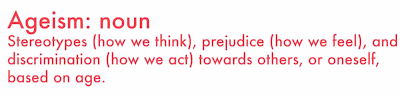
Joined screening of 16-minute video premiere of Changing the Narrative’s Antidotes for Ageism: A Brief Guide to Creating Inclusive Care in an Ageist Society, followed by discussion with talking heads from video. Take-aways:

·       Our age does not define us (so stop attributing everything to “growing older”); instead, age-inclusive healthcare starts with caring for people as individuals because “every person is living a unique human experience.” 

·       “If you are receiving care: Talk to your provider. Ask questions. Your goals shape the course of your healthcare. Clarify what you value to avoid under- or over-treatment. Advocate beyond conversations with healthcare providers.  Seek care providers that truly listen to you, and support your vision for your health.” (Can this be done in typical 15- to 20-minute visit?!)

·       “If you are a healthcare professional: Active listening and letting patients guide care.” 

Geriatrician Jeff Wallace, MD, advised: “Get to know the patient, whether they’re age 20 or age 80, and get the background, and that’s the fun part in many ways, to learn about your patient to start…the therapeutic relationship with a patient starts with respect. You have to respect them, and they have to respect you…doctors should be interrupted more often…it’s okay to say, ‘let’s just timeout, and I really want you to focus on this.’”

Consultant Carolyn Love said she understood that doctors and nurses are medical experts, but patients are experts of their own body so providers need to listen.

Gilliane Lee, recent graduate of occupational therapy (OT), talked about shift to focus on safety as well as quality of life for older adults, and responded to following Q&A:

Q: What are some things that can be done to encourage more people to work with older adults?

A: “Bring them to assisted living facilities (ALF) and getting that exposure so that they can understand that there is such a need for providing care.”

Oy vey, will exposure to ALF for understanding “need for providing care” translate to encouraging more people to work with older adults? Possible to deter people from working in ALF setting like Brookdale, the nation’s largest senior living provider and target of federal lawsuit on behalf of 83 families alleging elder neglect and financial abuse, as well as lawsuit by California Attorney General?! As a graduate gerontology student, I watched Life and Death in Assisted Living (2013), PBS Frontline documentary that featured my instructor Pat McGinnis, founder and Executive Director of California Advocates for Nursing Home Reform; that horror show convinced me to stay away from for-profit ALF!  

“Too many assisted living centers, care centers, and nursing homes are places I would never allow a loved one to enter. Most wouldn’t either if they knew what the facilities were really like. However, families who schedule facility tours and interviews when considering placing a parent or grandparent, do not see that side…Families must learn to get behind the scenes in order to see the truth.” --Linda L. Schlenker, OTR, author of Aging in America: A Wake-Up Call and Call to Action for Seniors and Those Who Love and Serve Them (2008), calling out non-profit Mayo Clinic and St. Anne’s Home, Little Sisters of the Poor (SF) as exceptional

Been there, done that with my own stint working in ALF (non-profit, of course)! People who get behind the scenes by working in ALF see truth of “need for providing care”: understaffing, lack of staff trained in gerontology and experienced in working with older adults, low morale, high turnover, etc. Residents who wait too long for assistance end up trying to manage on their own, resulting in falls, bedsores, medication errors, other neglect.

Exposure to older adults segregated in ALF seems to reinforce warehousing people based on old age/disability. More encouraging to meet older people where they are in a variety of settings, listen and let their complexity grow on you until you decide this could be an interesting way to earn a living 😉!

Ageism in media

Ageism isn’t even recognized in Pew Research’s list of 15 biggest problems facing the nation; in contrast, racism and sexism make the list. 

November 2021 issue of The Journal of Gerontology: Social Sciences featured several articles about media coverage of aging and ageism.

In Aging Narratives Over 210 Years (1810-2019), Reuben Ng, PhD, found aging narratives in newspapers, magazines and nonfiction books have become more “negative” over 210 years, from “uplifting narratives of heroism and kinship” in the 1800s to “darker tones of illness, death, and burden” in the 1900s as older adults came to be viewed as dominant occupants of almshouses and described as deserted by their children and too infirm to work. Contributing to this ageism were the diminishing status of older adults, loss of warmth, loss of competence, social ostracism, and medicalization of aging. Defying this trend was fiction, which provided “positive” portrayals of older adults through romantic courtship and war heroism.

In Ageism in COVID-Related Newspaper Coverage: The First Month of the Pandemic, researchers analyzed 287 articles concerning older adults and COVID-19, published between March 11 and April 10, 2020, in four major U.S. newspapers (USA Today, The NY Times, LA Times, The WaPo), the term “ageism” appeared only five times and only in The NY Times opinion pieces, suggesting that journalists were not calling out ageism. 

This failure to call out or name ageism seems to normalize ageism so it’s not viewed as the problem it is with harmful impacts. 

Journalists continue to confuse assisted living and nursing home, needing to issue corrections like “This story has been corrected to refer to Brookdale as an assisted living and memory care center instead of a nursing home.”  In “The Forgotten Nursing Home Tragedy” (NY Times, Nov. 4, 2021), journalist stated “Nurses were routinely working at several elder-care facilities at once”—more likely the reality is lower-paid certified nursing assistants (CNA) who have closer hands-on contact with residents (assisting with toileting, bathing, dressing, feeding, etc.) work at multiple nursing homes? Important to understand differences: ALF v. SNF, CNA v. nurse.

Wish more journalists would follow reporter Laura Wenus’ advice to consult someone with expertise in the field because “elder care and nursing care is a complex industry” so it helps to turn to a second pair of eyes to ensure “using the right terms and describing the relevant systems correctly.” 
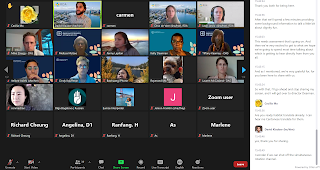
SF Dept. of Disability & Aging Services (DAS) hosted SF Dignity Fund Community Needs Forum (“What do older adults & adults with disabilities living in San Francisco need?). This took place on day after holiday weekend, 39 showed up on Zoom, mostly DAS staff; service providers who participated talked about workforce challenges like finding social workers who are Cantonese bilingual and who are familiar with African American culture. 
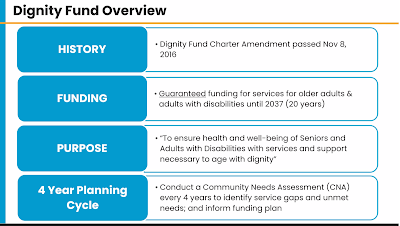
I completed 36-item SF Dignity Fund Community Needs Assessment survey, commenting on need for gerontology training in workforce development to better serve diverse older adults, like designing a more age-friendly survey! Wonder how many older adults/people with disabilities had stamina to actually answer all survey items: e.g., 5-item Likert scales for #6 Please rate your agreement with the following (19) statements about your needs; #17 Please rate your agreement with the following (15) statements about any barriers you have experienced when trying to participate in services. By the time I got to survey's demographic information section, I just wanted to get over ordeal so quickly selected "Decline to answer"! 

Friday, January 31, 2014

Coming of Age in American Samoa

It’s been over 85 years since anthropologist Margaret Mead published Coming of Age in Samoa, based on her field studies of adolescent girls over a six-week period on the island of Tau in American Samoa.  It’s unknown if her study subjects are still alive, but I decided to spend one week on the main island of Tutuila (where 95% of American Samoa’s population lives) to study food culture and aging.

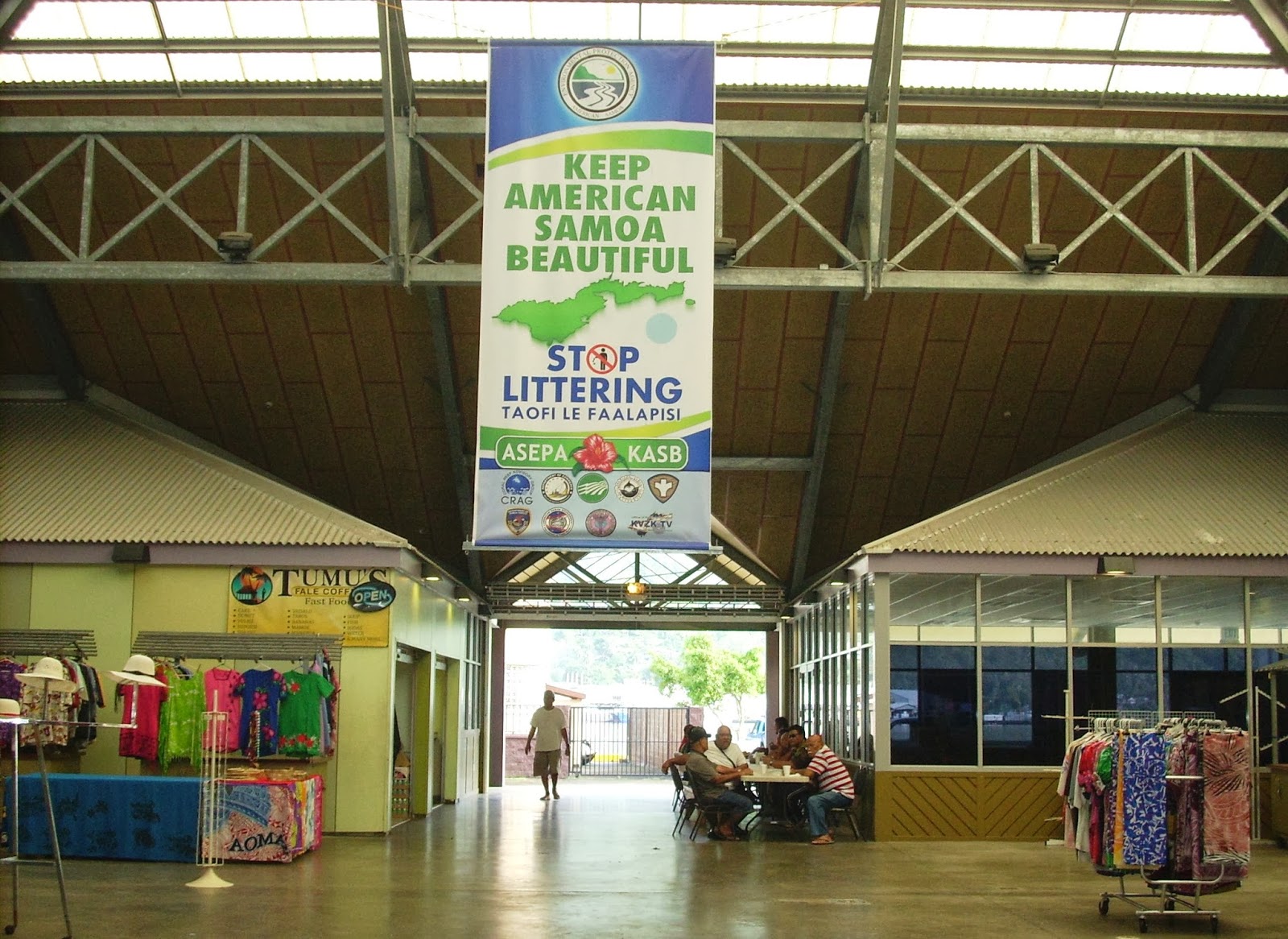
Like Bhutan and Galapagos Islands, American Samoa is naturally beautiful (with many reminders to stop littering, plastic bags banned since 2010), relatively isolated (only two flights per week from USA-Honolulu to Pago Pago), expensive (discouraging backpackers) and unspoiled by mass tourism (only one golf resort).  There are no traffic lights, no street signs (except for Government Housing in Tafuna village for palagi/white contractors), few paved sidewalks, and only one main road (ideal for mass transit). Most land is communally owned so homelessness is refreshingly almost non-existent for native American Samoans.  I also welcomed the humidity and rainy weather, as it’s been an unusually dry winter in San Francisco.

What does food culture have to do with aging?
I grew up in a food-obsessed household in Hawaii.  My immigrant parents, who grew up starving in China during the Second Sino-Japanese War, wanted to ensure that their American-born children were well-fed so I was stuffed with traditional Hawaiian staples like poi and laulau, as well as home-grown produce from our backyard and meals cooked from scratch.  Then for most of my adult working life, I was a road warrior, which meant my meals were often dining out with clients or take-out to do work in my hotel room.  After losing my job during the Great Recession, I decided to pursue my passion for do-it-yourself food – enrolling in permaculture, organic farming, cooking and nutrition classes – partly inspired by my grandfather who was a home gardener and restaurant chef-owner. 
While doing my nutrition internship at San Francisco Department of Aging and Adult Services (thanks Linda Lau, RD!), I became an advocate for the Elderly Nutrition Program to promote better health through food security and reduced isolation.  Congregate and home-delivered meals are also a wonderful opportunity to return to traditional foodways by creating menus using fresh, seasonal and local food sources that appeal to the diverse palates of seniors who grew up without modern conveniences (like processed fast food) so they recognize real food.  
Like Michael Pollan said in Food Rules, “Don't eat anything your great-grandmother wouldn't recognize as food.”

Why study aging in American Samoa?

As a full-time graduate gerontology student, my free time to travel is to the same gerontology-related meetings (ASA, GSA) attended by my SFSU professors and during winter break.  I visit my parents in Honolulu after the new year when President Obama and his entourage leave Oahu to avoid traffic jams.  
This year I decided to take my first trip to American Samoa, where elders continue to be revered despite modernization that brought American cash economy, television, cars and fast food.  According to the 2010 Census:
People 65 years of age or older . . . have grown to 4.1% of the population. Even though that has been a large increase, there are still relatively few elderly in American Samoa. For example, in the United States, the percentage of the population 65 and over is 13%.  As a matter of curiosity, there were 110 elderly that were at least 85 years old living in American Samoa in 2010.
As for the elderly, local health care is improving, but not any faster than local health levels are declining due to non-communicable diseases (NCD) and conditions, such as diabetes, high blood pressure, obesity, heart problems, dialysis, and the other negative consequences of modern changes in the American Samoa diet and activity levels.
Based on the 2010 Census, American Samoa’s population is 55,519, a decrease of 3.1% from 2000. 

Hope House at Fatu-O-Aiga (heart of the family), American Samoa’s first and only nursing home opened in 1987, houses only 10 seniors.  One local said they don’t need additional nursing beds because Samoans care for their own, especially elders at home.

Yet just over a year ago, the American Samoa Government (ASG) settled its first age discrimination suit involving a class of older workers who were allegedly forced into retirement or reassigned into undesirable positions to free slots for young people.  I wondered if this might indicate a shift in how American Samoan elders are treated?


Raised by a Tiger Mum, who regards every experience as educational, I did my homework before traveling to American Samoa.
I visited ASG Office in Honolulu to prepare for my trip.
Jessie and Diana of ASG presented me with 213–page Centennial Edition of American Samoa: 100 Years under the United States Flag, by J. Robert Shaffer (Honolulu: Island Heritage, 2000).  I later received another copy of this book from American Samoa's First Lady.


Obesity news

Last year, Samoa Air made international news for charging passengers airfares based on weight.
At Honolulu Airport gate waiting to board flight to Pago Pago (capital of American Samoa), CNN news coverage of food addiction’s contribution to obesity epidemic appeared on left video screen.

Then last summer, American Samoa made headlines for being the most overweight nation, while the American Medical Association officially recognized obesity as a disease despite concerns that using BMI measurement is controversial.  PETA recommended a plant-based diet to fight obesity.   
 
Hawaiian Airlines provided this dinner tray with portions that reminded me of a senior congregate meal.  However, to meet federal nutrition standards, replace at least ½ of white rice and bread roll with brown rice and whole wheat (more fiber); replace macadamia milk chocolate cluster with fresh fruit (avoid added sugars); and include vitamin D food.  During the flight, a passenger seated behind offered me his dinner tray, which made me wonder if I looked like I needed more food?
The day after I arrived, Samoa News reported that AS Governor Lolo Moliga appointed Obesity Task Force to curb growth of “national nemesis.”  I wondered whether any of the appointed Task Force members were gerontologists to address the needs of older adults. 
Ofeira Nu’usolia, recently retired Executive Director of Tafuna Health Center, was part of a research team that found obesity among American Samoans starts at birth. (Ofeira sits on Region IX Office on Women's Health Advisory Council with my SFSU Gerontology Professor Darlene Yee, who sent an email introduction so we could connect during my visit.)  Though obesity is established early in life and may be influenced by genetic predisposition and environments that encourage overeating, physical activity and healthy eating interventions can often reduce, but not completely overcome, the effects of genes. 
While obesity in young people is a risk factor for morbidity and mortality, the effect of obesity in older adults is more complex.  The obesity paradox in the elderly suggests fitness matters more than weight, finding that overweight and moderately obese patients with certain chronic diseases often live longer and fare better than normal-weight patients with the same diseases.


Homestay & Fa’a Samoa (Samoan Way)
For personal travel, I prefer staying with local families or in hostels.  National Park of American Samoa provides a list of homestay hosts (which included former deputy secretary of Samoan Affairs Nanai Afuola, whose recent death at age 80 made front page news the day after my arrival).  The objective of a homestay is to live as much like locals and foster more authentic people-to-people connections. 
Three generations under one roof: homestay host Alu (executive director of AmericanSamoa Alliance Against Domestic and Sexual Violence), her daughter (in Samoana High School uniform) and her Mama (visiting from Sydney).  Many American Samoan households are three-generation family units (aiga) headed by a chief (matai, over 90% are male) who represents the family on the village (nu'u) council (fono).

My homestay family members did not participate in traditional Sunday morning church service followed by lunch banquet (to'ona'i), nor observe evening prayers (sa).  There was no home cooking (which was a man's responsibility in traditional Samoa), but meals were take-out with leftovers for the next meal.  Alu and her Mama seemed more Australian, so I often relied on Alu’s intelligent daughter (who was raised in American Samoa since moving as a toddler from Australia) and other locals for a reality check.  After all, I didn’t want to be duped like Margaret Mead, according to New Zealand anthropologist Derek Freeman, who claimed her informants played a Samoan joke on her.

For example, one local told me that Samoan elders complain by crying until they get their way because a crying senior is like a curse.  According to this informant, two laid-off elders went to see the Governor, crying to get their jobs back so the Governor added them to his payroll; one elder has died since and “you always want to make a senior die happy.”  True?  (Stoic California Governor Jerry Brown would not be swayed by tears/curse, nor protests).

On a couple of evenings, Alu and Mama attended a widow support group led by a social worker trainee.  Alu explained that these meetings were helpful in unearthing individual feelings of grief since “I (the individual)” is subordinate to “we (the extended family)” in Samoan culture. 

Fa’a Samoa (Samoan Way) is illustrated in proverbs like o le ala I le pule le tautua (“the way to the family title is through loyal and faithful service to the family”).  In The Happy Isles of Oceania, Paul Theroux offered his criticism: “It seemed to be one of the oldest Samoan customs to victimize the person without a family, the individual, the outsider, the stranger, because it was a society where, if you had no family, you had no status.  Perhaps this was the reason they had achieved so little, either here or on the mainland.  They did not want to stand out.” 

As a gerontologist trained in the USA, I wondered about the relevancy of an ethical principle like respect for autonomy or self-determination in a communal society like American Samoa?  I thought about my own Chinese upbringing, in which a healthy individual would express feelings of grief in the appropriate context like loss of a loved one.  I also thought about Jehovah’s Witnesses who grieve over loss of loved ones yet maintain their Bible-based hope in the resurrection and living forever in Paradise on Earth.
 
Instead of going to church on Sunday morning, we relaxed at home, which was a great opportunity to hear more about Mama’s life story as a minister’s wife for 51 years in Western Samoa, New Zealand, Australia and American Samoa.  Mama showed me manuscript that she and Alu plan to publish about Papa’s ministry in New Zealand and Australia.
On a wet Sunday afternoon, we joined Rory West (educated at City College of San Francisco’s Environmental Horticulture Program) who operates North Shore Tours and Polynesian Herbs for sightseeing drive.
Breathtaking view of Pago Pago Harbor
 
American Samoa would be a beautiful and tranquil place to enjoy retirement, just listening to the trees grow! 
Pola Island is a protected seabird nesting area.

Later in the evening, Alu and I sat in on Mama’s Samoan language lessons to a woman who recently moved to American Samoa and now trying to learn the formal and ceremonial, as opposed to everyday and colloquial, Samoan speech.  Showing fa’aaloalo (respect) involves matching the formality of speech to the status of the person, with matai and ministers regarded as royalty.

Laughing Samoans
 
Joined Alu and her Mama to Laughing Samoans’ two-hour Fobulous show, which poked fun at aspects of Samoan culture, for $20 per adult ticket (no student discount available).
Samoan making wedding plans with palagi fiancé:  inviting village of 4,000 to wedding; imposing strict discipline (spare the rod, spoil the child) by knock-out instead of time-out (Samoans would never send a kid to room without eating dinner).  Alu told me she has never used corporal punishment, and I found her daughter remarkably self-disciplined (focused on studying for exams during my homestay visit, which would have distracted myself) and one of the most respectful teenagers I know.
Father and Son skit covered Samoan values of conservatism (no sleepovers, go to school for education not socialization) and modesty (cover up body when going to beach).
 
Elvis impersonator sang (in tune of Blue Suede Shoes) about going broke from fa’alavelave (obligation charged to family members to contribute toward events like weddings, graduations, funerals, church activities) to promote social harmony.  Alu’s Mama expressed her concern that this practice could be a financial burden: forget presents; just give me your presence.

Getting around

I prefer walking and mass transit, but went along on car rides because “when in American Samoa, do as the American Samoans do.”  The pervasive car culture enables a sedentary lifestyle, and I was struck by the near absence of pedestrians outside of Fagatogo village, the commercial and government hub on Pago Pago Harbor.
Tourist trap hotel car rental agency charged an exorbitant $80-90 per day, while gas price was about $4.13 per gallon.  I favored the local mass transit, colorful aiga buses, which run from sunrise to sunset, and will drop off passengers upon request in the absence of designated bus stops.  Since there really is only one main road, one can flag the bus (like a taxi) if there is no bus stop nearby to get picked up.  Cost was $2 for one-way fare for the scenic ride from Pago Pago to Tafuna (about 5 miles distance).
On this hard seat bus and against blasting music from the bus speakers, a uniformed student asked me, "Are you new?” I replied, “No, I’m old.” Giggles.  No seniors on this hard seated bus.
On this soft seat bus and a video playing, sat next to an older woman who asked to be dropped off at this Kingdom Hall of Jehovah’s Witnesses.
American Samoa’s motto is Muamua Le Atua (Let God Be First).  Ieova is Samoan for God’s name Jehovah.
Over half of reported injuries in American Samoa are attributed to dog bites, which interfere with a healthful lifestyle that includes walking and bicycling.  Outside Fagatogo, it was rare to see anyone walking outdoors; it seemed people hop in and out of cars to get around. 
Chicken of the road.  One Samoan explained that locals do not eat local chickens, which eat toads that are "so ugly." 

Opening of legislature
Legislators, which include two mature women, in front and CCJS Combined Choir in back
Preparing for Governor's arrival

Meeting TAOA

With time for only a one week trip to study aging in American Samoa, I decided to start with the State Unit on Aging.  Thanks to the Administration for Community Living’s Region IX Office based in San Francisco, I was introduced to the American Samoa Territorial Administration on Aging (TAOA).  According to its website
The Territorial Administration on Aging was established in 1974 during Governor Peter Tali Coleman's term in office. Delegate-at-large A.P. Lutali in Washington D.C. requested through U.S. Congress to have a program to help the seniors of American Samoa. Some of the people did not want such program, saying that it's a Welfare program and they didn't like to turn American Samoa into a Welfare State. Eventually, it was established as part of the Governor's Office and HC Pulefa'asisina B. Tuiasosopo as its manager. A TAOA staff was hired, Mr. Penei Sewell was its Director, and it became an ASG Agency.
TAOA is 100% federally funded through grants from U.S. Department of Human & Social Services and U.S. Department of Labor.

Mission Statement:  TAOA was established to serve the senior citizens of American Samoa through services funded by our two grantors - DHSS and DOL, as follows:  Senior Nutrition Program through Food Vouchers served to seniors 60 plus each month the employment program for those 55 years of age and older.
TAOA Social Services Manager Tafia Fiame Taimalelagi makes telephone calls to schedule appointments from her office.  In the Pacific islands (including my native Hawaii), the oral-aural tradition and face-to-face interaction is favored over written and electronic communication (American Samoa’s isolation makes its internet access the most expensive in America).  After all, there was no written language in Samoa until after the London Missionary Society arrived in 1830 and developed the Samoan alphabet in order to translate the Bible.
American Samoa’s only senior center looks over Pago Pago Harbor in Tsunami Hazard Zone.
This location near Pago Pago port is convenient for cruise ship passengers to shop at TAOA Handicraft Market.
 
Inside TAOA Handicraft Market, TAOA Secretary Tina handles sales of handicrafts made by seniors under Title V of the Older Americans Act.
 
Title V Manager Fanaufouina Solia displays more handicrafts in her office.  In addition to creating handicrafts, seniors also work in schools teaching Samoan language and culture.  
Seniors busy at work on handicrafts—baskets, mats—made from paogo (pandanus, official tree of American Samoa). 
TAOA Title III Manager Amiula Pola next to van (12 passenger seats, 2 wheelchairs) used to escort seniors to hospital, Social Security/bank offices, post office, etc. 
Tafia picks up copy of Governor’s 64-page State of the Territory Address from Governor's Executive Assistant Iulogologo Joseph Pereira in Executive Office Building. Governor's Address states, "We owe a debt of gratitude to our senior citizens for we are benefitting from their hard work," and highlights ASG contributing local funds to increase services to seniors; activities planned during Senior Citizen Month in May; transportation services; intergenerational programs with Department of Education (employing seniors as mentors to students) and Museum Director (seniors teach indigenous arts and craft to young). 
My trip coincided with TAOA’s plans to transition its food vouchers to a congregate and home-delivered meals program under Title III of the Older Americans Act.  As a foodie, I was thrilled so I went along for the ride (nearly 55 square miles of scenic Tutuila) with Finance Manager Sam Kupa and Social Services Manager Tafia to meet food vendors. 
Driving over potholes and puddles on the road can be rough.  Governor's Address also mentioned intention to continue road repair projects as funding becomes available.
Samoans take great pride in caring for their own, and adapt welfare programs to the Samoan Way, which involves “sharing” government benefits (WIC, NAP) with aiga (extended family).  In a communal society, even social security benefits and food vouchers intended for seniors apparently are “shared” with family members.  TAOA Director Ale Tifimalae said that this problem surfaced when TAOA staff made home visits to home-bound seniors, and his office was looking at solutions to end this abuse by family members of seniors.  One solution is the transition to congregate meals program, where seniors dine in-person so TAOA can be assured that seniors benefit from nutritious meals as well as socialization.
TAOA staff in front of fale.

Respect for dead
Graves of dead ancestors, rather than food, are planted in front gardens. 
Sarcophagus lies next to house. 

Island Funeral displays variety of caskets. 
Chapel at LBJ Tropical Medical Center, American Samoa’s only hospital.  While making my way to restroom, I found morgue with chapel.  Samoans will drop everything to visit dying relative’s body while still warm.

Food desert

There's a joke about a Samoan's favorite food is all-you-can-eat! Well, I could find only one restaurant that offered all-you-can eat, on Friday nights only.
 
In 1830, John Williams (statue in Leone) of London Missionary Society arrived in Samoa to introduce Christianity and trade of foodstuffs began.  Modernization has fueled population growth and imported food.  Today, people in American Samoa depend on imports for 95% of their food, and this increasing reliance on imported canned/frozen/processed foods with longer shelf life has contributed to a deterioration of their diets.  
Fast food in Tafuna village.  Fast foods and other nutrition-deficient meals provide calories (energy), but leave one malnourished, tired and hungry, which can lead to overeating and weight gain.  By adopting the Standard American Diet (SAD), American Samoa has experienced a growing prevalence of obesity, diabetes, cardiovascular disease, hypertension and other chronic conditions.

When Paul Theroux published The Happy Isles of Oceania in 1992, he wrote rather contemptuously about American-style consumption:  “Greedy, wasteful, profligate, and proprietorial, American Samoans are living on large handouts, forever pushing supermarket shopping carts full of junk food, packages and cans, the Cheez Ball diet of fat-bellied Polynesia—seedy prosperity.”
 
Traditional Samoan diet included fresh fish gathered from the reef by women, while modern diet is canned fish.  In 1963, Starkist opened its tuna cannery plant in American Samoa, and employs a workforce of 2,000 mostly from independent SamoaAbout 40% of all U.S. exposure to mercury comes from eating contaminated tuna from the Pacific, which is associated with brain and nervous system disorders.  It is safer to eat canned light (smaller skipjack tuna) than canned white (albacore), which is a larger predatory fish that accumulates higher concentrations of mercury. 
Panikeke (pancake donuts) sold six for dollar (Fagatogo Market).  Falaoa (flour) introduced by 19th century traders.
 
Dozen local eggs (from toad-fed chickens?) cost dollar more than eggs from California due to monopoly as one local explained that Samoans don’t like competition due to dominant sharing culture.
 
Turkey tail was banned for awhile (2007-2013) in neighboring independent Samoa, as public health measure but found to violate WTO rules.
Sticker shock:  fruit prices
 
Sticker shock:  vegetable prices
 
Samoan-Chinese 3-item lunch (Sunny’s) 
Filipino chicken adobo and green bananas plate for $4 (Pinoy)

Traditional foods
American Samoa’s first and only Registered Dietitian, Ianeta Ah Ping, Manager of Dietary Services at LBJ Tropical Medical Center.
 
American Samoa is mountainous with less than 10% of its land suitable for agriculture. I mostly saw growing around the island: tropical trees (breadfruit, coconut, mango, noni, papaya), green bananas, and root crops (taro, yam).  To address the obesity epidemic and food security via intergenerational programs that involve all ages in the physical activity of growing their own food would be awesome! There are a variety of vegetables that grow well in tropical climates like American Samoa.  Grow food, not lawns!
Tapwater must be filtered or disinfected (boiled) before drinking; bottled water is common.
 
Kava is the root of the pepper plant, used ceremonially (mildly narcotic drink) and medicinally (sedative, muscle relaxant, remedy for nervousness and insomnia) for over 3,000 years by Polynesians. After unsuccessful attempts to find locally produced ‘ava, I ended up purchasing packets made from Fiji and independent Samoa. Samoan noni juice is also from independent Samoa.  Samoan koko (cocoa) is sold in blocks packaged in styrofoam cup.
Samoan food plate (Louise Grocery Market aka Charlie Block)
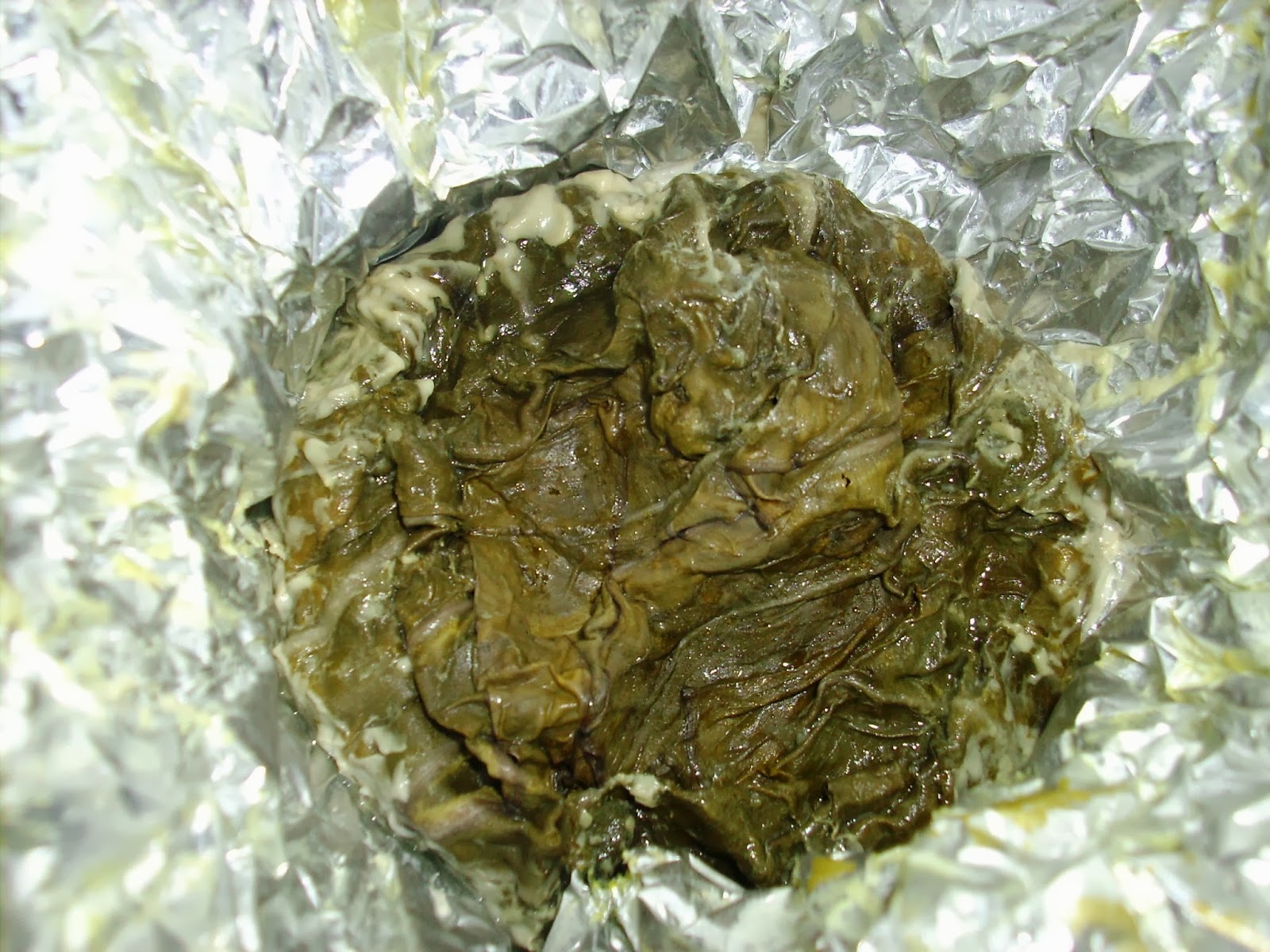
My favorite: palusami made from taro leaves, onions and coconut cream (Louise Grocery Market) 
Sua fa’i is warm breakfast porridge made from banana, tapioca and coconut milk (Milovales) 
Farewell congregate lunch plate—poke (cubed raw tuna marinated in sea salt, soy sauce, onions, chili peppers), sapa sui (Chinese bean noodle with mixed veggies), umu roasted pork, palusami, chicken, taro in coconut milk, breadfruit, and raw greens with carrots salad in center—deliciously prepared by TAOA staff, who should be in the catering business! “Ta’u valea pe a le lava mea’ai” is the Samoan phrase meaning that it’s embarrassing not to have enough food for a special event or occasion, so I shared some chicken – in the Samoan tradition of sharing – and wrapped up leftovers for my supper.
Tafia presented me with surprise (!) puletasi in fabric matching hers.  After my non-stop eating, I could not fit blouse and fortunately the skirt had an elastic waist! American Samoan seal carved into wood by Title V senior.

First Lady’s passion for seniors

At the top of “20 things to do in American Samoa” is take a tour of Maugaoali'i Government House, or the official residence of the Governor and First Lady.  First Lady Cynthia Moliga and Resident Manager Teuila Love were so welcoming that I visited the Government House twice!
My first visit was with my homestay host Alu, who said she worked with “Cindy” at Department of Human and Social Services, and now they are both active members of American Samoa Organization on Aging (ASOA).  In the library, there is a sign that reads “aroha – where there is love, there is life” – which Alu’s Mama liked to quote. During the tour, the First Lady highlighted photos from last May's first-ever luncheon honoring seniors at the Government House on American Samoa Senior Citizens Day, and photos from last month’s Special Olympics in Australia, where American Samoa’s 12-member team took home 10 medals! We were treated to cookies and truffles, and given 2014 Calendars from American Samoa Historic Preservation Office.
My second visit took place on my last day, when I enjoyed an hour-long meeting with the First Lady who spoke like a fellow gerontologist, covering an impressive range of topics from grandparents caring for grandchildren (she has two grandchildren), home visits to isolated seniors, elder abuse prevention, hospice care and the overall need for more senior services.  I wish our U.S. First Lady paid as much attention to seniors as to her Let's Move campaign targeting obese kids.  We were treated to sandwiches and fries, and I received an autographed copy of the book, American Samoa: 100 Years Under the United States Flag.
With TAOA Finance Manager Sam, First Lady Moliga and TAOA Social Services Manager Tafia.  Like the Sesame Street Song:
One of these things is not like Samoans,
One of these things just doesn't belong,
Can you tell which thing is not like the others
By the time I finish my song?
I'm the smiley American flashing my teeth while others strike passport-like facial expressions.  


The future


As far as I could tell, American Samoan seniors have wide faces with room for dental arches, indicating good nutrition by their parents.  In Nutrition and Physical Degeneration, dentist Weston A. Price traveled the world in the 1930s to study teeth and the health of “primitive” people:  those who ate “modern” refined and processed foods (white flour, sugar, canned foods, other denatured foods that remove essential nutrients) had decayed teeth and deformed dental arches; those who ate ancestral foods (natural, whole foods) had near perfect teeth.  He found that it took only one generation of poor eating to destroy a family heritage of perfect teeth and bone structure, jaw structure, jaw alignment and dental arches.  Check out the website http://www.westonaprice.org/nutrition-greats/weston-price for copyrighted photos comparing the perfect teeth of a Samoan boy born to parents who ate nutrient-rich native foods, and the crowded dental arches of a Samoan boy born to parents who ate “modern” foods.

Almost ten years ago, gerontologists projected that due to the rapid rise of childhood obesity, the current generation of children could be the first, in the history of the United States, to live less healthful and shorter lives than their parents.  This suggests that the younger generation can learn from the experiences of older adults. (I was surprised to learn that American Samoa’s School Lunch Program is not subject to the same nutrition requirements as National School Lunch Program, though both are funded by USDA.)  I am encouraged that TAOA is transitioning to a culturally appropriate congregate and home-delivered meals program (which is subject to nutritional standards) to promote the health, safety and well-being of seniors in American Samoa.

In American Samoa TAOA, I enjoyed observing the seniors weaving their mats while socializing at their senior center, admired their handicrafts (baskets, coconut shell bowls, wood carvings, etc.) at the store, and appreciated learning that they are teaching these traditional craft skills to schoolchildren.  Though I’m not a bingo fan, American Samoan seniors like to play bingo, which is a form of fundraising to build church halls.  I was impressed by the First Lady’s informed and passionate commitment to advocate on behalf of American Samoan seniors, amazed by the power of crying seniors to get what they want, and the respect accorded to them.
Senior role model: Tafia is also known as American Samoa’s “own Elizabeth Taylor," an actress currently working on her fourth feature film.  Tafia holds up DVD of "Heart to Heart," the first feature film written, directed and cast by natives of American Samoa and filmed on site!
Tafia’s Leone house, damaged in 2009 tsunami, not habitable but still standing tall.

No, this is not a photo of American Samoa, but Waikiki (Honolulu) before it became overrun with tourist development.  American Samoa has avoided thus far, the fate of Hawaii's shameless sell-out because American Samoa's land tenure system is permitted to discriminate by restricting individual land ownership to persons who are at least 50% Samoan ancestry, so it remains for livable for locals.
As I reflect on my one week in American Samoa, I thought about how much this experience reminded me of my own upbringing raised in a three-generation household where my grandparents rocked and ruled:  the emphasis on family, food, village (my family belonged to Lung Doo Benevolent Society, where I called thousands of members my aunt, uncle, or cousin!), food, education, food, proper behavior, food, etc.  Sharing food builds relationships and respect, so no such thing as Michelle Obama’s eat before you come to my party because it’s all about us (not just you) so it's “our” party, too! And we'll cry if there's no food (American Samoan senior curse)!

Today begins Chinese New Year’s.  When my grandparents were still alive, I remember getting up early on Chinese New Year’s to serve my grandparents tea and a tray of assorted dried fruits, with the cheerful greeting, Gung hay (wish you happiness) fat choy (increased prosperity)!  In exchange, my grandparents handed me lai see (money in red envelope) which I then “shared” with my parents. (Tray of togetherness exhibit from Hawaii State Library)